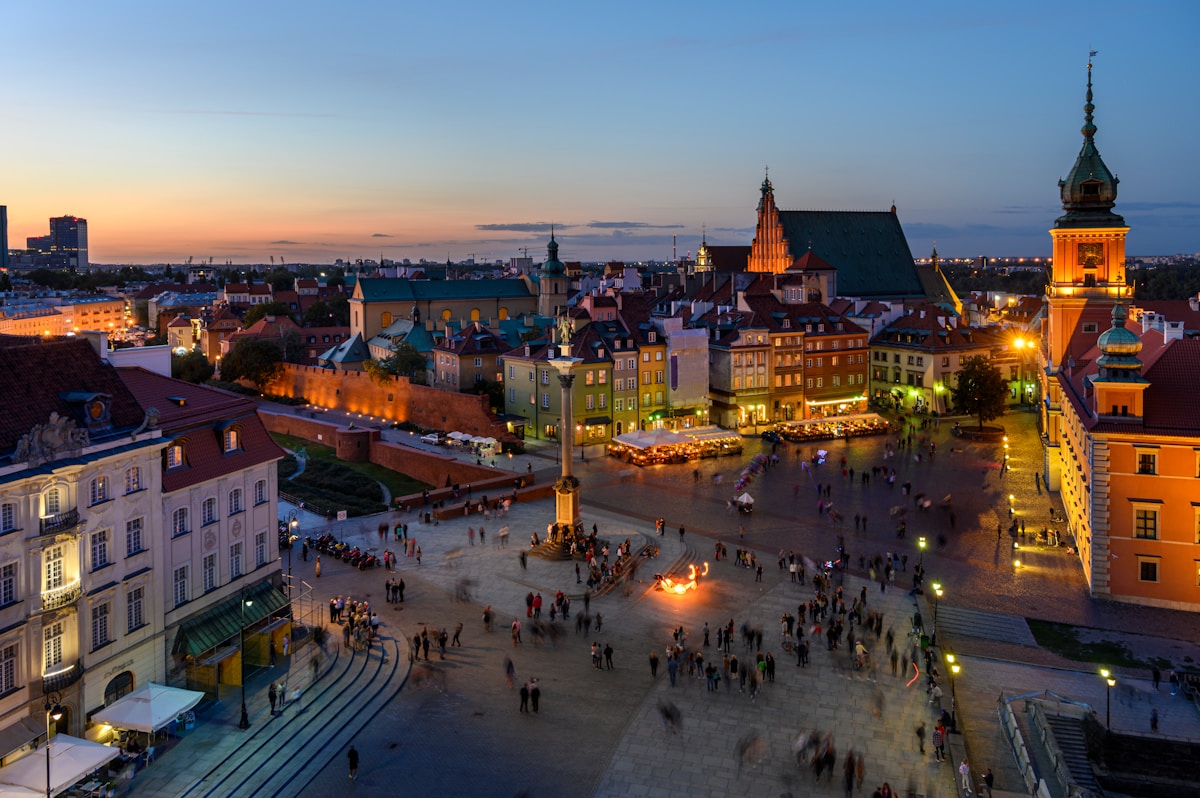
Warsaw has built a nightlife reputation that stretches well beyond Poland. The city’s club scene is internationally respected, drawing DJs and crowds from across Europe, and the bar culture that has developed around Praga, the Vistula boulevards, and the reconstructed city centre is genuinely diverse and interesting. It is a city that starts late and runs long - plan accordingly.
The Main Nightlife Areas
Praga - right bank Warsaw
Praga is the word that comes up most in conversations about Warsaw’s nightlife evolution. The right-bank district was largely untouched by the Second World War bombing that levelled the west bank, which means it has preserved 19th-century industrial buildings, workers’ tenements, and factories that have been gradually converted into cultural spaces, clubs, and bars over the past 15 years.
ul. 11 Listopada and the streets around it are the current centre of gravity, though the area is diffuse enough that part of the experience is walking between venues. Skład Butelek on ul. Mińska is one of the longest-established Praga venues - an outdoor urban garden space in a former bottle warehouse that operates as a bar and live music venue from spring through autumn. Warszawa Wschodnia restaurant-bar complex near Dworzec Wschodni station is a good early-evening anchor point before exploring the neighbourhood. Fabryka Trzciny is the largest cultural venue on the right bank, hosting club nights, concerts, and performances in a vast converted factory.
City Centre (Śródmieście)
The area around Nowy Świat and Krakowskie Przedmieście has a higher tourist concentration but also the city’s best selection of wine bars and cocktail venues. pl. Zbawiciela (Saviour Square) is perhaps the most pleasant outdoor drinking destination in the city centre - a roundabout ringed with bar terraces that fill on warm evenings from around 19:00 and stay busy until midnight.
Pawilony (ul. Nowy Świat 22/24) is a Warsaw institution that shouldn’t be missed. The name refers to a cluster of small wooden kiosks and prefabricated bar pavilions tucked behind the main Nowy Świat street - an informal warren of tiny, cheap bars that operates as a single social space even though each kiosk is independent. Beer here runs approximately PLN 10–16 as of 2026, cash only at most stalls. The crowd is entirely local - students, young professionals, and the occasional tourist who stumbled in from the main boulevard. It gets packed from around 20:00 on weekend nights and the atmosphere is unlike anywhere else in the city.
ul. Mazowiecka has a high concentration of bars within a few hundred metres and is reliably busy at weekends. The street mixes student-friendly pubs with more polished cocktail bars and is probably the most efficient option if you want variety without committing to a single area.
Vistula Boulevards (Bulwary Wiślane)
The riverside promenade on the west bank of the Vistula was redeveloped extensively in the early 2010s and is now one of Warsaw’s most popular summer social spaces. Beach bars, pop-up venues, and regular events run from May through September, with the stretch between Most Poniatowskiego and Most Śląsko-Dąbrowski being the most active. The atmosphere is more casual and family-friendly than Praga but the concentration of venues and the riverside setting make it worth visiting in summer.
Rooftop Bars
Warsaw’s rooftop bar scene has grown substantially as luxury hotels and office towers have opened their top floors to the public. Sky Bar at the Hilton Warsaw (ul. Grzybowska 63) on the 26th floor offers uninterrupted views over the city skyline and the Palace of Culture and Science - cocktails from approximately PLN 45 as of 2026. Level 27 at the Renaissance Warsaw Airport Hotel is an option for those staying near the airport. For a less corporate feel, Panorama Sky Bar at the Hotel Warszawa on pl. Powstańców Warszawy has some of the best architecture of any Warsaw rooftop - the interwar building has been meticulously restored.
Search hotels in Warsaw on Booking.com
Craft Beer and Pubs
Warsaw has a strong craft beer scene anchored by several well-run taprooms. Kufle i Kapsle on ul. Nowogrodzka has 24 taps covering Polish craft breweries as well as European imports and is reliably regarded as the best beer bar in the city - pints from approximately PLN 20–30 as of 2026. PINTA (the flagship brewpub of Poland’s largest craft brewery) operates a bar in Śródmieście with 12 taps of their own beers. PiwPaw on ul. Foksal has a similarly extensive tap list and is popular with the expat community.
Clubs
Warsaw’s club scene is the most developed in Poland and compares well with the major European capitals. Smolna (ul. Smolna 38) is the most internationally known venue - a converted printing press that books serious electronic music acts and has an unusually high-quality sound system; entry typically PLN 50–100 depending on the artist. Jasna 1 in the city centre runs house and techno nights in a more intimate setting. Luzztro is longer-established with a loyal local following.
The Praga side has its own club circuit: Hydrozagadka (ul. 11 Listopada) hosts alternative, punk, and electronic nights in a grimy, beloved venue that has operated since the 1990s. PartYbas is louder and more mainstream. The Praga clubs tend to be cheaper on the door (PLN 20–40) and start later.
Jazz and Live Music
Tygmont Jazz on ul. Mazowiecka is the city’s longest-running jazz club with live performances most evenings from 21:00 - no cover on most nights, with a drinks minimum of approximately PLN 30 per person. Jassmine Jazz Club near pl. Zbawiciela is newer and more intimate. The National Philharmonic (ul. Jasna 5) runs a full classical and chamber music programme; tickets from approximately PLN 30–80 as of 2026.
Practical Notes
Warsaw is a large city and the nightlife areas are spread out. The metro runs until around 01:00 on weekdays and 02:30 on weekend nights (check current timetables). After that, night buses cover the main corridors. Bolt and Uber are the standard late-night options - a Praga to city centre ride typically costs PLN 15–25 as of 2026. If you are new to the city and want to see several areas in one evening, Warsaw evening tours often combine cocktail stops in the city centre with a look at the Praga scene.
Dress codes vary significantly: smart-casual gets you into most venues without issue. The more upmarket cocktail bars in the city centre appreciate effort; Praga and the boulevard bars are entirely casual. Queueing is common at Smolna and a few other clubs on peak nights - plan to arrive before midnight if you want to avoid a wait.
More in Warsaw
- Warsaw City Guide - overview, top attractions, and getting there
- Things to Do in Warsaw - attractions and activities in depth
- Where to Stay in Warsaw - hotels and hostels by neighbourhood and budget
- Food and Drink in Warsaw - restaurants, milk bars, and coffee
- Day Trips from Warsaw - Łódź, Toruń, Kazimierz Dolny, and more
- Vegan Restaurants in Warsaw - plant-based dining for a night out without meat
- Solo Travel in Poland - how to plug into Warsaw’s social scene as a solo traveller
- Kraków Nightlife - comparing Warsaw’s club scene with Kraków’s Kazimierz bar culture