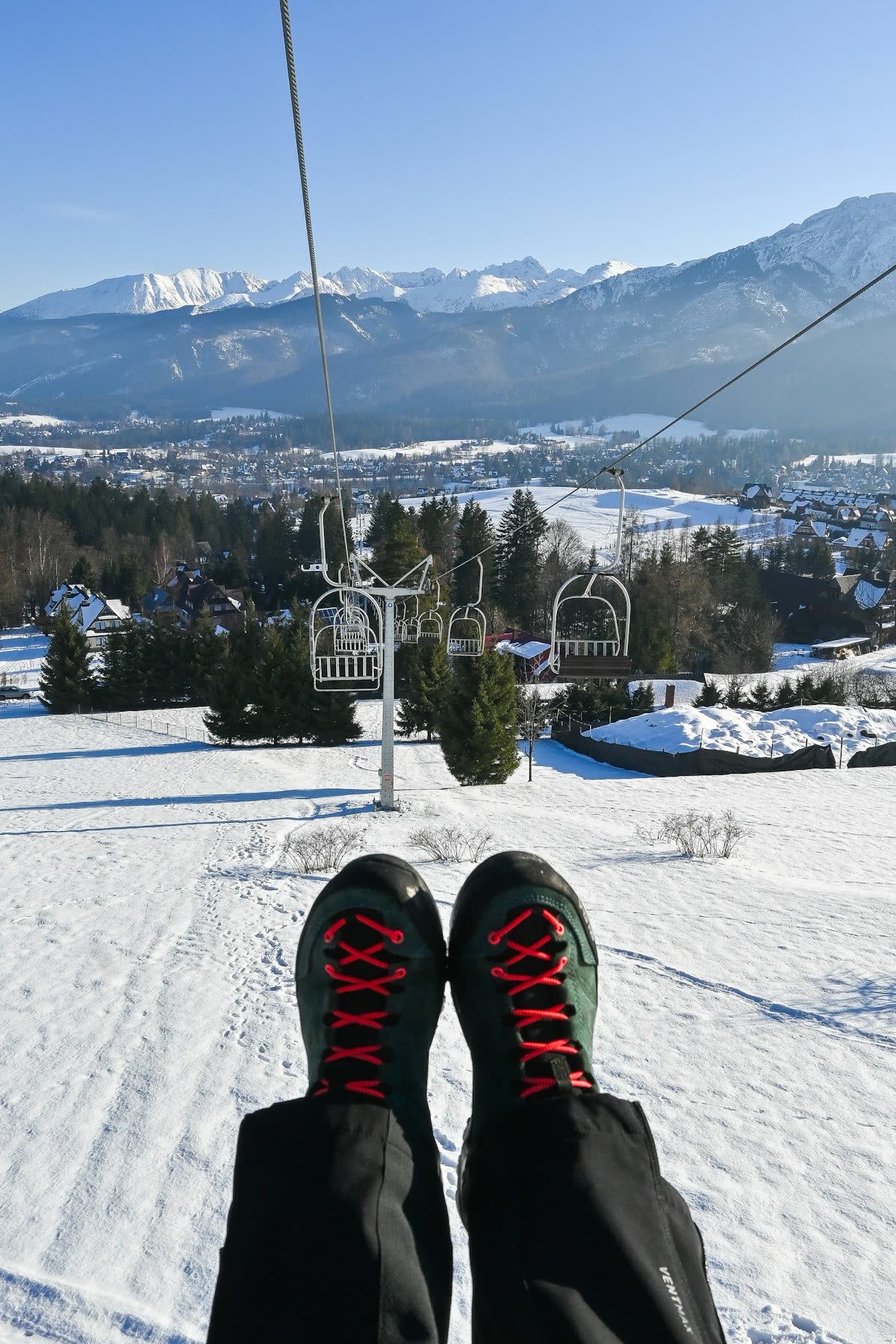
Zakopane sits at the foot of the High Tatras, Poland’s highest mountain range, and in winter the town transforms into the country’s most active cold-weather destination. Ski runs descend from nearly 2,000 metres, thermal pools steam against snowfield backdrops, and horse-drawn sleighs still carry visitors along mountain paths as they have for a century. Here is what to do and what it costs.
Skiing at Kasprowy Wierch
Kasprowy Wierch (1,987 m) is the centrepiece of Zakopane skiing. A cable car departs from the Kuźnice terminus (approximately 3 km from the town centre, reachable by bus or taxi) and rises to the summit ridge, where two ski areas - Goryczkowa and Hala Gąsienicowa - offer runs of varying difficulty.
Cable car prices (as of 2026): Return ticket approximately PLN 89 for adults, PLN 69 for children (under 16). One-way approximately PLN 55. The cable car runs from 07:00 to 17:00 on most winter days; it closes entirely in high winds and during maintenance periods (usually one week in autumn). Check the PKL (Polskie Koleje Linowe) website or app before travelling, as closures happen without much advance notice.
Ski runs: The mountain has blue, red, and black pistes accessible from the summit. Total skiable distance is relatively modest compared to Alpine resorts but the altitude guarantees better snow quality than the lower slopes in town. Lift queues can be long on weekends and school holidays - midweek visits are significantly calmer.
Getting there: Local bus lines 18 and 28 run from Zakopane bus station to Kuźnice. Journey time approximately 10 minutes. Taxis cost approximately PLN 20–30 one-way as of 2026.
Skiing at Nosal and Polana Szymoszkowa
Nosal (1,206 m) is the most accessible ski area for beginners and families. It sits within walking distance of central Zakopane and has a mix of chairlifts and surface lifts covering gentle to intermediate terrain.
Day pass prices (as of 2026): Approximately PLN 100–115 for adults, PLN 85–95 for children. Half-day passes (from noon) cost approximately PLN 75–90 for adults. Prices increase during peak periods (Christmas week, January half-term, February).
Polana Szymoszkowa is a slightly larger ski area 3 km from town with better snow-making infrastructure. Prices are comparable to Nosal. A gondola replaces the older surface lift system; the gondola ticket is included in the day pass.
Ski rental: Multiple rental shops operate near both areas. Rates are approximately PLN 70–90 per day for standard ski sets (skis, boots, poles), PLN 90–120 for snowboard sets as of 2026. Helmet rental is approximately PLN 20 extra.
Snowshoeing in the Tatras
Snowshoeing (rakiety śnieżne) is increasingly popular as an alternative to skiing and opens up terrain that skis cannot reach. Several guided snowshoe tours depart from Zakopane in winter.
Popular routes: The Dolina Strążyska valley is the most accessible snowshoe trail from town, a gentle 2–3 hour loop through forest and open meadow. The Hala Ornak route in the Western Tatras requires more fitness and approximately 5–6 hours return. Both routes are marked and manageable with basic snowshoeing experience.
Organised tours: Local operators including Tatrzańskie Centrum Sportów Zimowych offer half-day and full-day guided snowshoe excursions. Prices start at approximately PLN 150–200 per person including equipment as of 2026. Guides speak English and adapt routes to group fitness levels.
Self-guided: Snowshoes can be rented from sports shops in central Zakopane for approximately PLN 40–60 per day as of 2026. Micro-spikes (kolce) are a cheaper alternative (approximately PLN 20–30 per day) for well-trodden paths.
Morskie Oko in Winter
The hike to Morskie Oko (Eye of the Sea), the largest lake in the Polish Tatras, is possible in winter and spectacular - the frozen lake reflects the surrounding peaks and the valley is quieter than in summer.
Getting there: Buses from Zakopane bus station to Palenica Białczańska car park run regularly, including in winter (approximately PLN 10–15 return per person as of 2026). From the car park, the trail climbs 9 km to the lake; it takes approximately 2.5–3 hours at a steady pace.
Trail conditions: Expect compacted snow and ice from November through March. Micro-spikes are strongly advised; full crampons are not necessary unless you venture beyond the lake. Trekking poles help significantly on the descent.
Horse-drawn sleighs: The lower section of the trail (from Palenica to Włosienica, approximately 4.5 km) can be covered by horse-drawn sleigh. Return sleigh fare costs approximately PLN 60–80 per person as of 2026. The sleigh only goes as far as Włosienica; you walk or snowshoe the final section to the lake independently.
Thermal Baths
Two large thermal spa complexes operate within easy reach of Zakopane and are particularly popular in winter when outdoor soaking in heated pools against a mountain backdrop becomes an experience in itself.
Terma Bukovina (Bukowina Tatrzańska) is approximately 13 km from Zakopane. The complex has multiple indoor and outdoor pools fed by geothermal water at temperatures of 28–36°C, plus sauna facilities. Entry prices (as of 2026): approximately PLN 69–89 for a 3-hour ticket, PLN 99–129 for a full-day ticket. Children under 3 free. Open daily 09:00–21:00. Regular buses connect Zakopane bus station with Bukowina Tatrzańska.
Terma Bania (Białka Tatrzańska) is approximately 16 km east of Zakopane. This is one of Poland’s largest thermal complexes, with 10 outdoor and 4 indoor pools. The outdoor pools operate year-round and the combination of warm water and snow-covered Tatra views is a strong draw. Entry prices (as of 2026): approximately PLN 79–99 for 3 hours, PLN 119–149 for a full day. The premium areas (Hammam, private jacuzzis) cost extra. Open 09:00–22:00 daily; closes slightly later on weekends. Taxi from Zakopane costs approximately PLN 40–60 one-way; the bus service is less direct.
Ice Skating
An outdoor ice rink (lodowisko) operates in central Zakopane during winter, typically from December through February. The rink is open to the public in sessions; skate hire is available on site. Entry costs approximately PLN 15–25 per session including skate rental as of 2026. Check current opening hours at the local sports centre (MOSiR Zakopane) - session times change during school holidays.
Horse-Drawn Sleigh Rides
Kulig (sleigh rides) are a genuine local tradition rather than a tourist gimmick. The most common route runs from the Krupówki promenade area into surrounding valleys. Short rides (20–30 minutes) cost approximately PLN 80–120 for up to 4 people as of 2026. Longer valley routes (1–2 hours) cost approximately PLN 200–350 depending on the route and operator. Several operators gather near the Tatra Museum on ul. Krupówki; agree on the price before departure.
Practical Tips for Zakopane in Winter
When to visit: January and February offer the most reliable snow. The Christmas–New Year period and February half-term (ferie zimowe) are the busiest weeks - prices rise 20–40% and accommodation books out weeks ahead. Mid-January weekdays offer the best combination of good conditions and manageable crowds.
Search hotels in Zakopane on Booking.com
What to bring: Waterproof jacket and trousers, insulated mid-layer, waterproof boots with good grip, and a hat and gloves. Even on clear days, temperatures on the upper slopes run −10 to −20°C. The town centre itself stays around 0 to −5°C in January.
Getting to Zakopane: Buses from Kraków depart regularly (approximately every 30–60 minutes) and the journey takes 1.5–2.5 hours depending on traffic. Tickets cost approximately PLN 25–40 as of 2026. Direct minibuses (busy transport) are faster; they leave from near Kraków Główny station.
Book Zakopane Winter Tours on GetYourGuide
| Tour | Duration | From price | Highlights |
|---|---|---|---|
| Zakopane snowshoeing in the Tatra Mountains | 4 hrs | From €35 | Guided snowshoe trek, Tatra National Park trails, mountain panoramas |
| Zakopane: dog sledding and Tatra winter experience | 3 hrs | From €55 | Husky sled ride, traditional góral village, regional food tasting |
| Zakopane ski school - Kasprowy Wierch beginner lessons | 4 hrs | From €60 | Ski or snowboard instruction, equipment rental, Kasprowy cable car access |
| From Kraków: Zakopane winter day trip with cable car | 10 hrs | From €50 | Coach from Kraków, Kasprowy Wierch gondola, Krupówki promenade, góral lunch |