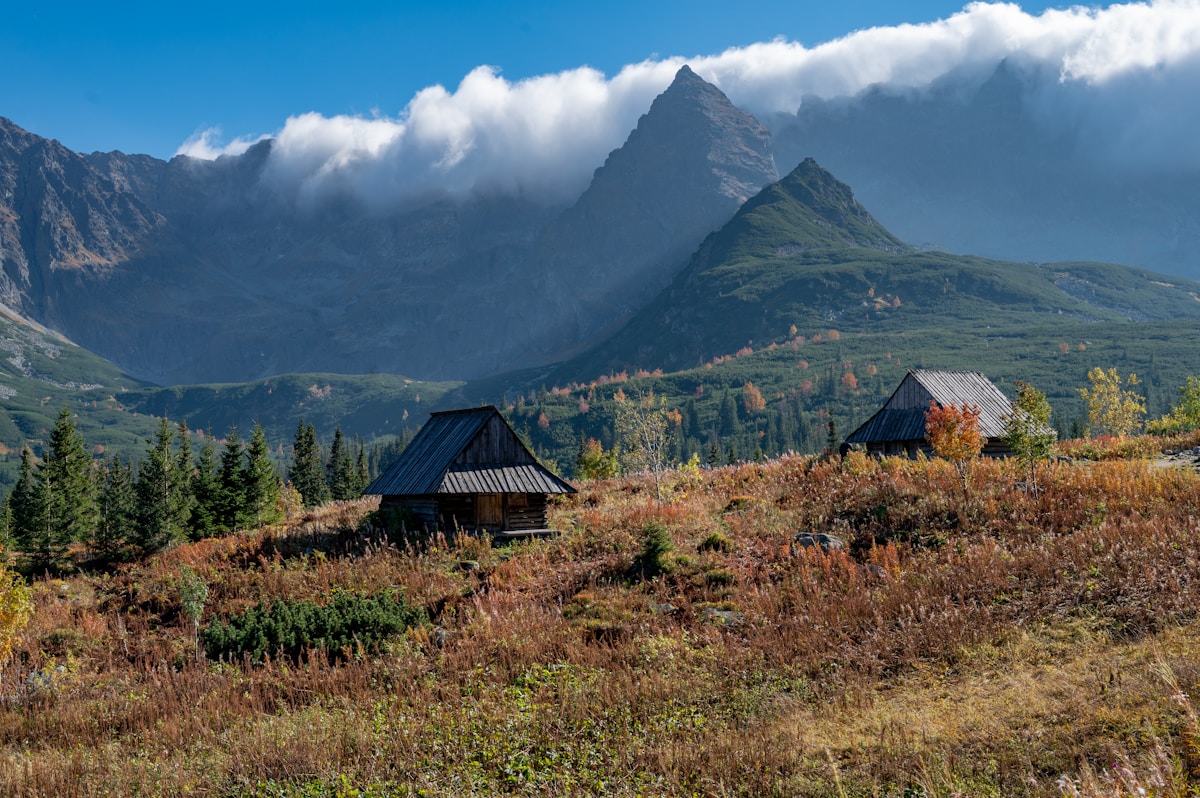
Poland’s mountain regions lie at opposite ends of the country’s southern border. Zakopane anchors the Tatra Mountains in the far south, within sight of Slovakia. Jelenia Góra sits in Silesia in the southwest, the largest city in the Karkonosze (Giant Mountains) region and a gateway to a different, gentler set of highland landscapes. Both are worth visiting, but for different reasons and different types of traveller. Here is how they compare.
Overview
Zakopane is Poland’s most famous mountain town and its primary ski and hiking resort, sitting at around 850 metres altitude beneath the Tatra range. The Tatras are the highest mountains in Poland - Rysy reaches 2,503 metres - and the scenery is genuinely dramatic, with glacial lakes, rocky ridges, and high-altitude meadows. Zakopane’s Krupówki street is a busy pedestrian strip lined with souvenir shops, food stalls, and restaurants; the town is heavily commercialised but the mountains behind it are not. In winter it is one of the busiest ski destinations in Central Europe. In summer, hiking trails into the Tatra National Park draw hundreds of thousands of visitors. It can be crowded. It earns its popularity.
Jelenia Góra is a larger city (around 80,000 people) that functions as the administrative and commercial hub of the Karkonosze region in southwest Poland. The Karkonosze - or Krkonoše across the Czech border - are rounded, forested mountains reaching around 1,600 metres at their highest point (Śnieżka, the highest peak in the range, is approximately 1,603 m). The landscapes are softer than the Tatras, the hiking is excellent but less vertiginous, and the region has a network of historic spa towns - Karpacz, Szklarska Poręba, Cieplice Śląskie-Zdrój - accessible by bus or car from Jelenia Góra. The town itself has a handsome baroque Old Town that most visitors overlook entirely. For an overview, see our Jelenia Góra things to do guide.
Getting There
Zakopane is around 100 km south of Kraków. Buses and minibuses depart from Kraków’s main bus station roughly every 30 minutes during peak season; the journey takes approximately 2 hours and costs PLN 20–30 as of 2026. There is no direct train. By car via the S7/E77 road it is approximately 1.5–2 hours. From Warsaw by car it is approximately 4.5 hours.
Jelenia Góra is connected by direct train to Wrocław, with journey times around 2–2.5 hours (approximately PLN 30–60 as of 2026). From Warsaw the fastest option involves a change in Wrocław and takes 4.5–5 hours total. By car from Wrocław it is approximately 110 km, around 1.5 hours via the A4/S3.
From the UK, most visitors flying to Poland will access Zakopane via Kraków and Jelenia Góra via Wrocław.
Hiking and Outdoor Activities
Zakopane and the Tatras offer the most dramatic high-mountain hiking in Poland. The Morskie Oko lake trail (8 km each way from the car park at Palenica Białczańska, no cars allowed) is the most popular walk - a wide gravel path through forest to a glacial lake beneath the High Tatras. The ascent to Giewont (1,895 m) involves some scrambling and a fixed-chain section and is popular in summer. The Kasprowy Wierch cable car (approximately PLN 75 return as of 2026) lifts non-hikers to 1,987 metres with views across the Polish and Slovak Tatras. Winter skiing: Kasprowy Wierch and Nosal are the main ski areas, reliable for snow December–April.
The Tatra National Park entrance fee applies: approximately PLN 6 per day as of 2026 on most trails.
Jelenia Góra and the Karkonosze offer a different hiking experience - longer ridge walks through subalpine meadows rather than steep rock scrambles. The Śnieżka summit walk from Karpacz (approximately 5 km, 600 m elevation gain) is the most popular route and rewards with views across the Czech and Polish Silesia. The Karkonosze National Park (entry approximately PLN 7 as of 2026) protects the highest terrain. For families, the Mountain Tram (Kolejka Linowa) up Śnieżka from Karpacz runs from approximately PLN 45 return. Cross-country skiing is well-developed across the Karkonosze plateau; downhill skiing at Karpacz and Szklarska Poręba is competent but at lower altitudes than the Tatras and correspondingly less reliable for snow.
Edge: Zakopane for dramatic alpine scenery and higher-altitude hiking and skiing; Jelenia Góra for gentler trails, spa town culture, and less crowded routes.
Food and Local Cuisine
Zakopane has a strong regional food identity based on Highlander (Góralski) cuisine. Oscypek - a smoked ewe’s milk cheese, often served grilled with cranberry jam - is the signature food and is sold at stalls along Krupówki; approximately PLN 15–20 for a full oscypek as of 2026. Żurek Góralski (sourdough rye soup with sausage and egg), roast lamb, and bigos feature on most restaurant menus. The Schronisko na Hali Gąsienicowej mountain hut serves hot food on the trail - a full meal approximately PLN 30–50. Mid-range restaurant dinners in town run approximately PLN 50–90 per person. For local food recommendations, see our Zakopane things to do guide.
Jelenia Góra draws on the traditions of Silesian and German cuisine alongside Polish standards - the region’s complex history (it was Hirschberg until 1945) is visible in the food. The Old Town market square has a mix of Polish and Czech-influenced dishes. Regional cheeses and cold cuts appear on menus throughout the Karkonosze area. Prices are generally slightly lower than Zakopane; a mid-range dinner costs approximately PLN 40–80 per person. For local food specifics, see our Jelenia Góra food to try guide.
Where to Stay
Zakopane has an enormous accommodation stock built up over a century of resort tourism. Pension houses (pensjonaty) are the dominant form - private homes with rooms, often with breakfast included. Typically PLN 150–300 per person per night at a solid pension as of 2026. Hotel Giewont is a well-established mid-range option in town from approximately PLN 400 per night for a double. Self-catering chalets (domki) are popular for families and groups; prices vary widely. For detailed options, see our Zakopane where to stay guide.
Jelenia Góra is less resort-oriented and offers more standard hotel and apartment accommodation. Hotel Mercure Jelenia Góra in the city centre is the most reliable mid-range option (from approximately PLN 300–400 per night as of 2026). Many visitors base themselves in Karpacz or Szklarska Poręba - smaller resort towns with more mountain atmosphere - rather than in Jelenia Góra itself. The Zamek Książęcy (Ducal Castle) hotel in Wojanów, a baroque castle converted to accommodation approximately 15 km from Jelenia Góra, is a memorable splurge (from approximately PLN 600 per night). See our Jelenia Góra where to stay guide.
Search hotels in Zakopane on Booking.com
Crowds and Atmosphere
This is a significant differentiator. Zakopane in July and August, or on winter weekends, is very crowded. The Morskie Oko trail alone sees over a million visitors per year. Parking is difficult, restaurants are full, and Krupówki is shoulder-to-shoulder. This is not necessarily a negative - the energy is festive and the Polish mountain folk culture is genuine - but visitors who find crowds dispiriting will do better elsewhere or in the Tatras’ quieter off-season (April–May and October–November).
Jelenia Góra and the Karkonosze are substantially quieter than the Tatras at all times. The region attracts fewer international tourists and more domestic visitors, which tends to mean more relaxed services and less commercial pressure.
Budget
| Expense | Zakopane | Jelenia Góra |
|---|---|---|
| Pension/budget hotel (per night) | PLN 200–350 | PLN 180–300 |
| Mid-range hotel (per night) | PLN 350–550 | PLN 300–450 |
| Restaurant dinner (per person) | PLN 50–90 | PLN 40–75 |
| National park entry (per day) | PLN 6 | PLN 7 |
| Cable car (return) | PLN 75 | PLN 45 |
| Bus from nearest major city | PLN 20–30 | PLN 30–50 |
All approximate, as of 2026.
The Verdict
Choose Zakopane if: you want the most dramatic mountain scenery in Poland, iconic alpine hiking, skiing with reliable snow, and the full immersion in Góralski highland culture - crowds included.
Choose Jelenia Góra if: you want a quieter mountain experience, gentler ridgeline hiking through the Karkonosze, access to spa towns and historic Silesian architecture, and lower prices.
Both regions are worth visiting if time allows - they are different enough that seeing both gives a much richer picture of Poland’s mountains than either alone. Guided mountain tours of Poland that include both the Tatras and the Karkonosze are available for those wanting a comprehensive southern Poland itinerary. See our full guides to Zakopane and Jelenia Góra for complete planning information.
Plan Your Mountain Trip
- Tatra Mountains Trekking Guide - the full hiking and trail guide for Zakopane’s mountains
- Karkonosze National Park Hiking - the full guide for Jelenia Góra’s Śnieżka and Giant Mountains
- Skiing in Poland - Zakopane - the winter case for Zakopane
- Bieszczady Hiking Guide - Poland’s third mountain region for comparison
- Things to Do in Zakopane - activities beyond hiking in the mountain resort
- Best Time to Visit Poland - when to visit for hiking vs skiing
More Poland Comparisons
- Kraków vs Warsaw - the classic city debate for visitors using Kraków as the base for mountain day trips
- Lublin vs Zamość - eastern Poland’s alternative to the standard tourist circuit
- Poland vs Czech Republic - how Poland’s mountains compare to the broader Central European choice