Poland 10-Day Itinerary: Beyond the Tourist Trail
Contents
- Budget Tiers
- Days 1–2: Warsaw
- Day 1: History and the Old Town
- Day 2: Rising Museum, Neon Museum, and Praga
- Day 3: Toruń Day Trip from Warsaw (or Overnight)
- Why Toruń
- Key Sites
- Days 4–5: Gdańsk
- Day 4: The Waterfront, Long Market, and Maritime Heritage
- Day 5: European Solidarity Centre and Sopot
- Days 6–7: Wrocław
- Day 6: Ostrów Tumski, the Market Square, and Dwarves
- Day 7: Panorama of the Battle of Racławice and the Łódź Mural Detour
- Days 8–10: Kraków with Auschwitz Day Trip
- Day 8: Wawel, Kazimierz, and the Main Square
- Day 9: Auschwitz-Birkenau
- Day 10: Schindler’s Factory and Departure
- Full Transport Summary
- What This Itinerary Gives You
Ten days allows something that seven does not: the space to explore Poland’s second-tier cities seriously. Toruń and Wrocław are not second-rate destinations — they are among the finest medieval and central European cities on the continent, and the fact that international tourists largely bypass them makes them more rewarding to visit.
This itinerary follows a logical geographic loop: Warsaw north to Gdańsk via Toruń, then southwest to Wrocław, then east to Kraków. All connections are by train or bus.
Budget Tiers
| Tier | Daily Budget | Accommodation | Meals | Notes |
|---|---|---|---|---|
| Budget | ~PLN 150/day | Hostel PLN 60–80 | Street food + milk bars PLN 40–60 | Transport ~PLN 20 |
| Mid-range | ~PLN 380/day | Hotel PLN 250–320/night | Sit-down meals PLN 90–130 | |
| Splurge | ~PLN 850+/day | Hotel PLN 600–800/night | Fine dining PLN 180–250+ |
All prices approximate as of 2026.
Days 1–2: Warsaw
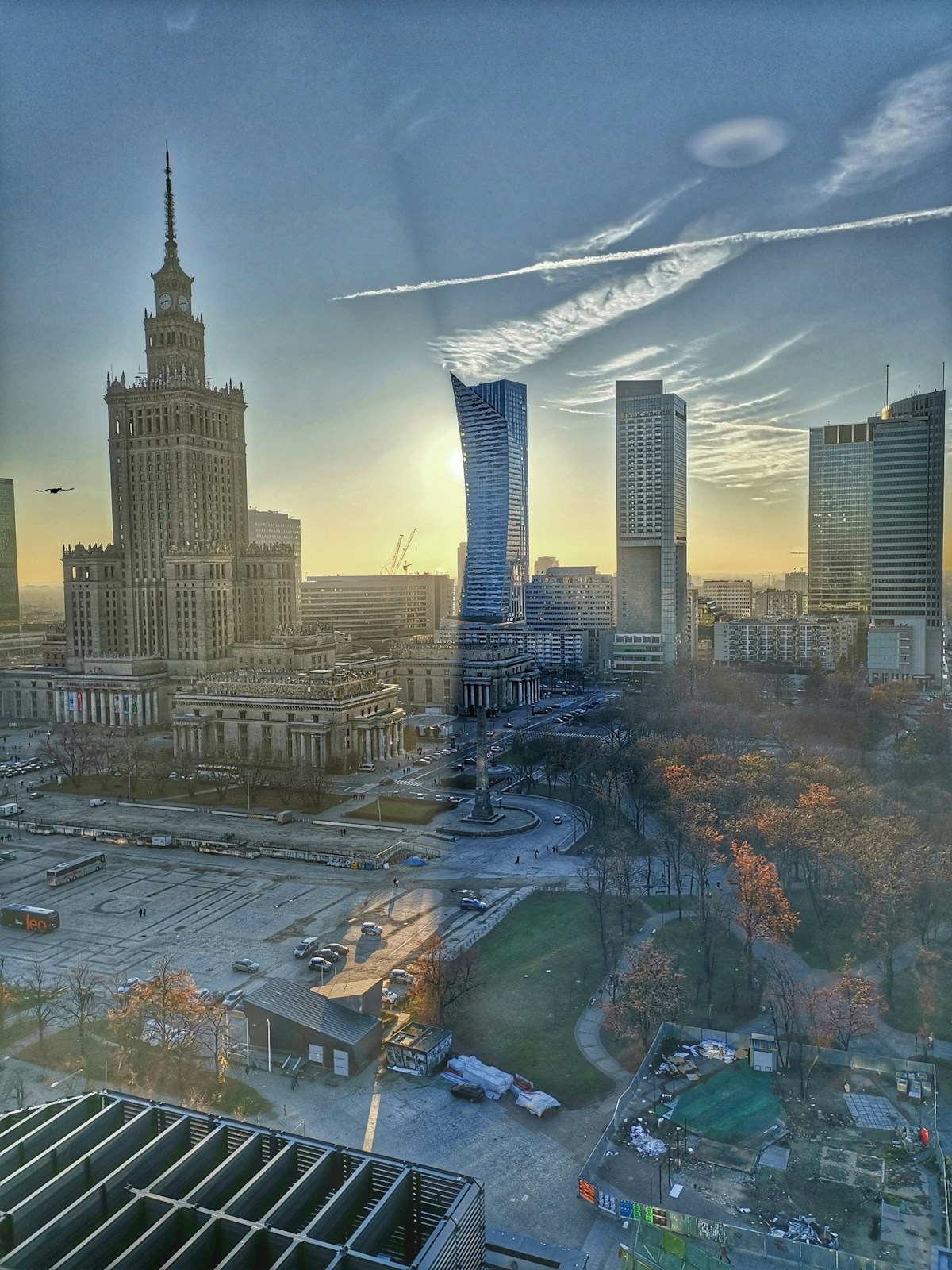
Warsaw anchors this itinerary as the entry point for most international arrivals. Two days covers the main sites without rushing.
Day 1: History and the Old Town
Begin at the Royal Castle (Zamek Królewski; ul. Zamkowy 4; approximately PLN 35 per adult; closed Mondays). Poland’s most important royal palace, rebuilt from rubble after the Second World War using pre-war documentation and the Canaletto paintings of 18th-century Warsaw that now hang inside it. Allow 2 hours.
Walk north through the Old Town Market Square (Rynek Starego Miasta) and onto the New Town — medieval names, both rebuilt, both atmospheric. The Warsaw Barbican at the dividing point is free to walk through.
Afternoon: POLIN Museum of the History of Polish Jews (ul. Andersa 6; approximately PLN 30; free Thursday; closed Tue). One of the most significant Jewish history museums in the world. Plan 2.5–3 hours minimum.
Where to eat:
- Budget: Lunch Bar Familijny (ul. Nowy Świat 39; milk bar, approximately PLN 20 as of 2026)
- Mid-range: Kieliszki na Próżnej (ul. Próżna 12; Polish and European food; approximately PLN 70–100 per person as of 2026)
Day 2: Rising Museum, Neon Museum, and Praga
Morning: Warsaw Rising Museum (ul. Grzybowska 79; approximately PLN 35; closed Tuesday). This and the POLIN Museum together provide a full picture of Warsaw’s 20th-century history from two very different angles.
Afternoon: take tram or taxi across the Vistula to the Praga district. Walk along ul. Brzeska and ul. Ząbkowska for the most authentic pre-war architecture still standing in Warsaw (this area was not systematically destroyed in 1944). Then visit the Neon Museum (Muzeum Neonów; ul. Mińska 25; approximately PLN 25 as of 2026) — a collection of restored post-war Polish neon signs salvaged from demolished communist-era buildings. Unusual and genuinely evocative of a specific era.
Evening: back in central Warsaw, the Powiśle riverside neighbourhood has the best concentration of independent bars and restaurants. Bistro Warszawa (ul. Foksal 10; approximately PLN 80–100 per person as of 2026) for classic Polish dishes done well.
Where to sleep in Warsaw:
- Budget: Moon Hostel Warsaw (ul. Chmielna 13a; dorm from approximately PLN 65 as of 2026)
- Mid-range: Puro Hotel Warsaw (ul. Ogrodowa 9; from approximately PLN 280/night as of 2026)
- Splurge: Hotel Bristol (Krakowskie Przedmieście 42/44; from approximately PLN 500/night as of 2026)
Day 3: Toruń Day Trip from Warsaw (or Overnight)
Toruń lies approximately 220km west of Warsaw by rail — roughly 2 hours on the PKP express (approximately PLN 50–80 as of 2026). Most visitors treat it as a day trip from Warsaw, though an overnight allows a slower pace.
Why Toruń
Toruń is one of the most complete Gothic old towns in Poland. Unlike Kraków, which developed through multiple architectural periods, Toruń’s Old Town is overwhelmingly Gothic — brick churches, granaries, towers, and the remains of a Teutonic Knights castle, all in an outstanding state of preservation. UNESCO listed it as a World Heritage Site in 1997.
It is also the birthplace of Nicolaus Copernicus (1473–1543), who proposed that the Earth orbits the Sun — a shift in cosmological understanding that took another century to be widely accepted and reshaped European science.
Key Sites
House of Copernicus (Dom Kopernika; ul. Kopernika 15/17; approximately PLN 20 per adult as of 2026; open Tue–Sun from 10am): the building where Copernicus was born, now a museum of his life, work, and the revolutionary impact of the heliocentric model. Compact and well-explained.
Old Town Market Square (Rynek Staromiejski): surrounded by Gothic and Renaissance townhouses in excellent condition. The Town Hall in the centre dates from the 14th century and houses the Regional Museum (approximately PLN 20 as of 2026).
Toruń Gingerbread Museum (Muzeum Piernika; ul. Strumykowa 4; approximately PLN 32 as of 2026): more engaging than it sounds. Toruń gingerbread (pierniki toruńskie) has been produced here since the Middle Ages and carries a EU protected designation of origin. The museum includes a demonstration of traditional production using medieval moulds.
The Medieval Walls and Teutonic Castle ruins: free to walk. The castle was partially demolished by Polish forces in the 15th century after defeating the Teutonic Knights, and the remaining towers and gatehouse are photogenic and accessible.
Travel time: Warsaw to Toruń approximately 2 hours, approximately PLN 50–80 as of 2026 by PKP express. Toruń to Gdańsk approximately 1.5–2 hours, approximately PLN 30–50 as of 2026 — making it a logical stop between Warsaw and Gdańsk on the north-south rail line.
Where to eat in Toruń:
- Budget: Gospoda Pod Modrym Fartuchem (Rynek Staromiejski 16; traditional Polish, approximately PLN 30–50 as of 2026)
- Mid-range: Manekin (ul. Wielkie Garbary 11; stuffed crêpes, Toruń’s most popular casual dining chain, approximately PLN 35–50 as of 2026)
Days 4–5: Gdańsk
From Toruń, Gdańsk is approximately 1.5–2 hours by direct train (approximately PLN 30–50 as of 2026). Arriving in the afternoon gives time to orient before Day 4 proper.
Day 4: The Waterfront, Long Market, and Maritime Heritage
Walk the Długa Street and Długi Targ (Long Street and Long Market) axis — the spine of Gdańsk’s medieval commercial city. The restored Gothic and Renaissance facades are the originals, not replicas; Gdańsk’s Old Town was less systematically destroyed than Warsaw’s, though significant damage was done.
Golden Gate (Brama Złota) and Green Gate (Brama Zielona) bookend Długi Targ. Pass through the Green Gate to the Motława River waterfront. The Crane Gate (Brama Żuraw, ul. Szeroka 67/68; approximately PLN 20 as of 2026) is the 15th-century twin-towered crane that loaded cargoes onto merchant ships for centuries — Gdańsk’s most iconic building.
Afternoon: St Mary’s Basilica (Bazylika Mariacka; ul. Podkramarska 5; approximately PLN 5 as of 2026): the largest brick Gothic church in the world, built over 159 years and accommodating approximately 25,000 people. The astronomical clock (c. 1470) is one of the most complex medieval timepieces in existence.
Walk along ul. Mariacka — the amber street, lined with independent jewellers and amber sellers. Gdańsk has been trading amber since antiquity.
Evening: dinner near the waterfront. Restauracja Stary Dom (ul. Chlebnicka 9/10; approximately PLN 80–110 per person as of 2026) for well-prepared Polish food in a historic cellar.
Day 5: European Solidarity Centre and Sopot
Morning: European Solidarity Centre (ECS; pl. Solidarności 1; approximately PLN 20 adults; 10am–7pm in summer). This is the museum of the Solidarność movement — the trade union that launched from these shipyards in 1980 and catalysed the end of communism in central Europe. The building is itself remarkable: a rusted-hull exterior that dissolves into warm amber inside. Allow 2.5–3 hours.
Afternoon: take the SKM commuter train (approximately PLN 5, approximately 20 minutes) to Sopot — a 19th-century Baltic resort with a famous wooden pier (Molo; 511 metres; entry approximately PLN 10 as of 2026), a good beach, and a crooked house (Krzywy Domek) that has become inexplicably popular. A pleasant afternoon respite from dense history.
Where to sleep in Gdańsk:
- Budget: 3City Hostel (ul. Tokarska 15; dorm from approximately PLN 65 as of 2026)
- Mid-range: Hotel Podewils (ul. Szafarnia 2; from approximately PLN 320/night as of 2026)
- Splurge: Hilton Gdańsk (ul. Targ Rybny 1; from approximately PLN 650/night as of 2026)
Days 6–7: Wrocław
Gdańsk to Wrocław: approximately 5–6.5 hours by train (one change, typically in Poznań or Warsaw); cost approximately PLN 80–150 as of 2026. Alternatively, FlixBus runs Gdańsk–Wrocław directly in approximately 7–8 hours for approximately PLN 50–90 as of 2026.
Wrocław is often overlooked by visitors who fly into Warsaw or Kraków and never travel west. This is a significant omission. The city has been Silesian, Bohemian, Austrian, Prussian, German (as Breslau), and finally Polish since 1945 — and every phase has left its mark on the architecture.
Day 6: Ostrów Tumski, the Market Square, and Dwarves
Ostrów Tumski (Cathedral Island) is the oldest part of Wrocław — a cluster of Gothic and Baroque churches on an island in the Oder River. The Wrocław Cathedral (Katedra Świętego Jana Chrzciciela; pl. Katedralny 18; free entry; towers approximately PLN 15 as of 2026) was heavily damaged in 1945 and painstakingly reconstructed; the Gothic exterior is dramatic, the interior sober and moving. The bridge connecting the island has love locks — padlocks fixed by couples — covering every centimetre of its railings.
Walk west across the Tumski Bridge to the Rynek (Market Square) — one of the largest Gothic market squares in central Europe. The Town Hall (Ratusz; approximately PLN 15 as of 2026) dates from the 13th century and houses the Wrocław History Museum. The surrounding townhouses include some of the finest late-Gothic and Renaissance facades in the country.
Look for Wrocław’s dwarves (krasnale): small bronze statuettes scattered across the city as a whimsical urban art project that began in the 2000s and expanded into more than 600 figures. There is an official dwarf map; collecting all of them is a full-day occupation for obsessives.
Where to eat in Wrocław:
- Budget: Bar Mleczny Miś (ul. Świdnicka 14; milk bar, approximately PLN 20–25 as of 2026)
- Mid-range: Restauracja Jadka (ul. Rzeźnicza 24/25; modern Polish cuisine; approximately PLN 80–120 per person as of 2026)
Day 7: Panorama of the Battle of Racławice and the Łódź Mural Detour
Panorama Racławicka (Panorama of the Battle of Racławice; ul. Jana Ewangelisty Purkyniego 11; approximately PLN 40 adults as of 2026; advance booking required at panoramaraclawicka.pl; open daily). A monumental 360-degree painted panorama (114 metres wide, 15 metres high) depicting the 1794 Battle of Racławice — a Polish victory over Russian forces during the Kościuszko Uprising. One of the most unusual and technically impressive artworks in Poland.
A note on Łódź: If you have flexibility in your itinerary, Łódź (roughly 2.5 hours by train from Wrocław, approximately PLN 40–70 as of 2026) is worth a half-day detour for its extraordinary street art murals. The city was Poland’s main industrial centre in the 19th century and has reinvented itself as a hub for contemporary art, with murals by international artists covering entire apartment building facades along ul. Piotrkowska and in the Fabryczna quarter. It can be visited en route between Wrocław and Kraków on Day 7 if you book trains accordingly.
Where to sleep in Wrocław:
- Budget: Mleczarnia Hostel (ul. Włodkowica 5; dorm from approximately PLN 60 as of 2026)
- Mid-range: Art Hotel Wrocław (ul. Kiełbaśnicza 20; from approximately PLN 290/night as of 2026 — design hotel in a historic tenement building)
- Splurge: Hotel Monopol (ul. Heleny Modrzejewskiej 2; from approximately PLN 580/night as of 2026 — Art Deco landmark, Richard Wagner and Marlene Dietrich among past guests)
Days 8–10: Kraków with Auschwitz Day Trip
Wrocław to Kraków: approximately 3 hours by PKP train (direct on some services); approximately PLN 50–100 as of 2026.
Day 8: Wawel, Kazimierz, and the Main Square
Wawel Castle (PLN 35 State Rooms; PLN 15 Cathedral; open from 9am) is the first priority — arrive before 10am to avoid queues. The State Rooms house the finest collection of Flemish tapestries in Poland; the Cathedral is the burial place of Polish kings.
Lunch on or near the Main Market Square (Rynek Główny). Milkbar Tomasza (ul. Tomasza 24; budget, approximately PLN 20–30 as of 2026) for traditional Polish dishes at very low prices, or Edo Sushi (ul. Bonerowska 2; mid-range, approximately PLN 50–70 as of 2026) if you need a break from Polish food.
Afternoon: walk to Kazimierz — see the Old Synagogue (PLN 15), Remuh Synagogue (PLN 10), and the winding streets between ul. Szeroka and ul. Józefa. Dinner in Kazimierz at Klezmer Hois (ul. Szeroka 6; traditional Jewish-Polish food; approximately PLN 70–100 per person as of 2026).
Day 9: Auschwitz-Birkenau
Full day. Take the PKS bus from Kraków Główny bus station (approximately PLN 15–18 each way; approximately 1.5 hours). The guided tour of Auschwitz I is mandatory — pre-book at auschwitz.org (approximately PLN 70–100 as of 2026). Add the Birkenau section (free entry) for the full experience. Allow the entire day.
Return to Kraków in the evening. Low-key dinner near your accommodation.
Day 10: Schindler’s Factory and Departure
Schindler’s Factory (Fabryka Schindlera; ul. Lipowa 4; PLN 26; pre-book at muzeumkrakowa.pl; closed Tuesday; free Thursday): 2–3 hours. This is the essential WWII complement to Kazimierz — the story of the Kraków ghetto and one factory owner’s decision to protect approximately 1,200 Jewish workers.
If there is time before departure, walk back to the Rynek Główny and visit St Mary’s Basilica (PLN 15) for the Gothic altarpiece. Or simply take coffee on the square.
Kraków Balice Airport (KRK) is approximately 15km from the centre: taxi approximately PLN 60, or direct bus (Bus 208) approximately PLN 4.
Where to sleep in Kraków:
- Budget: Greg & Tom Beer House Hostel (ul. Pawia 12/7; dorm from approximately PLN 65 as of 2026)
- Mid-range: Hotel Pugetów (ul. Starowiślna 15a; from approximately PLN 280/night as of 2026)
- Splurge: Hotel Copernicus (ul. Kanonicza 16; from approximately PLN 700/night as of 2026)
Full Transport Summary
| Leg | Route | Duration | Cost (approx. 2026) |
|---|---|---|---|
| Warsaw → Toruń | PKP train | ~2 hrs | PLN 50–80 |
| Toruń → Gdańsk | PKP train | ~1.5–2 hrs | PLN 30–50 |
| Gdańsk → Sopot | SKM commuter | ~20 min | PLN 5 |
| Gdańsk → Wrocław | Train (1–2 changes) | ~5.5–6.5 hrs | PLN 80–150 |
| Wrocław → Łódź (optional) | PKP train | ~2.5 hrs | PLN 40–70 |
| Wrocław → Kraków | PKP train | ~3 hrs | PLN 50–100 |
| Kraków → Auschwitz | PKS bus | ~1.5 hrs | PLN 15–18 each way |
Book all PKP trains at pkp.pl or the PKP Intercity app. Book 30–60 days ahead for express services on popular routes.
What This Itinerary Gives You
Ten days on this route delivers two very different reading of Poland: the country’s traumatic 20th century (Warsaw Rising Museum, POLIN, Auschwitz, European Solidarity Centre, Schindler’s Factory) and its deep medieval roots (Toruń’s Gothic old town, Wrocław’s Cathedral Island, Kraków’s Wawel and Kazimierz, Malbork visible as a side trip from Gdańsk).
The inclusion of Toruń and Wrocław is what separates this from a standard tourist circuit. Both cities are less crowded, better value, and at least as architecturally interesting as the more obvious stops.
Book an experience
Itinerary in the area
Instant confirmation · Free cancellation on most bookings
Frequently Asked Questions
- What makes this itinerary different from a standard Poland trip?
- This route includes Toruń — Copernicus's birthplace and one of Poland's finest medieval cities, rarely visited by international tourists — and allocates full days to Wrocław, which has its own distinct Austro-Hungarian and German architectural heritage. It treats Warsaw and Kraków as essential but deliberately pushes into less-visited territory.
- Is it possible to do this itinerary without a car?
- Yes — all connections between cities use PKP trains or buses. Some day trips within the Kraków section benefit from independent transport, but everything in this itinerary is achievable by public transport.
- How do you get from Gdańsk to Wrocław?
- The most practical route is train via Warsaw or Bydgoszcz, taking approximately 5–7 hours total with one or two changes. Alternatively, a direct bus (FlixBus or PKS) runs Gdańsk–Wrocław in approximately 7–8 hours. Cost approximately PLN 50–120 depending on booking lead time as of 2026.
- What is Toruń known for?
- Toruń is the birthplace of Nicolaus Copernicus (1473–1543), the astronomer who proposed the heliocentric model of the solar system. It also has one of the best-preserved Gothic old towns in Poland, intact medieval city walls, and is famous for its gingerbread (pierniki), which has been produced here since the Middle Ages.
- How far in advance should you book Polish trains?
- PKP InterCity express trains on popular routes (Warsaw–Kraków, Warsaw–Gdańsk) can sell out 30–60 days ahead, especially on summer Fridays and Mondays. Book as early as possible at pkp.pl for the best seats and prices.