Katowice Travel Guide: Industrial Heritage, Music and Silesian Culture
Katowice travel guide: the Silesian Museum, Nikiszowiec, Spodek and NOSPR, plus how to get here from Kraków, Warsaw and Katowice Airport.
Guides for Katowice
Katowice is the capital of Upper Silesia and the centre of a conurbation of around two million people, and it makes no attempt to look like a postcard medieval Polish city. The city grew with coal and steel in the 19th century, and what visitors find today is a place that kept its industrial bones and rebuilt them as cultural venues. Former mine buildings house a museum, a steelworks site hosts festivals, and one of Europe’s most distinctive concert halls sits on old railway land. UNESCO added Katowice to its Creative Cities Network as a City of Music in 2015, and the programme of concerts, festivals and club nights backs that up.
For first-time visitors, the best approach is to treat Katowice as a compact two-day stop. Our things to do in Katowice guide covers the main sights in detail; this page sets out how the city fits together and how to plan around it. If you want local context on the mining story, guided tours in Katowice include walking routes through the centre and Nikiszowiec, plus day trips to Auschwitz-Birkenau.
At a glance: Katowice is the post-industrial capital of Upper Silesia, with its main sights in a Culture Zone built on former mine and railway land.
| Detail | What to know |
|---|---|
| Best for | Silesian Museum, NOSPR concert hall, Spodek arena, Mariacka Street, Nikiszowiec |
| From Kraków | Around 1 h by fast train |
| From Warsaw | Around 2.5 h on PKP Intercity |
| Airport | Katowice Airport (KTW) in Pyrzowice, about 30 km north of the city |
| Silesian Museum | Adult ticket roughly PLN 24-29 as of 2026; free permanent collection on Tuesdays at the time of writing |
| Best months | Spring and early autumn; August’s OFF Festival brings crowds and higher accommodation prices |
The Culture Zone (Strefa Kultury)
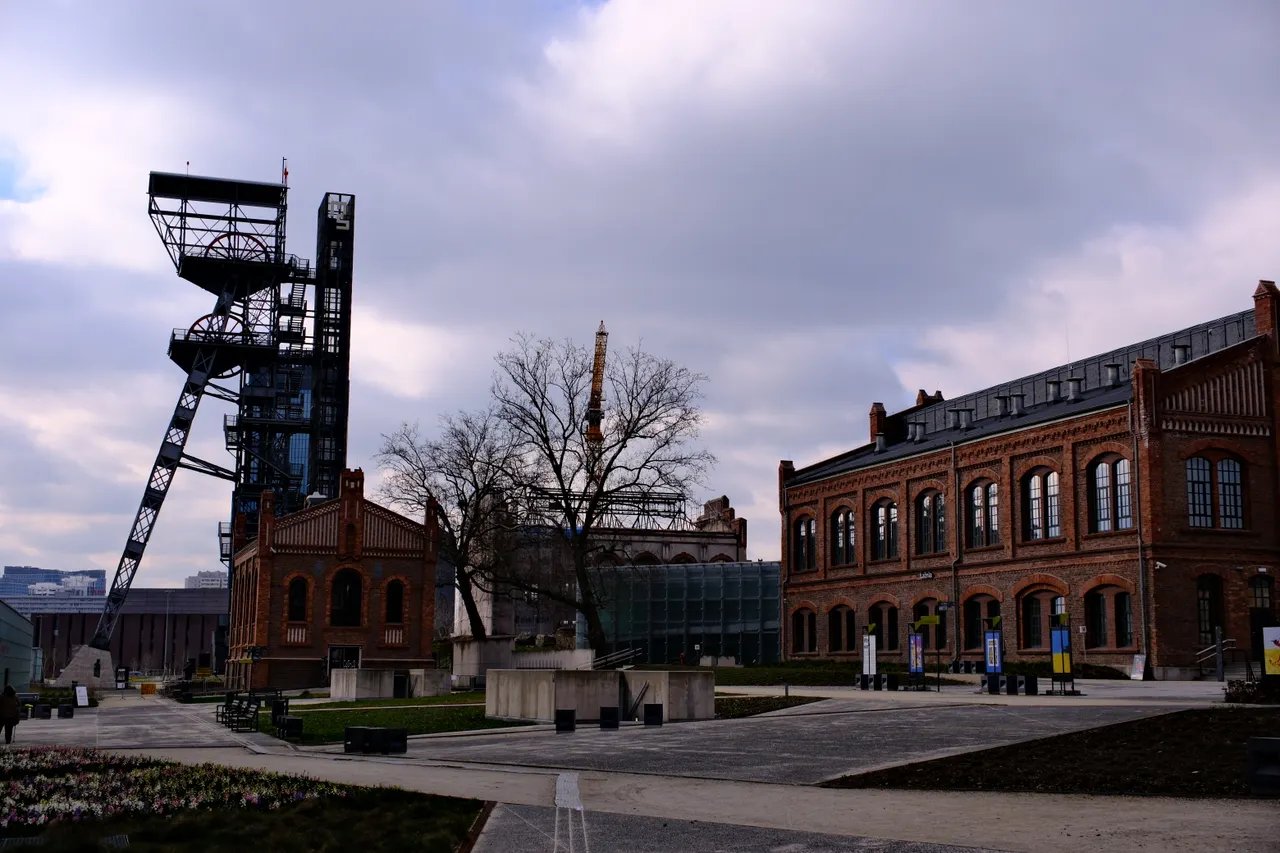
The Culture Zone is where most visitors start. It sits just east of the main station and the Spodek complex, and it brings together three landmark buildings within a few minutes’ walk of each other. The Silesian Museum occupies the site of the former Katowice coal mine, with the original winding tower and red-brick lamp room and engine buildings kept in place and the main galleries built underground. The NOSPR (Polish National Radio Symphony Orchestra) hall is a red-brick, glass and concrete building whose acoustics are widely praised. The International Congress Centre completes the group. The walkable green spaces between them make this the easiest introduction to the city.
The museum’s official site, muzeumslaskie.pl, lists current exhibitions and opening hours, which are worth checking as temporary closures happen. Standard adult tickets were roughly PLN 24-29 as of 2026, with free entry on Tuesdays for the permanent collection at the time of writing.
Spodek and the Sports Quarter
The Spodek (“saucer”) is the arena that defines Katowice’s skyline. Opened in 1971, its suspended roof and flying-saucer profile remain a landmark of Polish modernism. It hosts concerts, ice hockey and esports events, and it is the base for the city’s big-ticket entertainment calendar. There is no regular walk-in sightseeing, so the best way to see the interior is to attend an event or join one of the occasional organised tours; see the arena’s official site spodekkatowice.pl for dates.
Nikiszowiec
Nikiszowiec is the single most photogenic corner of the city. This self-contained miners’ settlement was built between 1908 and 1912 for workers at the Giesche company’s Wieczorek mine, and its dark-red brick blocks are arranged around a central square with the Church of St Anne at one end. The streets have a deliberate, almost fortress-like uniformity, with arched passages, internal courtyards and original details. Today it is a living neighbourhood with galleries, small cafés and Silesian restaurants, and it is free to wander. It is a short tram and bus ride from the centre, and we cover the route in our Katowice things-to-do guide.
Where to Eat
Silesian food is hearty and rooted in the region’s working-class history. Look for rolada śląska (beef roulade) with potato dumplings (kluski śląskie) and red cabbage, kluski na parze and żur. Silesian restaurants cluster around Mariacka Street, the pedestrian strip of bars and restaurants a short walk from the main square (Rynek), and in the revitalised area around the Culture Zone. In Nikiszowiec, small local places serve regional cooking at lower prices than the city centre. Main courses typically cost around PLN 40-70 as of 2026.
Where to Stay
The best base is the city centre between the main station and the Rynek, which keeps the Culture Zone, Mariacka Street and the rail links all within walking distance. The area around Spodek suits you if you are in town for a concert or match. Staying near the station is also practical for early airport transfers and onward trains to Kraków. Prices vary sharply with events, and festival weekends can push rates up significantly. You can compare Katowice hotels on Booking.com and filter by distance to the station or to the Culture Zone.
Getting There and Getting Around
By train. Katowice station is one of the busiest rail hubs in Poland. Kraków is around one hour by fast train, Warsaw around 2.5 hours on PKP Intercity, and Wrocław and Gliwice are also well connected. Our getting around Poland guide explains ticket types and the PKP Intercity booking system.
By air. Katowice Airport (KTW) is in Pyrzowice, about 30 km north of the city. It is one of Poland’s busiest airports and has a strong low-cost network. Our Katowice airport transfer guide compares the bus, rail link, taxi and private transfer. For general advice on regional airports see airport transfers in Poland. Official flight information is on the Katowice Airport website.
Around the city. The centre is walkable. Trams and buses run across the whole conurbation under the Metropolitan Transport Authority (ZTM), and a single ticket covers a short trip for just a few zloty. Bolt is widely available for late nights.
Day Trips
Katowice works as a base for Silesian day trips and for visiting two of southern Poland’s biggest draws. Kraków is the obvious one: see our Kraków city guide for what to see there. Auschwitz-Birkenau is roughly an hour away by road or rail connection, and many organised tours from Katowice include transport. Because the Auschwitz memorial requires timed entry and sells out in season, book ahead; our Auschwitz tickets guide explains the options.
When to Visit
Spring and early autumn give the best weather for walking between the sights. The city is busiest in summer when major music festivals, including the OFF Festival in August, bring large crowds and higher accommodation prices. Winter is cold but the Christmas market on the Rynek and the cultural programme keep the centre lively. For month-by-month advice see our best time to visit Poland guide.
Frequently Asked Questions
- Is Katowice worth visiting?
- Yes, if you like industrial heritage, modern architecture and live music more than medieval old towns. The Silesian Museum, the Nikiszowiec miners' district, the Spodek arena and the NOSPR concert hall give a very different picture of Poland from Kraków or Gdańsk. Two nights is enough.
- How many days do you need in Katowice?
- One full day covers the Culture Zone, Spodek and the city centre; a second half-day takes in Nikiszowiec. Most visitors stay two nights, often combined with Kraków or an Auschwitz-Birkenau visit.
- How far is Katowice from Kraków?
- Roughly 80 km. Direct trains take around one hour to 1 hour 20 minutes as of 2026, so the two cities work well together as a base swap or day trip.
- How do I get from Katowice Airport to the city?
- Katowice Airport is in Pyrzowice, about 30 km north of the centre. Options are the ZTM line AP bus (about 45 minutes to the main station), a limited rail link, taxi or Bolt, and a pre-booked private transfer. See our Katowice airport transfer guide for costs and journey times.
Upcoming Events in Katowice
Poland Independence Day: 11 November Celebrations
Poland Independence Day, 11 November. Commemorating independence regained in 1918: main march in Warsaw, ceremonies in cities nationwide.
- Great Orchestra of Christmas Charity (WOŚP) Grand Finale 2027
WOŚP Grand Finale 2027, Sunday 31 January. Poland's nationwide charity fundraiser, with free concerts and volunteer collections in every major city.
Book an experience
Top experiences in Katowice
Explore the best tours and activities in Katowice - instant confirmation, free cancellation on most bookings.