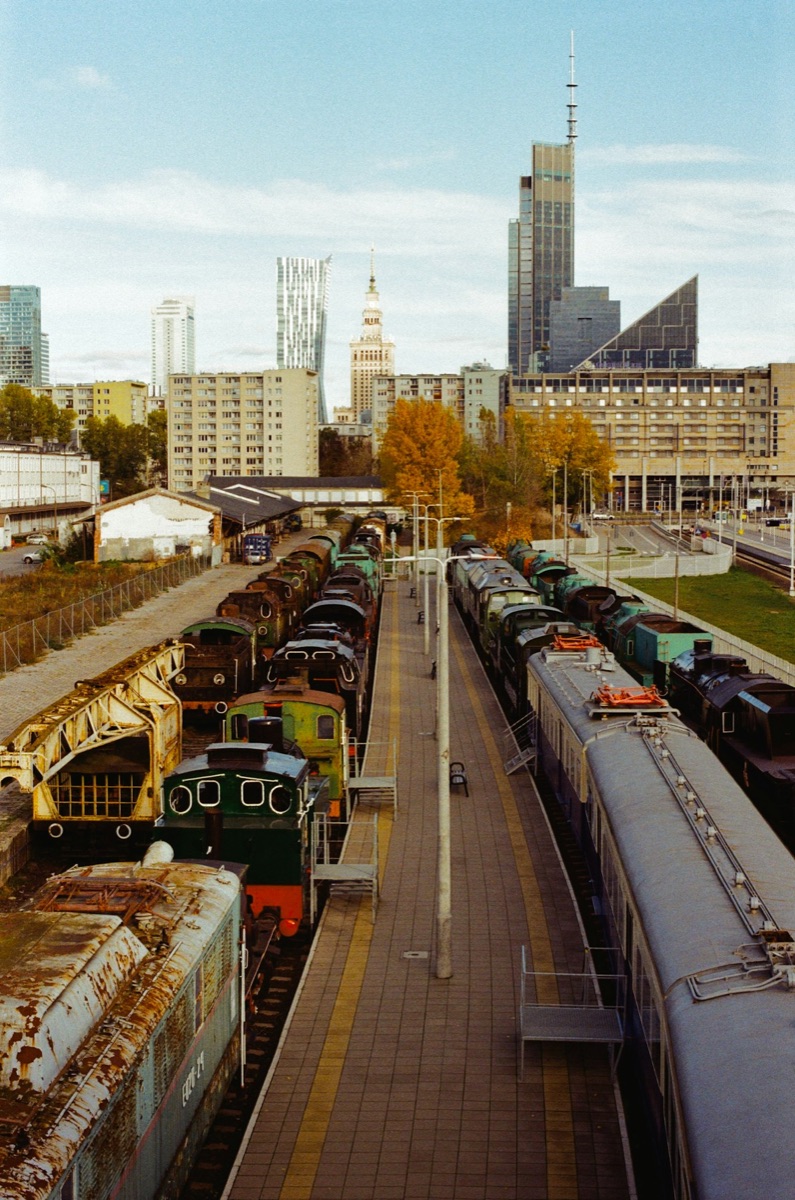
Poland has one of Central Europe’s most developed transport networks. The main cities are connected by fast express trains, an extensive bus network, and improving motorways. Within cities, trams and metro are reliable and cheap. Here’s a complete guide to moving around the country.
Intercity Trains - PKP Intercity
PKP Intercity operates Poland’s national express train network. The fastest trains are Express InterCity Premium (EIP) - high-speed services linking Warsaw with major cities.
Key routes and journey times:
| Route | Service | Journey Time | Approximate Advance Fare |
|---|---|---|---|
| Warsaw–Kraków | EIP | 2h 20m | PLN 50-80 |
| Warsaw–Gdańsk | EIP | 2h 45m | PLN 55-85 |
| Warsaw–Wrocław | IC | 3h 30m | PLN 60-90 |
| Warsaw–Poznań | EIP | 2h 50m | PLN 50-80 |
| Kraków–Gdańsk | IC | 5h 30m | PLN 70-100 |
| Kraków–Wrocław | IC | 3h 15m | PLN 45-70 |
Fares above are approximate advance rates as of 2026; last-minute fares are higher. First class upgrades add approximately PLN 20-40 to the price and give wider seats and a dedicated carriage.
Book at: intercity.pl or the PKP Intercity mobile app. The KOLEO app (koleo.pl) aggregates PKP plus regional operators and is often more convenient for non-PKP connections. To compare train and bus fares on the same route in one search, Omio covers PKP Intercity, RegioJet, and FlixBus together.
Tips:
- Advance booking of 7-14 days saves significantly on popular routes
- Seat reservations are mandatory on EIP trains and included in the ticket price
- Luggage can be stored in overhead racks and at the ends of carriages; no excess charge
- On-board restaurant car is available on most EIP services
Regional Trains
Beyond PKP Intercity, regional trains are operated by multiple state and regional companies:
- Koleje Mazowieckie - Warsaw region
- Małopolska SKA - Kraków region (including Wieliczka and Zakopane-adjacent)
- Polregio - national regional operator
- RegioJet - private operator on Warsaw–Kraków and international routes; excellent comfort and value
For regional connections not covered by PKP, KOLEO is the most practical booking tool as it aggregates all operators in one search.
Buses - FlixBus, PolskiBus, and RegioJet
Long-distance buses fill the gaps between train-served cities and offer a cheaper alternative on some routes.
FlixBus operates a wide national network, with connections between most major cities and many smaller towns not on the main train corridors. Warsaw–Kraków by FlixBus costs approximately PLN 20-40 as of 2026 and takes around 3 hours 30 minutes - slower than the train but cheaper for budget travellers. Book at flixbus.com or the FlixBus app.
RegioJet also operates premium-quality buses on some routes (and trains on others), with hospitality service on board. Often competes on price with FlixBus while offering better comfort. For city-based sightseeing, guided tours in Poland are worth considering - they handle the logistics between sites so you can focus on what you’re seeing.
LocalTransport intercity buses - For remote areas like the Bieszczady, Podlaskie, or rural Mazovia, PKS (Polish coach) regional buses fill routes trains don’t reach. These are managed locally and schedules are available at local bus stations or online at e-podróżnik.pl.
Internal Flights
Internal flights are useful primarily for saving time on longer distances that don’t have direct train connections.
LOT Polish Airlines operates domestic routes from Warsaw to Gdańsk, Kraków, Wrocław, Katowice, Poznań, and Rzeszów. Budget carriers Ryanair and Wizz Air operate some domestic routes.
Approximate internal flight fares (advance, as of 2026):
- Warsaw–Gdańsk: PLN 80-200
- Warsaw–Kraków: PLN 90-180 (note: train at 2h20m is usually preferable)
- Warsaw–Rzeszów (Bieszczady gateway): PLN 80-150
Warsaw Chopin Airport (WAW) is the main hub. Warsaw Modlin Airport (WMI) handles some Ryanair flights. Always check which airport your flight uses and allow sufficient transfer time.
Driving and Car Hire
Driving gives access to areas poorly served by public transport: the Tatra mountain villages, Bieszczady, Podlaskie, and rural Mazuria.
Motorways:
- A1 - north-south, Gdańsk to Czech border via Łódź and Piotrków
- A2 - east-west, Warsaw to the German border via Łódź and Poznań
- A4 - east-west, Wrocław to Kraków and Rzeszów to the Ukrainian border
Motorway tolls are payable at toll plazas or via the e-TOLL system (etoll.gov.pl). Most rental cars have viaToll transponders installed; check with the hire company.
Speed limits (as of 2026):
- Motorways: 140 km/h
- Expressways: 120 km/h
- Outside built-up areas: 90 km/h (100 km/h in some sections)
- Built-up areas: 50 km/h (30 km/h in residential zones)
Parking in cities is complex. Most Polish city centres have paid parking zones with ticket machines and an increasing number of app-based payment systems (SkyCash, mPay). Parking garages (parkings) in old town areas charge approximately PLN 5-8 per hour as of 2026.
Car hire: All major international rental agencies (Europcar, Hertz, Avis, Enterprise) operate at Warsaw and Kraków airports. You can also compare car hire options in Poland to find competitive rates across providers. Age minimum is typically 21 with 1+ year’s licence history; some vehicles require age 25. Winter tyres are legally required December–February in mountain areas.
City Public Transport
Warsaw:
- Two metro lines (M1 and M2) cover the east-west and north-south axes
- Extensive tram and bus network covering all districts
- Single journey: approximately PLN 3.40-5.20 depending on time validity
- 24-hour pass: approximately PLN 15; 72-hour: approximately PLN 26 as of 2026
- Buy at automatic machines at metro stations or via the Warsaw transport app (jakdojade.pl)
Kraków:
- No metro - trams and buses cover the city
- Single journey approximately PLN 3.80; 24-hour pass approximately PLN 18 as of 2026
- Trams link most tourist areas including Kazimierz with the Old Town and Nowa Huta
Gdańsk / Wrocław / Poznań:
- Tram and bus networks; no metro
- Similar pricing structure to Warsaw and Kraków
- The Jakdojade app works across all Polish cities
App-Based Taxis
Bolt and Uber are the dominant rideshare apps in Poland and are significantly cheaper than street taxis. Fares are transparent before booking; routes are tracked; dispute resolution is available in-app.
Avoid unmarked taxis at airports and train stations - overcharging of arriving tourists is a documented problem. All three major apps (Bolt, Uber, FreeNow) operate at Warsaw Chopin Airport with a designated pickup area outside arrivals. For fixed-price door-to-door service, pre-booked transfers via Kiwitaxi or Welcome Pickups are reliable alternatives - both offer named drivers and confirmed pricing before you travel.
Approximate Bolt/Uber fares as of 2026:
- Warsaw city centre trip: PLN 15-30
- Warsaw airport to Old Town: PLN 40-55
- Kraków city centre trip: PLN 12-22
Bike Sharing
Nextbike operates city bike-sharing schemes in Warsaw, Kraków, Wrocław, Poznań, and Gdańsk. Registration via the Nextbike app (or at docking stations) costs approximately PLN 1 per 20 minutes as of 2026. Warsaw’s Veturilo scheme and Kraków’s BikeU scheme are both operated through the Nextbike system. Useful for the final kilometre of a public transport journey, or for a casual cycle along Warsaw’s Vistula embankment.
City Transport Guides
- Warsaw - metro, trams, and buses across the capital
- Kraków - trams, airport bus, and transport to Wieliczka
- Gdańsk - SKM commuter rail linking Gdańsk, Sopot, and Gdynia
- Wrocław - extensive tram network across the city
- Zakopane - bus and minibus connections to mountain trailheads
- Poznań - trams and buses across the city
More Transport Resources
- Warsaw to Kraków - train, bus, and flight options with prices and booking tips for Poland’s busiest route
- Airport Transfers in Poland - how to get from Warsaw Chopin, Kraków, Gdańsk, and Wrocław airports into the city
- Cycling in Poland - if you plan to travel by bike: long-distance routes, city hire, and train carriage rules
Search hotels in Poland on Booking.com
Plan Your Trip
✈️ Book your flights to Poland 🚆 Compare trains & buses with Omio 🛡️ Get travel insurance 📱 Stay connected with an eSIM 🚗 Rent a car