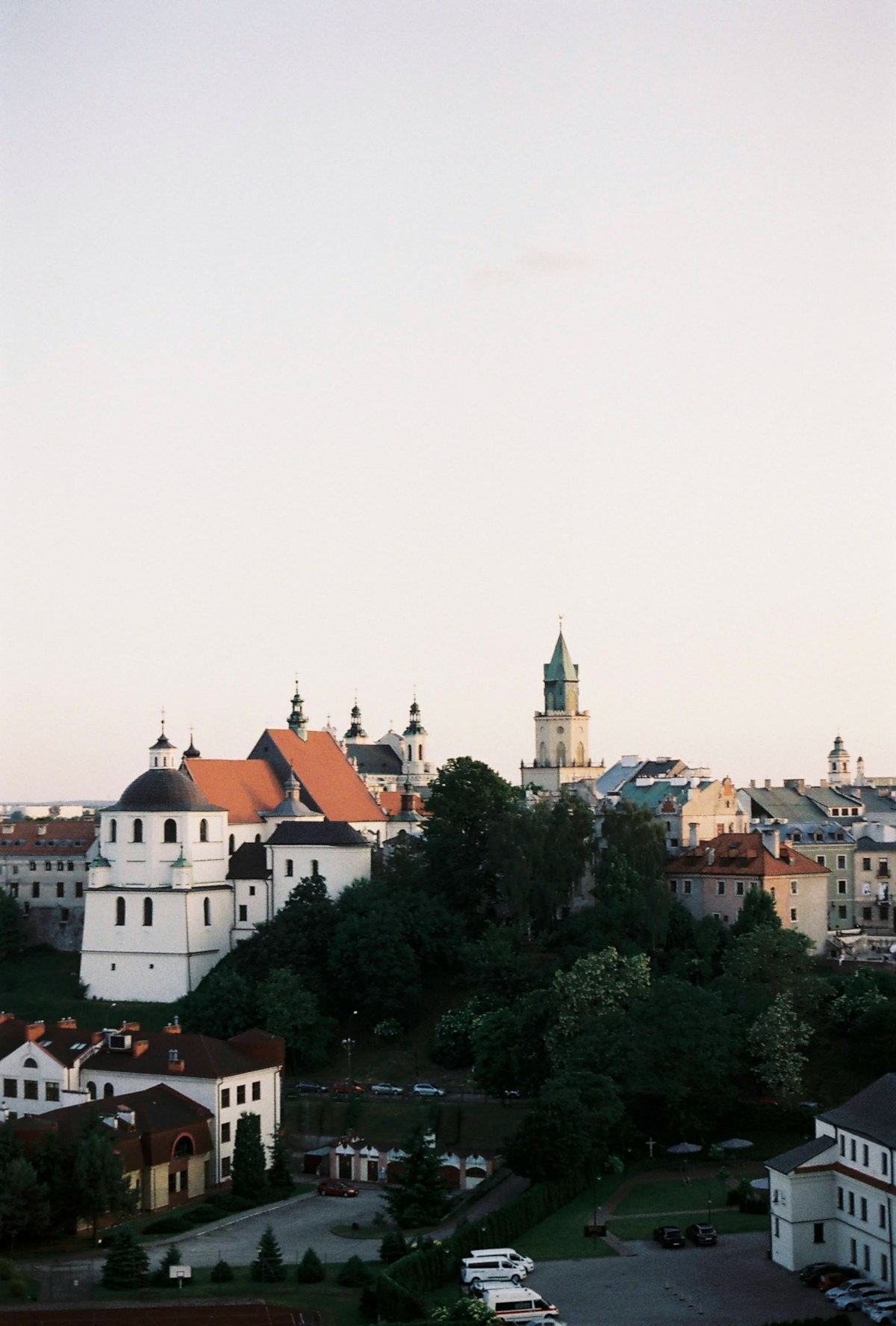
Lublin’s position in eastern Poland places it within comfortable range of some of the country’s most distinctive day-trip destinations. Zamość to the southeast is a UNESCO-listed Renaissance city built to a single plan in the 1580s - one of the best-preserved planned towns in central Europe. Kazimierz Dolny to the northwest is a Vistula riverside town with an art colony tradition stretching back a century. Chełm to the east has medieval chalk tunnels under its old town. Roztocze National Park begins 100 km south and offers a completely different, less-visited landscape of quiet forests, ponds, and wild horse populations. All are reachable without a car, though the park options require one.
Zamość - the Renaissance City
Zamość was founded in 1580 by Jan Zamoyski, the Polish Grand Chancellor, to serve as an ideal Renaissance city - a perfectly planned urban environment with a central market square, academic institutions, and defensive walls, all designed by the Italian architect Bernardo Morando. Unlike many historic European centres where different eras have overlaid each other, Zamość retains its original 16th-century proportions largely intact. UNESCO listed it as a World Heritage Site in 1992.
The Great Market Square (Rynek Wielki) is the starting point for any visit: a 100-by-100-metre space surrounded by arcaded merchant houses with Renaissance loggia and ornate polychrome facades. The town hall in the centre has a distinctive star-shaped staircase, designed in the Mannerist style. Walk the full perimeter of the square before entering any buildings - the visual coherence of the ensemble is its greatest quality.
The Zamość Cathedral (Kolegiata Zamojska), a few steps from the square, contains the tomb of Jan Zamoyski himself and a treasury. Entry approximately 5 PLN (€1.20) as of 2026. The Zamość Museum in one of the market arcades covers the town’s founding history, the Zamoyski family, and the wartime period (Zamość was the site of a Nazi Germanisation operation that displaced over 100,000 Polish villagers in 1942–43). Entry approximately 15 PLN (€3.50) as of 2026, closed Mondays.
The defensive bastions and walls (partially restored) are walkable on the east and north sides. The Rotunda (2 km from the centre, taxi approximately 15 PLN/€3.50 as of 2026) is a former fortification converted into an execution site by the German occupiers - a sober memorial to the thousands killed there.
Getting there from Lublin: PKS and private buses run from Lublin Dworzec Autobusowy several times daily, journey approximately 2–2.5 hours, fare approximately 22–32 PLN (€5–7.50) as of 2026. By car: approximately 90 km southeast via S17, around 1 hour 15 minutes.
Allow: Full day. Half a day covers the square and cathedral; a full day includes the museum, bastions, and Rotunda.
Kazimierz Dolny on the Vistula
Kazimierz Dolny has been a favourite destination for Polish artists and intellectuals since the interwar period. The town sits on a sharp bend in the Vistula, surrounded by chalk hills, with a ruined hilltop castle, a Renaissance market square, and a cluster of galleries and craft workshops. It is one of the most atmospheric small towns in Poland.
The market square (Rynek) is ringed by merchant houses dating to the 16th century, the most famous of which are the Przybyłów Houses - two adjoining residences with extraordinary carved facades depicting Old Testament scenes. The parish church on the square has a Renaissance tower added in the early 17th century. A short walk up the hill brings you to the ruined castle (entry approximately 10 PLN/€2.30 as of 2026, open year-round) with Vistula valley views in both directions.
Góra Trzech Krzyży (Hill of Three Crosses), directly above the castle, has a 360-degree panorama over the town and river. The walk takes approximately 20 minutes from the market square.
The town has a well-developed cafe and restaurant scene; freshwater fish from the Vistula (sum, szczupak, sandacz) appears on menus along the waterfront, typically 40–65 PLN (€9–15) for a main course as of 2026.
Getting there from Lublin: PKS buses from Lublin Dworzec Autobusowy, journey approximately 1.5 hours, fare approximately 15–22 PLN (€3.50–5) as of 2026. Several departures per day in summer; check timetables at e-podroznik.pl. By car: approximately 70 km northwest via road 824 and 801, around 1 hour.
Allow: Full day; the return buses are infrequent in the afternoon, so check your return option before arriving.
Chełm - Chalk Tunnels and an Unusual Town
Chełm is a medium-sized town 65 km east of Lublin that most visitors overlook entirely. That’s largely the point of going - the Podziemia Kredowe (Underground Chalk Tunnels) beneath the old town are one of the more unusual visitor attractions in eastern Poland. From the 13th century, townspeople quarried chalk from tunnels under the streets to use as building material; over six centuries the network expanded to 40 km, most of it now sealed. A 2 km tourist route through the tunnels (open year-round, tours approximately hourly, entry approximately 20 PLN/€4.60 as of 2026) passes through chambers up to 12 metres high and explains the geology and history of the excavations.
Above ground, Chełm’s old town hill (Górka Chełmska) has a skyline of Baroque church towers and a Greek Catholic basilica reflecting the town’s pre-war mixed population. The Regional Museum in the old Piast tower covers the Chełm region’s layered history.
Getting there from Lublin: Regular PKS and private buses from Lublin Dworzec Autobusowy, journey approximately 1–1.5 hours, fare approximately 14–20 PLN (€3.20–4.60) as of 2026. PKP trains also run Lublin–Chełm approximately hourly, journey approximately 1 hour, ticket approximately 15–22 PLN (€3.50–5) as of 2026.
Allow: Half a day (tunnels + old town + lunch).
Roztocze National Park
Roztocze is a narrow highland ridge running diagonally across the Lublin upland, straddling the Polish-Ukrainian border, and the national park at its heart is one of the least-visited protected areas in central Poland. The landscape is a mix of old-growth pine and beech forest, sandstone gorges, mill ponds, and river meadows. Wildlife includes beaver, white stork, and the konik - a semi-wild horse descended from the ancient tarpan, which is reintroduced at the Roztocze Wildlife Rehabilitation Centre near Zwierzyniec.
The park’s most accessible entrance is at Zwierzyniec, a small town 100 km south of Lublin that served as the private estate village of the Zamoyski family. The Echo Pond (Stawy Echo) a short walk from the town centre is a photogenic complex of mill ponds in a forest setting, popular with birdwatchers. The trail around the main pond loop takes approximately 45 minutes.
Getting there from Lublin: By car, approximately 100 km south via S17 and road 858 through Zamość; journey approximately 1 hour 30 minutes. Limited bus services via Zamość to Zwierzyniec run several times daily; journey approximately 2.5–3 hours including connection. Car is recommended for exploring beyond the Zwierzyniec area.
Allow: Full day for car visitors who want to see the park interior; half a day for the Echo Pond loop on foot from Zwierzyniec.
Planning Your Day Trips
Priorities: Zamość is the essential day trip from Lublin - nowhere else in Poland looks quite like it, and the 90-minute bus journey is manageable. Kazimierz Dolny is the most rewarding for atmosphere and river scenery. Chełm is a half-day option best combined with an afternoon back in Lublin. Roztocze requires a car and a full day to justify the distance.
Combining: Zamość and Roztocze (Zwierzyniec) are 30 km apart and can be combined in a single full day by car - Zamość old town in the morning, Zwierzyniec trails in the afternoon. Kazimierz Dolny does not combine easily with the others (it’s in the opposite direction).
For structured itineraries including Zamość, guided day tours from Lublin cover the key sites with transport included. For Roztocze and flexible castle combinations, car hire in Poland gives the most flexibility.
Search hotels in Lublin on Booking.com
More in Lublin
- Lublin City Guide - overview, old town, castle, and Jewish heritage
- Things to Do in Lublin - markets, museums, and the Majdanek memorial
- Where to Stay in Lublin - hotels and guesthouses by area and price
- Zamość City Guide - full guide to Poland’s Renaissance city, 90 minutes southeast
- Kazimierz Dolny from Warsaw - also reachable from the capital, 130 km north
- 2 Weeks in Poland Itinerary - how Lublin and eastern Poland fit a longer route