Search hotels in Oświęcim on Booking.com
Oświęcim is a working Polish town of approximately 38,000 people, 60 km west of Kraków. It is visited almost entirely because of the Auschwitz-Birkenau concentration and extermination camp complex that operated on its outskirts between 1940 and 1945, where approximately 1.1 million people - the vast majority of them Jews from across occupied Europe - were murdered. The memorial and museum on the sites of both camps is the most visited Holocaust site in the world.
Visiting requires preparation, both practical and emotional. This guide covers how to plan a respectful and meaningful visit.
Auschwitz I - The Main Camp
The original Auschwitz camp, situated at the edge of the town, was established in April 1940 in existing Polish Army barracks. Between 1940 and 1945 it held Polish political prisoners, Soviet POWs, and Jewish deportees, and functioned as both a concentration camp and extermination site. The red-brick blocks, the entrance gate with the Arbeit Macht Frei inscription, the execution wall between Blocks 10 and 11, and the crematorium are all preserved.
Entering Auschwitz I between 10:00 and 15:00 requires a guided tour, booked in advance at auschwitz.org. Standard guided tours cost approximately 70 PLN / €16 as of 2026 and take 3.5 hours. Alternatively, guided tours from Kraków include return transport and an authorised guide, which is convenient if you are day-tripping from the city. Study tours (specialist thematic programmes) and group tours are also available at higher prices.
Before 10:00 and after 15:00, independent visits to Auschwitz I are permitted. The exhibition blocks - covering the deportation and killing processes, the evidence of victims (confiscated shoes, suitcases, hair), and the liberation in January 1945 - are self-guided with maps provided.
Practical details: Open daily. Summer hours typically 07:30–19:00; winter hours shorter. A large visitor centre provides orientation, cloakrooms, café, and bookshop. Photography is permitted in most outdoor areas and some blocks; follow staff guidance on restrictions.
Auschwitz II-Birkenau
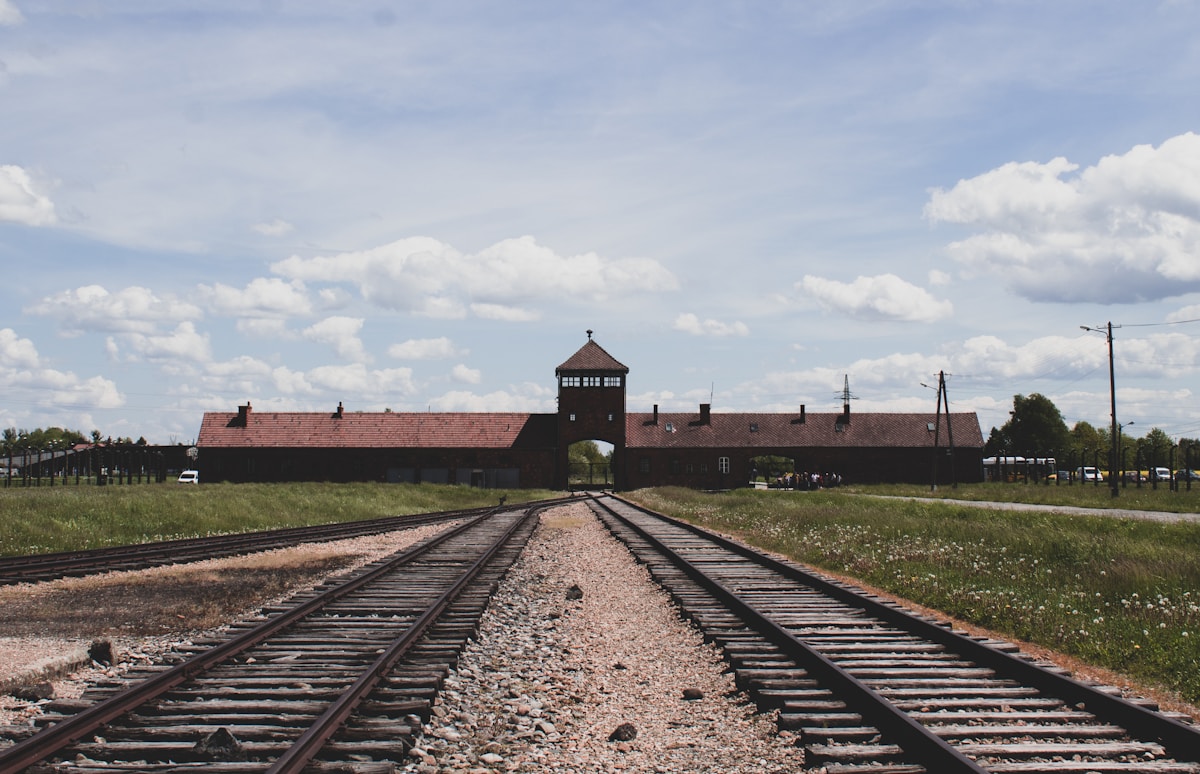
Birkenau (3 km from Auschwitz I by shuttle bus, included in many tour packages) is where the extermination process occurred at industrial scale from 1942 onwards. The site is vast - approximately 175 hectares - and the majority of the original barrack structures have not survived, but the remaining buildings, the ruins of the gas chambers and crematoria blown up by the SS before retreat, the railway ramp, and the memorial monument at the far end of the site together convey the scale of what happened here.
Entry to Birkenau is free at any time. An authorised guide is not required. Booking tickets for Auschwitz I in advance is strongly recommended - sold-out dates are common from June through August. Most visitors spend 1.5–2 hours here after visiting Auschwitz I. Walking the length of the railway ramp to the ruins of Crematoria II and III, and then to the international memorial, takes about 45 minutes at a respectful pace.
The contrast between Auschwitz I - preserved in its original state with the horror concentrated in objects - and Birkenau - a vast empty field where the absence and scale are the horror - makes the two-site visit essential.
The Auschwitz Jewish Centre
The Auschwitz Jewish Centre (Centrum Żydowskie w Oświęcimiu) on ul. Berka Joselewicza 5 operates in the Chevra Lomdei Mishnayot synagogue, one of only two surviving synagogues from the prewar Jewish community of Oświęcim. Before the war, Jews made up approximately 58% of the town’s population - a prosperous, long-established community whose life was completely destroyed between 1941 and 1943.
The museum inside the synagogue is small but carefully curated, covering prewar Jewish life in Oświęcim through photographs, documents, and personal accounts. It is a valuable counterweight to the camp visits: Auschwitz-Birkenau shows what was done to the people; the Jewish Centre shows who the people were before.
Entry is free; donations are encouraged. Open Sunday to Friday.
Oświęcim Castle
The ruined Piast Castle above the Soła River in the town centre is a less-visited site. The surviving tower and walls date from the 14th century; the castle was the seat of the Oświęcim principality before its incorporation into Kraków. The ruins are modest but the riverbank setting is pleasant. Entry is free. It provides a moment of quiet in a different register from the memorial.
Visitor Notes
A visit to Auschwitz-Birkenau is emotionally demanding. Allow time after the visit before onward travel; the town has cafés and quiet areas suitable for recovery. Many visitors find the Jewish Centre a helpful complement - ending on the human life that existed here before the war, rather than on the destruction, feels appropriate to many. The memorial requests that visitors dress modestly, refrain from eating on site, and treat the space with the gravity it deserves.
More in Oświęcim
- Oświęcim City Guide - visitor overview, transport, and booking information
- Where to Stay in Oświęcim - hotels near the memorial
- Food to Try in Oświęcim - restaurants and cafés for visitors
- Visiting Auschwitz-Birkenau - the full history and visitor planning guide
- Auschwitz Tours from Kraków - guided tours with transport included from Kraków
- Kraków City Guide - the city from which most visitors come, 70 km east
- Kraków History Guide - broader historical context for Kraków and the region
- 3 Days in Kraków Itinerary - how Auschwitz fits a day in a Kraków-based trip