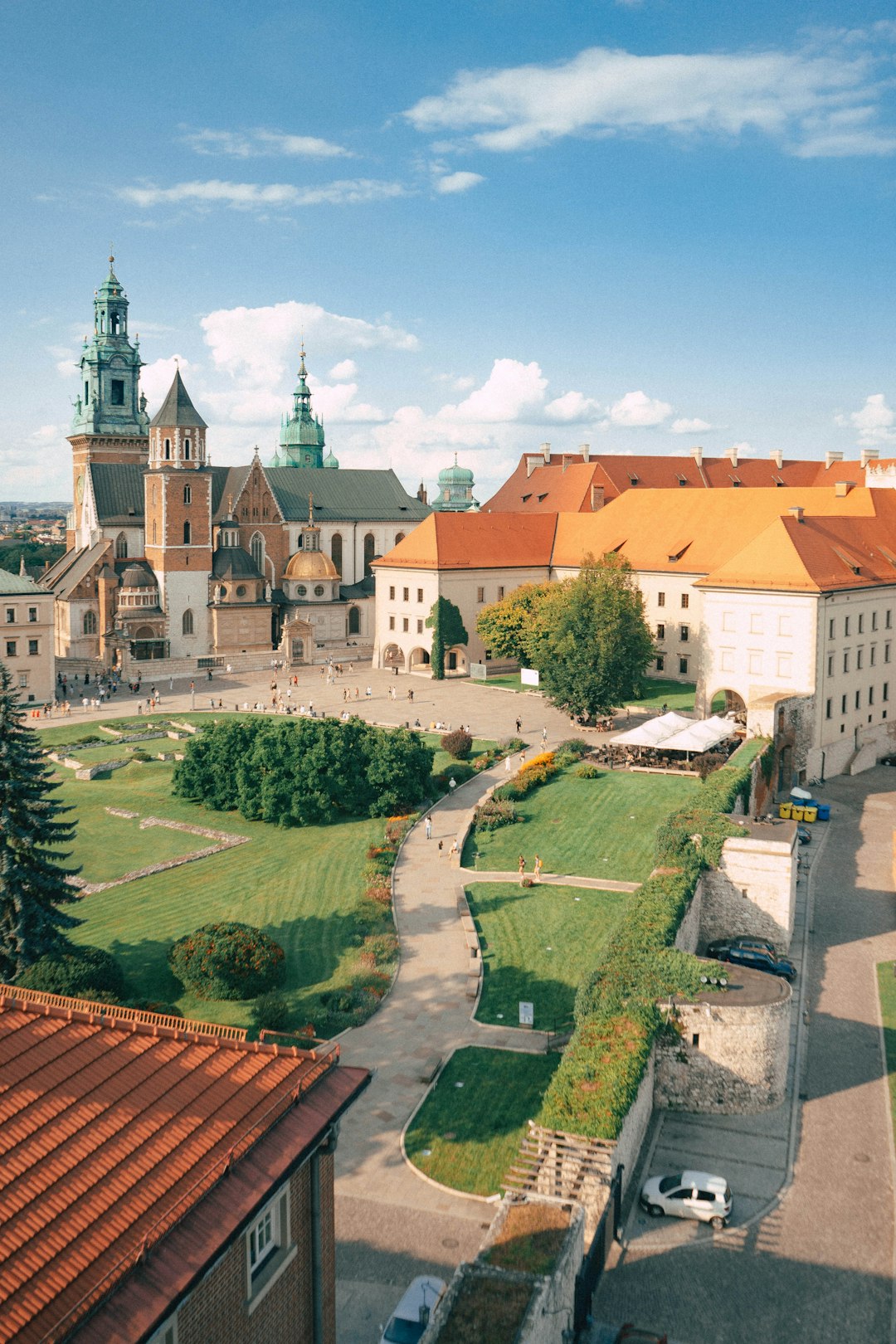
Kraków is Poland’s most visited city and one of the best-preserved medieval urban centres in central Europe. Unlike Warsaw, which was rebuilt from rubble after the Second World War, Kraków’s Old Town survived largely intact - its Gothic churches, Renaissance courtyards, and medieval fortifications are the real thing, not reconstructions.
But Kraków is not just beautiful architecture. It is a city whose history tracks the full sweep of Polish and European history: medieval power, Renaissance scholarship, religious diversity, royal ambition, devastating occupation, and the near-total destruction of a Jewish community that had lived here for five centuries.
The Medieval Capital
Kraków was first recorded in 965 AD in a merchant’s account of a trade route through central Europe. It grew around Wawel Hill - a rocky limestone outcrop above the Vistula River that offered natural defensive advantages - and became the seat of Polish kings in the 11th century. For the next 500 years, Wawel was the political, cultural, and religious heart of Poland.
By the 14th century, Kraków was a major European city, connected to the Hanseatic trade network and home to one of the oldest universities in central Europe - the Jagiellonian University, founded in 1364 and still operating today.
In 1596, King Sigismund III Vasa moved the royal court to Warsaw, which was more central to the expanded Polish-Lithuanian Commonwealth. Kraków retained its symbolic and religious importance - coronations and royal burials continued here - but it was never again the political capital.
Wawel Castle and Cathedral
Wawel Hill dominates the southern edge of the Old Town. The complex includes the Royal Castle, the Cathedral, and the dragon’s den cave (a beloved Kraków legend).
Entry: Multiple routes cover different sections of the castle complex. Approximate costs as of 2026:
- State Rooms (Komnaty Królewskie): approximately PLN 35 per adult
- Royal Private Apartments: approximately PLN 30
- Royal Cathedral (Katedra Wawelska): approximately PLN 15; bell towers approximately PLN 10 extra
- Dragon’s Den: approximately PLN 9
Entry to the State Rooms is free on Sundays, though some sections - including the Cathedral treasury and the bell towers - charge a small fee regardless of day. Combined tickets are available at the ticket office on Wawel Hill.
Opening hours vary by section and season; most areas open daily from approximately 9am. Check the current schedule at wawel.krakow.pl before your visit as specific sections close on different days.
The Cathedral (Katedra Wawelska) is the burial place of Polish kings and national heroes. The gold-domed Sigismund Chapel is considered the finest example of Renaissance architecture in Poland. The 11-tonne Sigismund Bell, cast in 1520, is rung only on major national and religious occasions.
What to see: Allow 3–4 hours for the full Wawel complex. The State Rooms contain the finest collection of 16th-century Flemish tapestries in Poland, commissioned by King Sigismund Augustus. The Royal Treasury and Armory houses coronation regalia, historic weapons, and the Szczerbiec coronation sword.
Getting there: A 15-minute walk south from the Main Market Square along ul. Grodzka, or directly from the bus stop on the southern bank near the castle entrance.
Rynek Główny - The Main Market Square
At 200 metres by 200 metres, Rynek Główny is one of the largest medieval market squares in Europe and has been the commercial and social centre of Kraków for 750 years. At its centre stands the Cloth Hall (Sukiennice), a Gothic and Renaissance trading hall still used as a market on its ground floor, with the National Museum’s gallery of 19th-century Polish painting above.
The square is ringed by Gothic and Renaissance townhouses and dominated on the northwest corner by St Mary’s Basilica (Bazylika Mariacka), whose asymmetric twin towers contain one of the most significant Gothic altarpieces in Europe - a carved limewood triptych created by Wit Stwosz (Veit Stoss) between 1477 and 1489. Entry to the Basilica: approximately PLN 15 as of 2026; open daily, times vary.
Kazimierz - The Jewish Quarter
Kazimierz was established as a separate town adjacent to Kraków in 1335 by King Casimir III (Kazimierz Wielki), who also invited Jewish communities to settle here under royal protection. By the 16th century it had become one of the most important centres of Jewish learning and culture in Europe.
The community thrived for nearly 500 years until the German occupation in 1939. Jews from Kazimierz were forced into a ghetto in the Podgórze district across the Vistula, then deported to extermination camps. Of approximately 65,000 Jews living in Kraków before the war, fewer than 6,000 survived.
Today Kazimierz is a mix of Jewish heritage sites - most of them still functioning - with a dense concentration of cafés, restaurants, and independent shops that have made it one of the most popular neighbourhoods in the city.
Key sites:
- Old Synagogue (Stara Synagoga): the oldest surviving synagogue building in Poland, now housing a museum of Jewish history and ritual. Entry approximately PLN 15 per adult as of 2026. Closed Saturday. Open Sun 9am–4pm, Mon 10am–2pm, Tue–Thu and Sat (for services) hours vary - check muzeumkrakowa.pl.
- Remuh Synagogue and Cemetery: a small 16th-century synagogue still active for religious services, with a Renaissance-era cemetery attached. Entry approximately PLN 10 as of 2026.
- Temple Synagogue (Synagoga Tempel): a magnificent 19th-century Reform synagogue with ornate interior decoration. Entry approximately PLN 12 as of 2026.
- Galicia Jewish Museum: a photography-led museum documenting Jewish life in Polish Galicia. Entry approximately PLN 25 as of 2026; open daily.
Walking: Kazimierz is compact and easily covered on foot. Allow half a day for the main sites.
Oskar Schindler’s Enamel Factory
The Fabryka Emalia Oskara Schindlera - made famous internationally by Steven Spielberg’s 1993 film Schindler’s List - is now the MOHiK museum (Muzeum Historyczne Kraków) flagship site documenting the history of Kraków during WWII.
The museum covers the German occupation of Kraków between 1939 and 1945: the persecution of the Jewish community, the establishment of the Kraków ghetto in Podgórze, Schindler’s role in protecting approximately 1,200 Jewish workers, and the broader fate of the city under Nazi rule.
Entry: approximately PLN 26 per adult as of 2026. Free on Thursdays (timed entry tickets still required - book via muzeumkrakowa.pl as Thursday slots sell out quickly).
Opening hours: 10am–8pm in summer (approximately May–October), 10am–4pm November–April; closed Tuesday and the first Monday of each month. Always verify current hours at muzeumkrakowa.pl.
Booking: Advance booking is strongly recommended. The museum regularly sells out in peak season. Book at muzeumkrakowa.pl or secure your slot through Tiqets.
Getting there: The factory is in the Podgórze district, across the Vistula from Kazimierz. A 15-minute walk from Kazimierz via the Kładka Ojca Bernatka footbridge, or tram from central Kraków to Plac Bohaterów Getta.
Guided Tours
Walking tours combining Kazimierz, the former ghetto in Podgórze, and Schindler’s Factory typically cost approximately PLN 100–150 per person for a small group as of 2026. These tours provide context that is difficult to replicate independently, particularly for the WWII-era sites. Several operators run tours in English from Kraków’s Old Town daily. Browse guided history tours of Kraków to compare routes and operators.
Search hotels in Kraków on Booking.com
Explore Kraków
- Kraków City Guide - full overview, hotels, restaurants, and transport
- Kazimierz - the Jewish Quarter - synagogues, history, and cultural life
- Day Trips from Kraków - Auschwitz, Wieliczka, and Zakopane
- Oświęcim and Auschwitz - visitor information for the memorial site
- Wieliczka Salt Mine Visitor Guide - the UNESCO-listed mine 14 km from Kraków, a natural day-trip pairing
- Warsaw Rising Museum - for context on Poland’s WWII experience beyond Kraków
- Visiting Auschwitz-Birkenau - practical guide to the memorial site west of Kraków
- 3 Days in Kraków Itinerary - how to structure a short break that covers the key history sites