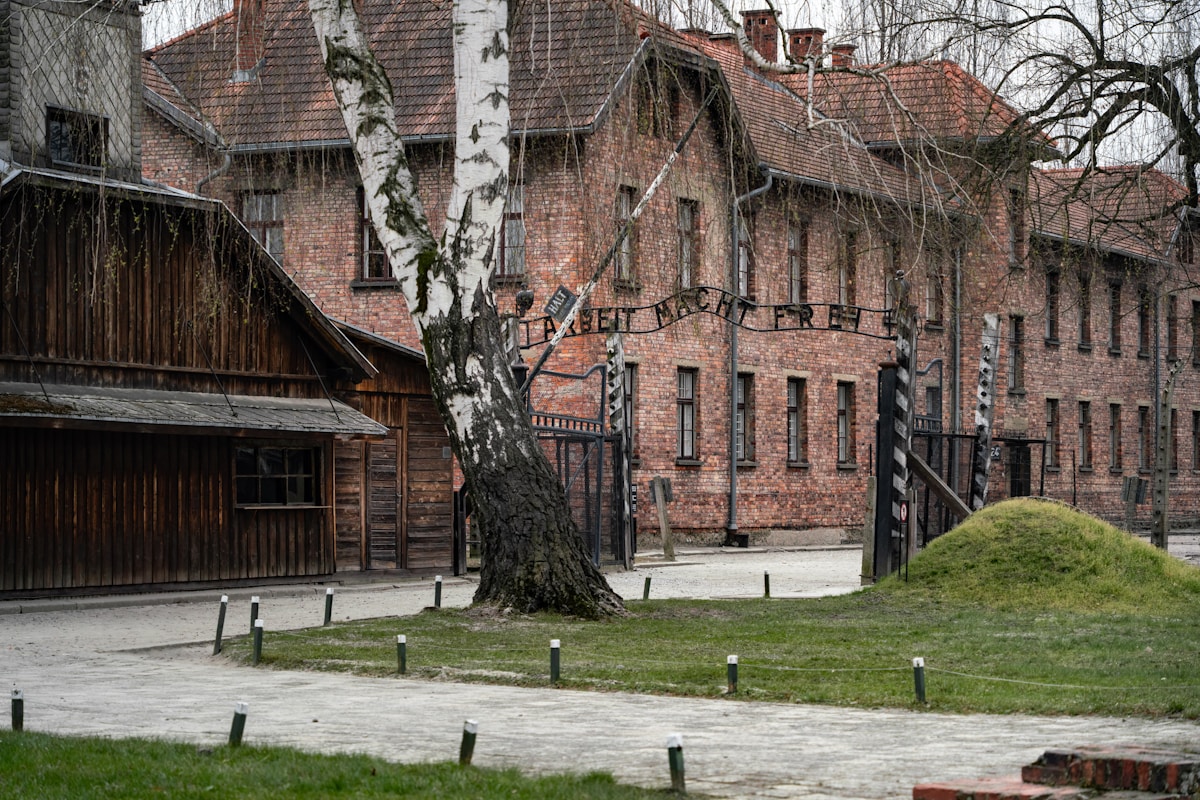
Auschwitz-Birkenau is the largest Nazi concentration and extermination camp ever built, and visiting it is one of the most profound and sobering experiences available to a traveller in Poland. The site operated between 1940 and 1945, and during that time approximately 1.1 million people - the vast majority of them Jewish - were murdered here. It was liberated by Soviet forces on 27 January 1945, a date now observed as International Holocaust Remembrance Day.
UNESCO added Auschwitz-Birkenau to its World Heritage List in 1979 under its original German name, specifically to mark it as a site of exceptional historical importance for all humanity. The Memorial receives well over two million visitors a year.
The Two Sites
The Memorial consists of two distinct complexes separated by roughly 3 kilometres.
Auschwitz I is the original camp, located on the outskirts of Oświęcim - a mid-sized Polish city about 70 kilometres west of Kraków. This is where the infamous gate bearing the inscription Arbeit Macht Frei (“Work Sets You Free”) stands. The original brick barracks here have been preserved and converted into exhibition halls documenting the history of the camp, the Nazi persecution of Jews and other groups, conditions inside the camp, and the liberation. Personal belongings confiscated from prisoners - shoes, suitcases, eyeglasses, hair - are displayed in glass cases. The scale of these objects is deeply affecting in a way that numbers alone cannot be.
Auschwitz II-Birkenau, approximately 3 kilometres away, is far larger. This was the dedicated extermination site, where deportees arrived by train, were selected on the ramp, and most were taken immediately to the gas chambers. The vast, flat landscape punctuated by guard towers and the remains of barracks stretches almost to the horizon. Walking through Birkenau communicates scale in a way that no photograph can.
Entry, Tickets and Booking
Individual visitors to Auschwitz I must take a guided tour - self-guided entry is not permitted unless you arrive before 8am or after 3pm (check the Memorial’s current policy at auschwitz.org as this varies by season). Guided tours cost approximately PLN 70–100 per adult as of 2026.
Birkenau (Auschwitz II) has free entry for self-guided visits at all times.
Combined guided tours covering both sites cost approximately PLN 100–130 per adult as of 2026 and are run by guides licensed by the Memorial.
Booking is mandatory for guided tours and cannot be overstated. In peak summer months (June–August), guided time slots sell out 2–3 months ahead - this is not an exaggeration. Book directly at visit.auschwitz.org as early as possible. Third-party booking platforms often charge higher fees for the same tours. Study tours for educational groups require separate advance arrangements.
If you are joining an organised tour from Kraków, transport and guiding are typically bundled together at approximately PLN 100–150 per person as of 2026 - a straightforward option if you prefer not to manage the logistics independently. Browse guided tours to Auschwitz from Kraków to compare what each operator includes.
Opening Hours
Hours vary by season. As a general guide:
- June–August: 8am–7pm
- May and September: 8am–6pm
- April and October: 8am–5pm
- March and November: 8am–4pm
- December–February: 8am–3pm
The site is closed on Christmas Day (25 December) and New Year’s Day (1 January). Always confirm current hours at auschwitz.org before your visit.
Getting There from Kraków
By bus: PKS Oświęcim buses depart from the MDA bus station in Kraków (adjacent to the main train station) roughly every hour. The journey takes approximately 1.5 hours and costs approximately PLN 20 each way as of 2026. Get off at the Oświęcim stop nearest the Memorial.
By organised tour from Kraków: Numerous operators offer minibus tours from Kraków’s Old Town departing between 8am and 10am. Prices typically run approximately PLN 150–200 per person as of 2026, including transport, a licensed guide, and sometimes Wieliczka Salt Mine as a combined day. This is the most common approach for first-time visitors.
By car: Hire a car in Poland if you want to visit independently and set your own pace - the drive from Kraków takes approximately 1.5 hours via the A4 motorway. Parking is available near both sites.
Practical Details
Luggage restrictions: Large bags, backpacks larger than A4 size, and pushchairs/strollers are not permitted inside the exhibition buildings. Lockers are available near the entrance at Auschwitz I for a small fee. Travel light - a day bag or small shoulder bag is fine; a large rucksack is not.
Photography is permitted in the outdoor areas of both sites. Inside some exhibition halls at Auschwitz I, photography is restricted - follow the signage and guidance from your tour guide.
Duration: A combined guided tour of Auschwitz I and Auschwitz II-Birkenau takes approximately 3.5 hours. If you want to spend additional time in Birkenau beyond the guided route - and many visitors do - allow a full day. The two sites are linked by a free shuttle bus during opening hours.
Food and facilities: There is a cafeteria on site near Auschwitz I serving simple meals and drinks. Options in the immediate surrounding area are limited. If you are travelling independently, bringing food is practical.
Dress code: Dress respectfully. The Memorial’s guidance is smart casual. Avoid shorts, short skirts, or sleeveless tops. Out of respect for the people who were killed here, this is not a place for beachwear.
Emotional preparation: Auschwitz-Birkenau is not simply a tourist attraction. It is a site of mass murder, and it is designed to communicate that with full clarity. Many visitors find it deeply distressing - particularly the personal belongings exhibits and the preserved gas chambers at Birkenau. Allow time to process your experience before and after the visit. There is a reflection and remembrance area at Birkenau near the ruins of the crematoria.
Best Time to Visit
Avoid July and August if you have flexibility. Summer brings the highest visitor numbers - thousands of people move through the site in tight groups, which affects both the atmosphere and the practical experience of moving between buildings. The queues at peak times can be lengthy, and some visitors find the density of crowds jarring given the nature of the site.
April–June and September–October offer a much more considered visit: mild temperatures, shorter queues, and a greater sense of space at Birkenau in particular.
Book the earliest available slot when visiting in any month. The first entry of the morning (typically 8am) consistently has smaller groups than midday arrivals, and the atmosphere in the early hours - before the main wave of day-trippers arrives - is noticeably quieter.
Weekdays over weekends. If your travel dates allow it, visiting Tuesday–Thursday rather than Friday–Sunday reduces both crowds and waiting time at shuttle connections.
Winter visits (December–February) are quieter but cold - temperatures regularly drop below freezing. Birkenau’s exposed landscape in particular is very cold in winter. Dress in proper thermal layers if you are visiting off-season.
Nearby: Wieliczka Salt Mine
If you are spending several days based in Kraków, Wieliczka Salt Mine makes an excellent separate day trip - it is an entirely different experience (UNESCO-listed, 800-year history of salt mining, extraordinary underground chapels) and pairs well with Auschwitz as two very different lenses on Polish history. Do not attempt both on the same day.
Before You Go
Book at auschwitz.org well in advance. Confirm current opening hours before your visit. If travelling by bus from Kraków, check current PKS timetables at the bus station or through the Polish PKS portal. For attraction tickets across Poland, Tiqets is a useful platform for securing timed entries at other UNESCO sites on your itinerary.
Search hotels in Poland on Booking.com
Related Guides
- Oświęcim City Guide - the town where the camp is located; accommodation, transport, and the Jewish Museum
- Kraków City Guide - the most practical base for a visit; hotels, transport to the site, and what to do before and after
- Day Trips from Kraków - Auschwitz, Wieliczka, and Zakopane
- Auschwitz Tours from Kraków - guided tour options and what they include
- Warsaw Rising Museum - another essential WWII memorial site, in the capital
- Wieliczka Salt Mine - the other UNESCO day trip from Kraków, a contrast in Polish history