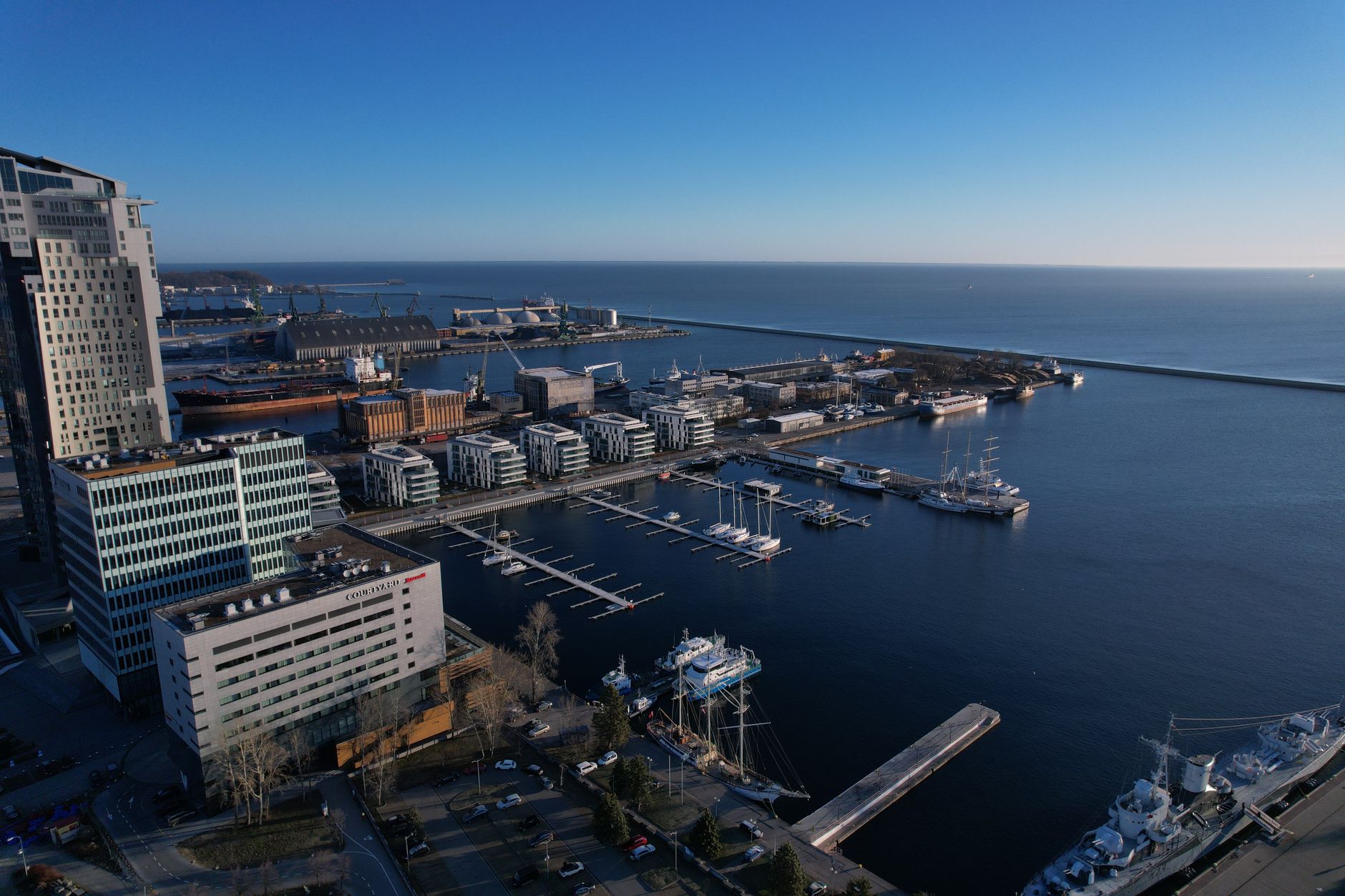
Gdynia is the youngest city in the Tri-City metropolitan area and, in some ways, the most unusual. Founded as a major seaport in the 1920s after Poland regained access to the Baltic Sea, it was designed and built almost entirely in the Art Deco and modernist styles - giving it a visually coherent cityscape that stands apart from Gdansk’s Hanseatic baroque and Sopot’s resort character. The result is a city of wide boulevards, white-rendered apartment buildings, and a confident maritime identity that rewards exploration.
For visitors, Gdynia works well as a Tri-City base, particularly if you want direct beach access at Orłowo or prefer a quieter evening atmosphere than Sopot’s summer season offers. It’s less immediately photogenic than Gdansk’s Old Town, but those who look past the surface find a genuinely interesting city.
Search Gdynia hotels on Booking.com
Understanding Gdynia’s Layout
Gdynia runs along a roughly north-south axis between the city centre and the sea. Key areas:
Śródmieście (City Centre) - the commercial and transport hub. Gdynia Główna station is here, along with the main shopping streets, restaurants, and hotels. The Art Deco architecture is concentrated in the streets around ul. 10 Lutego, ul. Świętojańska, and the area between the station and the seafront.
Waterfront and Seafront Promenade (Bulwar Nadmorski) - a broad promenade along the sea with the museum ships (Dar Pomorza and ORP Błyskawica) at the northern end near the passenger terminal. The most atmospheric part of Gdynia for walking.
Orłowo - a quieter beach district at Gdynia’s southern end, roughly 5 km from the centre. Known for the chalk cliff dropping to the beach, a small river estuary, and a long sandy beach. Well-connected by tram from the city centre.
Redłowo and Dąbrowa - residential districts above the city centre, mainly relevant for visitors who find cheaper guesthouse rates here and are happy to walk or tram to the seafront.
Neighbourhood Overview
Śródmieście and Waterfront
The obvious base for most visitors. Walking distance to Gdynia Główna station, the Art Deco streets, the seafront promenade, and the museum ships. Most of the city’s hotels are here. Evenings are quieter than Sopot - Gdynia has bars and restaurants but it’s a working city rather than a resort.
Best for: Visitors exploring the Tri-City, those interested in architecture, travellers who want convenient transport.
Orłowo
A separate village-like neighbourhood at the south of the city with direct beach access and a very different atmosphere from the centre. The beach drops from a cliff with views along the coast. Connected to the centre by trams and buses (approximately 20–25 minutes).
Best for: Families, beach-focused visitors, those who want peace and a beachside location without resort-town prices.
Budget Options (130–230 PLN / $32–57 USD per night)
Hostel Gdynia - A well-run central hostel near Gdynia Główna station. Dorm beds from approximately 60–90 PLN ($15–22 USD); private doubles from 150–200 PLN ($37–50 USD). Good common areas and reliable for making connections with other travellers.
Guest House Orłowo - A well-reviewed guesthouse in the Orłowo district, rated 8.7 on Booking.com. Within walking distance of the beach and cliff. Doubles from approximately 170–230 PLN ($42–57 USD). A characterful option for those who want to be away from the city centre and close to the beach. Book early in summer.
Mid-Range Hotels (260–500 PLN / $65–125 USD per night)
Hotel Antares - A well-maintained mid-range hotel in the city centre, within 10 minutes’ walk of the waterfront. 60 rooms from approximately 280–420 PLN ($70–105 USD). Reliable service, good breakfast, and a location that works well for both Gdynia sightseeing and Tri-City day trips.
Hotel Nadmorski - One of Gdynia’s longest-established hotels, in a modernist building near the seafront. 160 rooms from approximately 300–480 PLN ($75–120 USD). Restaurant on site, sea views from upper floors, and easy walking access to the museum ships and promenade.
Hotel Gdynia Boutique - A boutique hotel in the city centre, a 7-minute walk from Gdynia Central Beach. Praised by guests for quiet and comfortable rooms with good value for money. From 270–420 PLN ($67–105 USD).
Upper Mid-Range and Business Hotels (500–800 PLN / $125–200 USD per night)
Courtyard by Marriott Gdynia Waterfront - On the waterfront boulevard, steps from Kosciuszko Square and the beach. Rated 9.1 by 4,000+ Booking.com guests. Rooms have large windows with sea or bay views; the Searcle restaurant serves regional Kashubian-inspired cuisine. Fitness centre with sea views and underground parking. Rates from approximately 480–650 PLN ($120–162 USD) as of 2026.
Getting to and Around Gdynia
From Gdansk (most common approach):
- SKM commuter train from Gdansk Główny: approximately 35 minutes to Gdynia Główna. Trains run every 10–20 minutes. Cost approximately 6–9 PLN ($1.50–2.25 USD).
- Taxi: 70–100 PLN ($17–25 USD), approximately 35–50 minutes depending on traffic.
From Sopot:
- SKM: approximately 12 minutes to Gdynia Główna. Very frequent service.
From Gdansk Airport:
- Bus or taxi to Gdansk Główny, then SKM to Gdynia. Total approximately 50–70 minutes.
- Private transfer direct: approximately 90–150 PLN ($22–37 USD), 35–50 minutes.
Within Gdynia:
- The city centre and waterfront are walkable from Gdynia Główna station.
- Trams connect the centre to Orłowo in approximately 20–25 minutes. Buy a 24-hour ZTM Gdańsk ticket for unlimited travel across the Tri-City network.
Seasonal Pricing Notes
July–August: Peak season. Beach days at Orłowo and the summer atmosphere make this Gdynia’s busiest period for leisure visitors. Prices increase 30–50% over shoulder season.
Gdynia Sailing Days (usually June): One of Poland’s major sailing events. The harbour fills with yachts and the city is busy. Hotels near the waterfront fill up; book in advance if visiting during this period.
Gdynia Design Days (usually June–July): A design and architecture festival that uses Gdynia’s modernist buildings as venues. Hotels in the centre see increased demand during the festival.
September–October: Excellent shoulder season. The sea is still swimmable at Orłowo in September, prices drop, and the Art Deco streets are enjoyable without summer crowds.
November–March: Quiet and cheap. The maritime character of the city is most visible in winter - the harbour, the museum ships, and the wide seafront promenade take on a different, more austere atmosphere.
Compare prices and availability across all Gdynia hotels - Search hotels in Gdynia.
First-Timer vs Returning Visitor
First visit: Stay in Śródmieście near Gdynia Główna. Spend the morning at the museum ships (Dar Pomorza and ORP Błyskawica), walk the waterfront promenade, then explore the Art Deco streets on ul. 10 Lutego. Afternoon: take the SKM to Gdansk or Sopot.
Returning visitor: Base in Orłowo for a beach-focused stay and explore the coastal clifftop path. Visit the Sea Towers (Gdynia’s landmark skyscrapers) and the Gdynia City Museum for a deeper understanding of the city’s rapid 20th-century growth.
See our full Gdynia city guide and our things to do in Gdynia for a complete picture of the city. For the best beaches and waterfront areas, the Gdynia beaches and waterfront guide covers the options in detail.