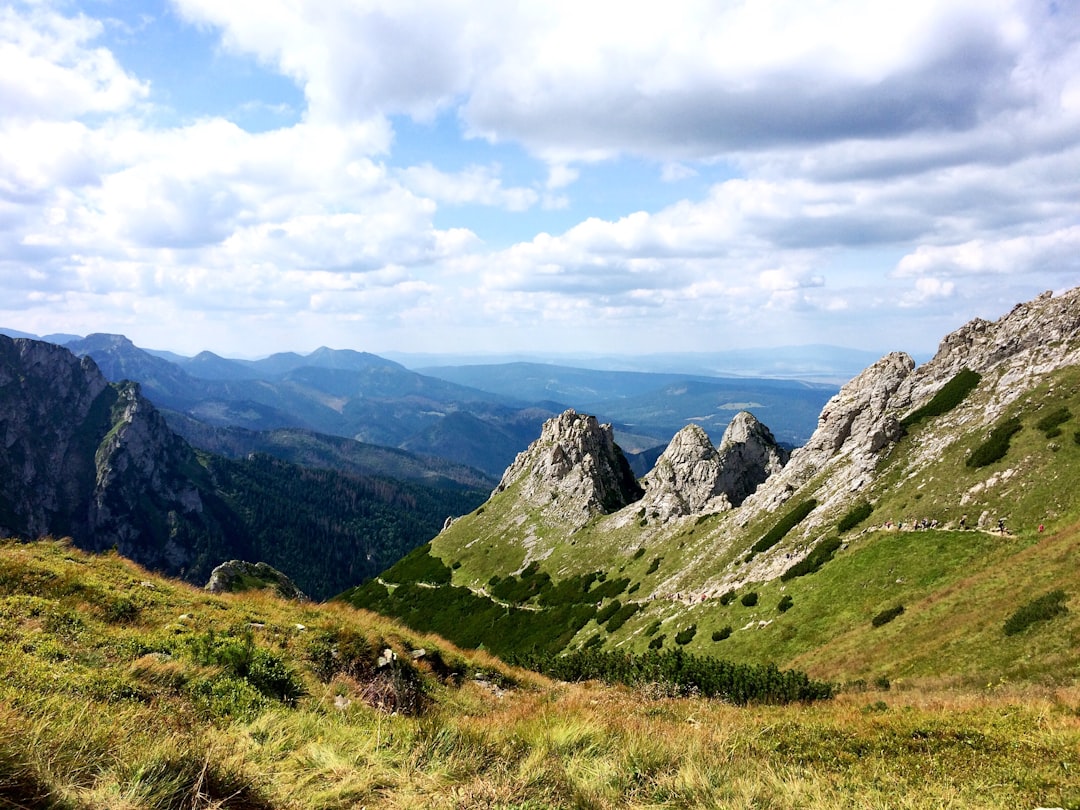
Poland’s outdoor offering covers a surprising range of terrain: alpine peaks in the south, forested highlands, a chain of glacial lakes in the north-east, and over 500 km of sandy Baltic coast. Here is a guide to the country’s best outdoor activities, with practical information on where to go, what it costs and when to go.
Hiking and Trekking
Tatra Mountains - Poland’s Best Hiking
The Tatras near Zakopane are the most dramatic landscape in Poland and the country’s only true alpine environment. The national park (Tatrzański Park Narodowy, TPN) has a well-maintained trail network covering peaks above 2,000 m, glacial lakes and forested valleys.
Most popular trails:
- Morskie Oko (Eye of the Sea) - 9 km return from the Palenica Białczańska car park, approximately 300 m ascent. The lake sits at 1,395 m. Allow 3–4 hours return. Minibuses run from the car park to the trailhead (approximately PLN 16 return). Free entry to the lake itself; TPN daily fee approximately PLN 7 as of 2026.
- Rysy Summit (2,503 m, Poland’s highest point) - a demanding 10 km route from Morskie Oko, not suitable for beginners; allow a full day. Best attempted July–September.
- Giewont (1,894 m) - accessible from Zakopane via Kalatówki; 4–5 hours return, steel chains assist the final section. Entry from Zakopane; TPN daily fee applies.
Zakopane itself is a 2-hour bus ride from Kraków (approximately PLN 20–25 as of 2026). Accommodation in Zakopane ranges from approximately PLN 80 per night at guesthouses (pensjonaty) to PLN 350+ at higher-end hotels during peak season. Guided Zakopane and Tatra tours include cable car access and local trail guidance - useful for a first visit when navigating the trail network.
Karkonosze National Park - Lower Silesia
The Karkonosze (Giant Mountains) on the Czech border are lower than the Tatras but quieter and more accessible. The highest point, Śnieżka (1,603 m), can be climbed from Karpacz in 3–4 hours via the Pielgrzymy trail. National park daily fee approximately PLN 8. Karpacz is 30 minutes from Jelenia Góra by bus.
Bieszczady Mountains - South-East Wilderness
The Bieszczady in south-east Poland are the wildest part of the country: no mountain trams, no cable cars, and far fewer people than the Tatras. The open highland meadows (połoniny) are stunning in late summer when the grasses turn gold. The Tarnica summit (1,346 m) is the highest point; allow 3–4 hours return from Wołosate village. No entry fee. The area is most easily explored with a rental car from Rzeszów or Sanok.
Roztocze National Park
Between Zamość and the Ukrainian border, Roztocze is a plateau of chalk hills, pine forests and stream valleys. The main hiking route from Zwierzyniec to Józefów covers 49 km and can be walked in 3–4 days. Accommodation in basic forest huts costs approximately PLN 30–60 per night.
Kayaking and Canoeing
Masurian Lake District
The Masurian Lakeland in north-east Poland has over 2,000 interconnected lakes. Kayaking is a Polish tradition here: families typically rent kayaks for a multi-day trip through the canal-linked lakes, camping at lakeside sites each night.
Practical details:
- Kayak hire: approximately PLN 60–80 per day, or PLN 300–400 for a week from operators in Mikołajki, Giżycko or Augustów as of 2026
- Organised kayak expeditions (including transport back to the starting point): approximately PLN 200–300 per person for a 3-day route
- Best season: July and August for warmth; June and September for fewer crowds
The most popular route runs from Sorkwity to Ruciane-Nida (approx. 100 km over 5–6 days). Alternative routes on the Krutynia River offer calmer water and excellent wildlife.
Dunajec River Gorge
Rafting the Dunajec through the Pieniny Mountains is one of Poland’s most scenic outdoor experiences. Traditional wooden rafts (flisy) carry passengers through a dramatic limestone gorge at the Polish-Slovak border.
Practical details:
- Departure from Sromowce Niżne or Kąty, 35 km south-east of Nowy Targ
- Duration: 2–2.5 hours for the main 18 km stretch
- Cost: approximately PLN 80–100 per person as of 2026; family tickets available
- Season: April to October; runs regardless of weather
Combined day trips from Kraków (bus transfer + rafting) cost approximately PLN 150–180 per person through local operators. Dunajec Gorge day trips from Kraków can be booked through GetYourGuide with transfers included.
Biebrza and Augustów Canals
The Biebrza Marshes in north-east Poland are the largest remaining wetlands in Central Europe and one of the best places in Europe to see rare wetland birds, including the aquatic warbler and white-tailed eagle. Guided canoe trips through the marshes run from approximately PLN 200–300 per half day from Osowiec-Twierdza.
The Augustów Canal (1824, a listed historic monument) connects the Biebrza to the Niemen River in Belarus. Kayaking a day section from Augustów towards Białystok costs approximately PLN 70–100 for kayak hire including transport.
Cycling
Poland has significantly expanded its cycling infrastructure in recent years. Long-distance routes include:
- Via Jagiellonica - a 1,200 km signed route connecting Kraków to Vilnius via Warsaw and Białystok; good surfaces, varied scenery
- Green Velo - a 2,000 km trail through the Eastern Carpathians, Bieszczady and Lublin highlands; best for experienced tourers
- Baltic Coast Cycle Route (EuroVelo 10) - follows the Baltic shore through Szczecin, Gdańsk and the Hel Peninsula; largely flat, well-signed
- Kraków–Vienna Greenway - 250 km from Kraków to the Slovak border through the Tatra foothills; very popular for weekend touring
Bike hire in Warsaw and Kraków starts from approximately PLN 20–30 per hour or PLN 80–100 per day as of 2026. City bike-share schemes (Veturilo in Warsaw, Wavelo in Kraków) cost approximately PLN 3–5 per 20 minutes.
Winter Activities
Skiing in Zakopane and the Tatras
Zakopane is the centre of Polish skiing, with the Kasprowy Wierch cable car (approximately PLN 95 return as of 2026) giving access to runs on the Polish and Slovak sides of the ridge. Ski pass for local slopes: approximately PLN 120–160 per day. Ski and board rental: approximately PLN 80–120 per day.
For longer runs, the Slovak Tatras just over the border (Jasná resort, 1 hour from Zakopane) have more vertical drop and better snowfall reliability.
Ski Touring and Snowshoeing
The Tatras and Bieszczady are excellent for ski touring from December to March. The Tatras offer technical routes suited to experienced tourers; Bieszczady has gentler terrain. Guided ski touring: approximately PLN 250–350 per day per person from operators in Zakopane.
Sailing
The Masurian Lakes are Poland’s sailing heartland. The season runs from late May to September, peaking in July and August. Yacht charter (bareboat, 7-berth) starts from approximately PLN 1,500–2,500 per week depending on boat size and season. Learn-to-sail courses at the Mazury sailing schools in Giżycko and Mikołajki run 5–7 days for approximately PLN 1,200–1,500 including accommodation.
Wildlife Watching
- Białowieża Forest: European bison, wolf and lynx. Guided entrance to the strictly protected zone costs approximately PLN 100–150 per group.
- Biebrza Marshes: Aquatic warbler, white-tailed eagle, elk. Best in April–May for bird migration. No entry fee to most of the park.
- Rospuda Valley (near Augustów): brown bear occasionally sighted; excellent for elk in autumn. Free access.
- Słowiński National Park (Baltic coast): shifting sand dunes up to 42 m high; grey seals in winter. Entry approximately PLN 8.
Practical Planning Notes
- Book Tatra mountain huts (schroniska) well ahead for July–August; popular huts like PTTK Murowaniec on Hala Gąsienicowa fill up 4–6 weeks in advance.
- National park fees vary: Tatra approximately PLN 7/day, Karkonosze approximately PLN 8/day, Białowieża approximately PLN 20 for the museum complex.
- Weather in the Tatras changes rapidly; carry full waterproofs even in summer.
- The GOPR (mountain rescue service) operates across all Polish mountain ranges and is reachable on +48 985 in an emergency.