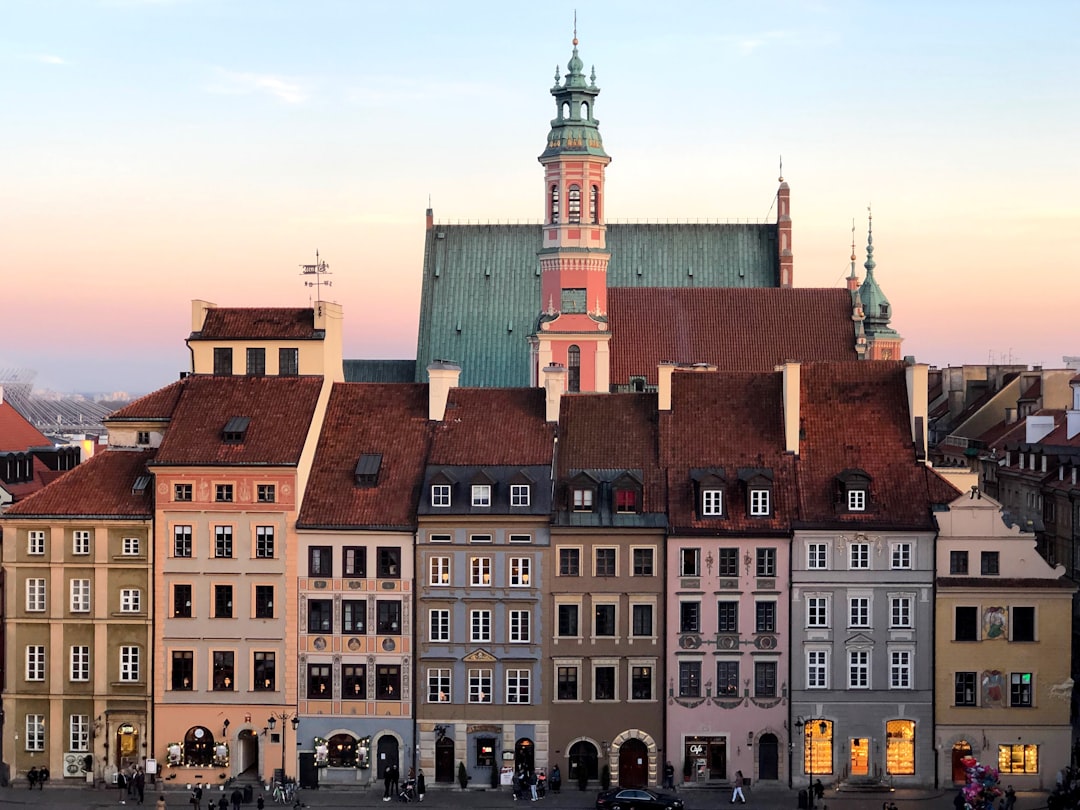
Poland packs a remarkable range of experiences into one country - Gothic castles, Baroque market squares, World War II memorials, salt mines, mountain trails, and amber-strewn beaches all within a few hours of each other. Here are our picks for the best things to do, organised by region and interest.
Historic Old Towns and City Centres
Kraków Main Market Square is the starting point for most visits to Poland. Europe’s largest medieval market square (approximately 200 m × 200 m) is ringed by townhouses, the 14th-century Cloth Hall, and the twin towers of St Mary’s Basilica. Climbing the basilica’s taller tower costs approximately PLN 15 and gives views across the entire Old Town. The square is walkable from the train station in under 15 minutes. A knowledgeable local guide brings the layers of history to life: Krakow: Old Town Guided Walking Tour (from approximately $10 per person as of 2026).
Warsaw’s Royal Route connects the Royal Castle (PLN 40 adult entry as of 2026, closed Mondays) in the Old Town to Wilanów Palace (approximately PLN 50 as of 2026) 8 km to the south. Walking it takes around two hours; the route passes the Presidential Palace, Łazienki Park, and several Chopin memorial benches. A guided walk covers the Royal Castle exterior, Market Square, and Warsaw Mermaid statue in two hours: Warsaw: Old Town Guided Walking Tour (from approximately $12 per person as of 2026).
Wrocław Market Square (Rynek) is arguably Poland’s most photogenic: four town halls, a fountain, and over 200 colourful tenement houses. The gnome trail - over 400 small bronze dwarf figurines hidden across the city - keeps younger visitors (and adults) occupied for hours. Entry to the town hall underground history museum costs approximately PLN 20.
Gdańsk Long Lane and Long Market form the historic core of Poland’s principal Baltic port. The Neptune Fountain (1633) at the eastern end is free to approach; the nearby Amber Museum charges approximately PLN 25 for entry. Gdańsk’s historic centre was almost entirely rebuilt after World War II and is one of the best examples of faithful urban reconstruction in Europe.
World War II and 20th-Century History
Auschwitz-Birkenau Memorial and Museum in Oświęcim is among the most important historical sites in Europe. Entry to the main Auschwitz I site and the larger Birkenau camp is free for self-guided visits; guided tours (highly recommended) cost approximately PLN 85–100 per person and must be booked in advance at auschwitz.org. The site is located approximately 60 km from Kraków; organised transport costs approximately PLN 60–80 return. For a fully organised day out with transport, licensed guide, and entry included, book directly: From Krakow: Auschwitz-Birkenau Guided Tour & Hotel Pickup (from approximately $45 per person as of 2026).
Warsaw Rising Museum documents the 63-day 1944 uprising against Nazi occupation. Entry costs approximately PLN 30 (free on Sundays). Allow at least two hours; the 3D film in the basement and the B-24 Liberator replica suspended from the ceiling are highlights. Located at ul. Grzybowska 79, open Tuesday to Friday 8:00–18:00 and weekends until 20:00.
Malbork Castle, 60 km south-east of Gdańsk, is the world’s largest Gothic castle by land area. Entry costs approximately PLN 60–80 depending on the guided route chosen. Direct trains from Gdańsk take around 40 minutes and cost approximately PLN 15–25.
Salt Mines, Forests and Natural Wonders
Wieliczka Salt Mine is the most visited single attraction in Poland. The UNESCO-listed mine has been worked continuously since the 13th century; chapels, sculptures and entire chambers have been carved from salt at depths of up to 135 m. Standard tour tickets cost approximately PLN 109 per adult as of 2026, booked online. The mine is 15 km from Kraków; minibuses run frequently from ul. Bosacka. To book a guided tour with transport from central Kraków: From Krakow: Wieliczka Salt Mine Tour with Transfer (from approximately $30 per person as of 2026).
Białowieża Forest straddles the Polish-Belarusian border and is home to Europe’s last primeval lowland forest and the largest free-roaming herd of European bison. Entry to the strictly protected zone requires a licensed guide (approximately PLN 100–150 per person as of 2026). The Białowieża National Park visitor centre charges approximately PLN 20 entry; bison can often be spotted near the European Bison Show Reserve (approximately PLN 12 entry).
Bieszczady Mountains in south-east Poland are the wildest and least-visited part of the country’s highlands. The open meadows (połoniny) above the treeline are accessible from July to September; hiking the Tarnica summit (1,346 m, the highest point in Bieszczady) from Wołosate takes 3–4 hours return and costs nothing. The nearest large town is Sanok, roughly 90 km away; a rental car or organised tour is the most practical option.
Mountains and Trekking
Tatra Mountains are Poland’s most dramatic landscape and the country’s only alpine environment. Zakopane, the gateway town, is 2 hours from Kraków by bus (approximately PLN 20). The most popular route is the trail to Morskie Oko (Eye of the Sea) lake - a 9 km walk from the car park with approximately 300 m of ascent; the lake itself is free to visit but the bus to the trailhead costs approximately PLN 16 each way. In winter, Zakopane’s ski slopes charge approximately PLN 120–160 per day for a lift pass.
Karkonosze National Park in Lower Silesia has some of the most accessible summit hiking in Poland. The Śnieżka peak (1,603 m) can be reached from Karpacz in 3–4 hours; entry to the national park costs approximately PLN 8 per day.
Baltic Coast and Lakes
Sopot Pier is the longest wooden pier in Europe (511 m) and extends into the Baltic Sea. Entry costs approximately PLN 11 as of 2026. The beach directly behind the pier is one of Poland’s most popular and is free to use. Sopot is 20 minutes by train from Gdańsk (approximately PLN 5).
Masurian Lake District in north-east Poland has over 2,000 lakes linked by rivers and canals - ideal for sailing, kayaking and cycling. Mikołajki and Giżycko are the main bases. Kayak hire starts from approximately PLN 60–80 per day as of 2026; a week-long sailing charter (boat only) starts from approximately PLN 1,500.
Art, Culture and Museums
POLIN Museum of the History of Polish Jews in Warsaw covers a thousand years of Jewish life in Poland. Entry costs approximately PLN 35 (free on Thursdays). Located on the site of the former Warsaw Ghetto, next to the Ghetto Heroes Monument; allow at least two hours for a full visit.
National Museum in Warsaw holds Poland’s largest art collection, including medieval altar paintings, Jan Matejko’s monumental history canvases, and an impressive collection of Faiyum portraits. Entry costs approximately PLN 20 as of 2026; free on Tuesdays.
Muzeum Narodowe we Wrocławiu (National Museum in Wrocław) is worth a visit for its Silesian Gothic sculpture collection and the original 14th-century Panorama Racławice painting (a separate building, approximately PLN 40 as of 2026).
Food and Drink Experiences
Warsaw food tour gives a good introduction to Polish cuisine: pierogi, żurek, bigos and flaki are all on the menu. Guided street food tours start from approximately PLN 150–200 per person and run 3–4 hours. Most depart from the Old Town or Praga district. Browse Warsaw food tours on GetYourGuide to compare operators and departure points.
Kraków vodka and food tour visits distilleries, milk bars and traditional restaurants over 3–4 hours. Tours cost approximately PLN 180–250 per person and include tastings at multiple venues including Starka and Bimber distilleries. Kraków food and vodka tours can be booked in advance with free cancellation.
Milk bars (bar mleczny) are subsidised canteens serving traditional Polish food at very low prices - a full hot lunch typically costs PLN 20–30. Warsaw’s Bar Bambino (ul. Krucza 21) and Kraków’s Bar Mleczny Pod Temidą (ul. Grodzka 43) are reliable choices.
Day Trips from Major Cities
Kraków day trips: Auschwitz-Birkenau (60 km, 1.5 hrs by organised transport), Wieliczka Salt Mine (15 km, 30 mins), Zakopane and the Tatras (100 km, 2 hrs by bus, approximately PLN 20).
Warsaw day trips: Żelazowa Wola - Chopin’s birthplace (54 km, day trips from approximately PLN 80 including entry); Łódź (130 km, 1 hr 20 min by train, approximately PLN 30–40); Toruń (220 km, 2 hrs 30 min by train, approximately PLN 50).
Gdańsk day trips: Malbork Castle (60 km, 40 min by train); Sopot and Gdynia via the Trójmiasto commuter rail (10–30 min, approximately PLN 5–8); Hel Peninsula beaches (60 km, 1.5 hrs by PKP Intercity).
Practical Tips
- Book Auschwitz tours and Wieliczka Salt Mine tickets at least 2–3 weeks ahead in summer. For everything else, last-minute Poland tours on GetYourGuide cover Kraków, Warsaw, and Gdańsk without the advance booking requirement.
- Poland Rail (PKP Intercity) covers most intercity routes; book online at intercity.pl for the cheapest fares.
- The Warsaw and Kraków tourist cards (24–72 hours) bundle public transport with free museum entry and can be worth buying if you plan to visit multiple paid attractions.
- Most attractions are free or significantly reduced for children under 4 and EU students.