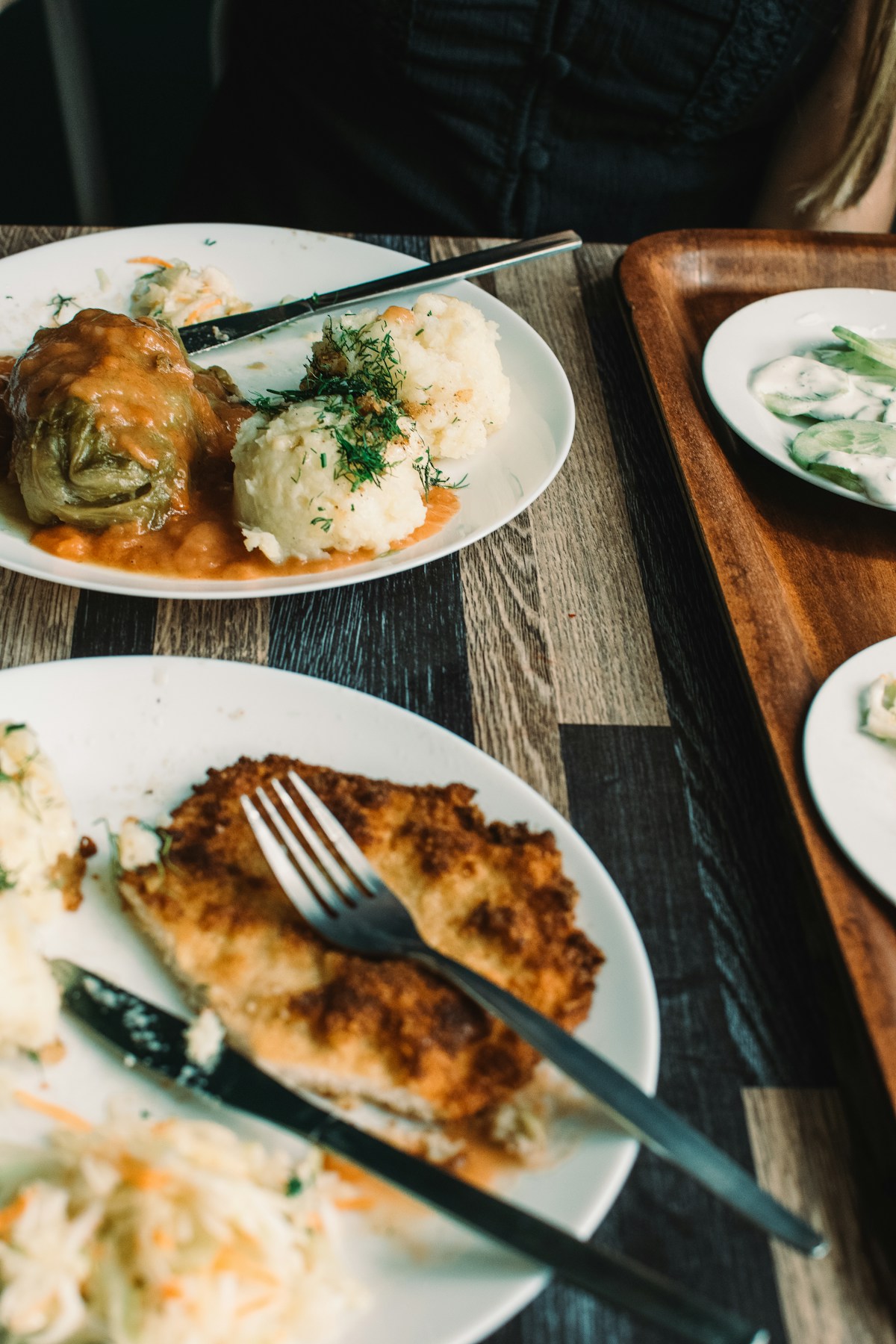
Rzeszów’s food scene reflects its Subcarpathian location - a region historically shaped by highland and lowland cooking traditions, Jewish heritage, and the influence of nearby Ukraine and Slovakia. The best way to eat here is in the Old Town restaurants that serve proper regional food rather than generic Polish-international menus, and at the city’s surviving milk bars for an affordable midday meal.
Regional Dishes Worth Ordering
Żurek - a sour rye soup with white sausage and hard-boiled egg - is on almost every menu in the city and is one of the most satisfying starters in Polish cooking. In several Old Town restaurants it comes served in a hollowed bread bowl (żurek w chlebie), which is both practical and genuinely good. Expect to pay approximately 18–28 PLN / €4–6.50 as of 2026.
Gołąbki (stuffed cabbage rolls with minced pork and rice in tomato sauce) is a Subcarpathian staple. Portions are generous; a main course typically runs approximately 35–50 PLN / €8–11.50 as of 2026. The version here tends to be saucier and more heavily seasoned than Warsaw versions.
Bigos (hunter’s stew of sauerkraut, fresh cabbage, pork, and sometimes game) is best ordered in autumn and winter when restaurants have slow-cooked batches from the previous day or week. Quality bigos improves with each reheating; a good version should be dark, fragrant with bay leaf and allspice, and faintly sweet from the cooked-down tomato. Approximately 25–38 PLN / €6–9 as of 2026.
Pierogi ruskie (dumplings filled with potato and farmer’s cheese, fried in butter with caramelised onion) are the classic version and available everywhere. More interesting are the mushroom-and-sauerkraut pierogi (especially at Christmas), and some restaurants offer a Subcarpathian version with smoked sheep’s cheese. A plate of 8–12 pierogi costs approximately 25–40 PLN / €6–9 as of 2026.
Placki ziemniaczane (potato pancakes, sometimes served with sour cream and mushroom sauce or with goulash) are a regional variant worth trying - heartier than the Warsaw version and more likely to come with meat accompaniment.
Restaurants in the Old Town
Restauracja Karpacka on or near the Rynek is one of the better options for traditional Subcarpathian cooking in a historic interior. The menu centres on regional meat dishes, soups, and seasonal specials. Mains run approximately 45–75 PLN / €10–17 as of 2026; the bigos and game dishes are usually worth ordering. Book ahead for Friday and Saturday evenings.
Pod Telegrafem is a long-standing Old Town restaurant with reliable cooking and a broad menu that covers both Polish standards and some grilled meat dishes. It attracts a local clientele as much as tourists; the lunch specials (danie dnia) represent good value at approximately 35–45 PLN / €8–10 for soup and main as of 2026.
Czarny Kot is a café-bar hybrid that works as well for a lunch as for an evening drink. The food is lighter - sandwiches, soups, and daily specials - but quality is consistent and it has a more contemporary atmosphere than the traditional restaurants. Lunch approximately 30–45 PLN / €7–10 as of 2026.
Restauracja Staromiejska (Old Town Restaurant) in or near the market square offers a classic sit-down experience with tablecloths, waitress service, and a menu that includes game in season. Expect to spend approximately 50–90 PLN / €11–21 for a main course as of 2026.
Milk Bars and Budget Eating
Several bar mleczny operate near the Rynek and in the university quarter. These canteen-style eateries serve bigos, pierogi, various soups, and daily meat dishes at prices that haven’t kept pace with inflation - you can eat a filling lunch for approximately 25–35 PLN / €6–8 including soup and a main. They close in the early afternoon; arrive before 1 pm for the best selection.
The covered market hall near the town centre is worth a visit for fresh produce, local cheeses, and smoked meats. It opens mornings Tuesday through Saturday and is where locals shop rather than tourists.
Cafés and Pastries
The cafés under the arcades of the Rynek are good for coffee and cake mid-afternoon. Local bakeries (piekarnia) typically sell makowiec (poppyseed roll), sernik (cheesecake), and szarlotka (apple cake) - all standard Polish pastry staples. A slice of sernik or szarlotka with coffee costs approximately 18–26 PLN / €4–6 as of 2026 at a café; from a bakery counter, considerably less.
Practical Notes
Most Old Town restaurants take card payments; milk bars and some market stalls are cash only. Tipping is not mandatory but 10% is standard in sit-down restaurants for good service. Poland tours departing from Rzeszów or Kraków cover the Subcarpathian region and can include local food experiences alongside the major sights. Lunchtimes (noon to 2 pm) are busy at traditional restaurants; dinner reservations are advisable at weekends. Most kitchens close around 10–11 pm on weekdays.
Book a Rzeszów Food Experience
Rzeszów’s Subcarpathian food traditions - shaped by Polish, Jewish, Ukrainian, and Slovakian influences - are worth understanding before you order. Tours covering the Subcarpathian region typically include tastings of regional specialities such as żurek w chlebie (sour rye soup in a bread bowl), forest mushroom dishes, and Subcarpathian honey, alongside visits to the underground routes and Old Town that define the city. Book a Rzeszów food and culture tour for a practical grounding in eastern Poland’s most distinctive regional cuisine.
More in Rzeszów
- Rzeszów City Guide - overview, top attractions, and getting there
- Things to Do in Rzeszów - underground route, Łańcut Castle, and all activities
- Where to Stay in Rzeszów - hotels and hostels in the Old Town and city centre
- Polish Food Guide - national dishes and Subcarpathian flavours