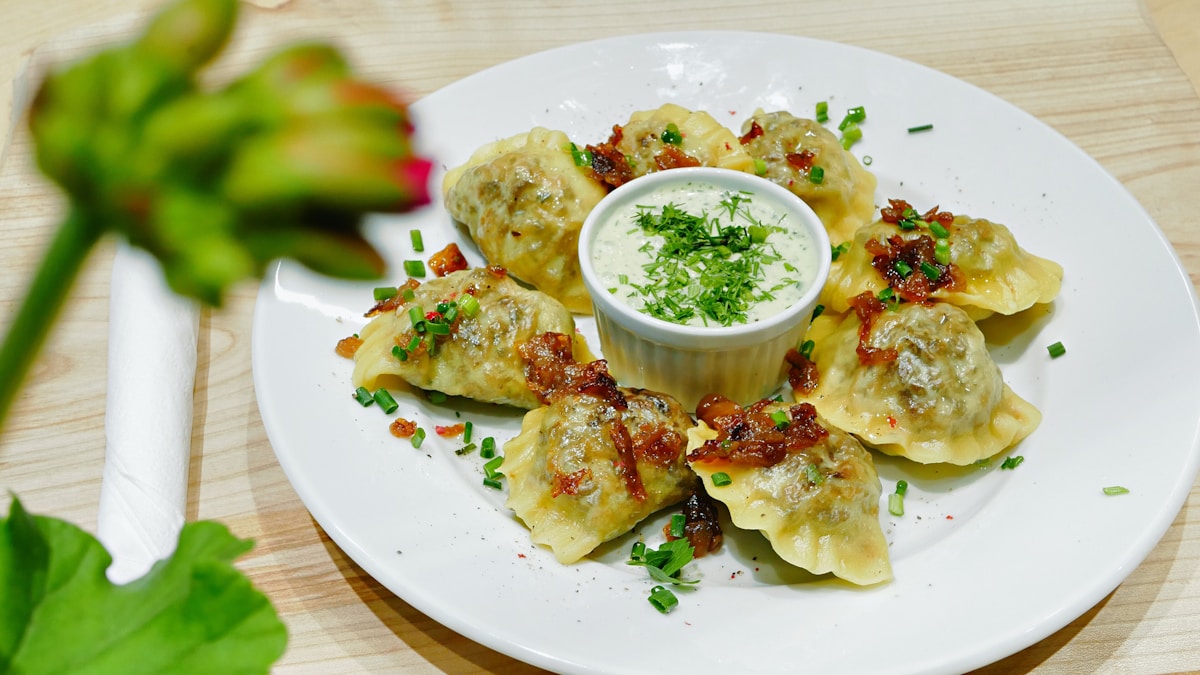
Polish food has spent decades being undersold. Hearty, seasonal, and deeply tied to Central European agricultural traditions, it rewards those who look past the obvious tourist menus and eat where locals actually eat - which in Poland usually means a bar mleczny, a regional pierogi specialist, or a market stall.
Pierogi
Poland’s most famous dish doesn’t need much introduction, but the variations deserve attention. Pierogi are filled dumplings, boiled and then sometimes pan-fried in butter. The standard tourist order covers the main three:
Pierogi ruskie (Russian-style pierogi) - filled with potato, white farmer’s cheese, and sometimes caramelised onion. The name refers to Ruthenia, a historical region, not Russia. This is the most common variety and appears on virtually every Polish menu.
Pierogi z kapustą i grzybami (sauerkraut and mushroom) - sharper, earthier, and traditional at Christmas. Many restaurants serve these year-round.
Pierogi mięsne (meat-filled) - typically ground beef or pork with onion and seasoning. More filling than the vegetarian versions.
Beyond these, you’ll find regional specialties: sweet pierogi filled with fruit (seasonal), pierogi z serem (with sweet white cheese), and in Kraków, pierogi krakowskie with distinctive pinched edges.
A portion of 8–10 pierogi typically costs approximately PLN 18–30 at a regular restaurant as of 2026.
Żurek
Sour rye soup is one of those dishes that sounds odd and tastes essential. Żurek is made from fermented rye flour, giving it a distinct sour tang, and usually contains hard-boiled egg, white kiełbasa, and root vegetables. It’s often served in a hollowed-out bread roll, which is both practical and correct.
You’ll find żurek at traditional Polish restaurants, market stalls, and milk bars. It’s a substantial lunch on its own, typically costing approximately PLN 15–25. Don’t confuse it with żur - żurek is the thicker, richer version.
Bigos
Hunter’s stew is Poland’s slow-food classic - a long-simmered combination of sauerkraut, fresh cabbage, various cuts of pork, kiełbasa, dried mushrooms, and sometimes plums or red wine. Every family has a slightly different recipe, and the stew improves with reheating, which means the best bigos has often been cooking for several days.
Bigos is ideal in winter and appears most prominently on menus from October through March. A portion costs approximately PLN 20–35 at a traditional restaurant.
Kiełbasa
Polish sausage encompasses dozens of varieties. The most common are kiełbasa wiejska (country sausage - coarse-ground pork with marjoram and garlic), kabanos (thin, smoked, eaten as a snack), and kiełbasa śląska (Silesian sausage - finer grind, mildly smoky). At street markets and outdoor stalls, grilled kiełbasa with mustard and bread is the default fast food.
At Kraków’s Stary Kleparz market or Warsaw’s Hala Gwardii food hall, you can buy quality kiełbasa from individual producers - worth doing even if you’re just sampling.
Kotlet Schabowy
Poland’s everyday restaurant anchor: a breaded, pan-fried pork cutlet, usually served with mashed potato and cabbage or beet salad. It’s the Polish schnitzel - reliably filling, reliably cheap, and done best by milk bars who make hundreds per day. Approximately PLN 18–28 at a bar mleczny.
Polish Vodka and Spirits
Polish vodka production predates the Russian claim to the name by several centuries. The two categories worth trying are:
Żubrówka - bison grass vodka from the Białowieża forest region. It has a faint herbal, almost vanillin note and is traditionally mixed with cloudy apple juice (szarlotka or tatanka cocktail). Served by the shot (approximately PLN 8–15 at a bar) or in bottles to take home (approximately PLN 40–70 in supermarkets).
Żytnia - rye vodka, cleaner and more traditional. Good neat or as the base for Polish cocktails.
Craft Beer
Polish craft brewing expanded rapidly after 2010. Warsaw, Wrocław, Kraków, and Gdańsk all have strong craft beer scenes, with local breweries producing IPAs, stouts, sours, and seasonal ales. Wrocław in particular has an impressive concentration of craft pubs. Expect approximately PLN 12–22 for a 0.4 litre craft pour.
Bar Mleczny - Milk Bars
Bar mleczny (literally “milk bar”) are subsidised, canteen-style restaurants that survived the communist era and now serve as some of Poland’s best-value food experiences. The original concept was dairy-based and vegetarian, though modern milk bars include meat. The format is the same: queue at the counter, order from a chalked menu, pay approximately PLN 15–25, collect your tray.
Bar Mleczny Centralny in Kraków and Miś in Warsaw are well-regarded examples that haven’t been entirely overrun by tourists. Order the żurek, the pierogi, and the kotlet schabowy, and you’ll understand why locals eat here instead of spending triple the price next door.
Where to Eat Well by City
Warsaw: Best range of international and modern Polish cuisine. Hala Gwardii food hall in the city centre is an excellent introduction - multiple vendors, good quality, approachable prices. See our Warsaw restaurant guide for specific recommendations. A guided food tour of Poland is the quickest way to understand regional differences in a short trip.
Kraków: The Old Town and Kazimierz (the historic Jewish quarter) offer the densest concentration of traditional and creative restaurants. Stary Kleparz market is good for produce and snacks. See our Kraków restaurant guide for details. Organised food tours in Kraków typically take in the market, Kazimierz, and at least one milk bar in three to four hours.
Wrocław: Strong café culture and a growing food scene. The Market Hall (Hala Targowa) is worth a visit for local products.
Gdańsk: Baltic fish - smoked herring, salmon, and cod - is a regional speciality not always available inland. Try the Old Town restaurants along Mariacka Street for a mix of traditional and modern Polish cooking.
Oscypek
Oscypek is a smoked sheep’s milk cheese produced exclusively in the Tatra Mountains under EU Protected Designation of Origin status. By law, authentic oscypek can only be made between May and September in designated highland villages. The cheese is moulded into a distinctive spindle shape, cold-smoked over spruce wood, and has a firm, salty, gently smoky flavour.
The best way to eat it is grilled flat on a cast-iron pan and served with cranberry jam - the sweet-sour jam cuts the saltiness perfectly. Zakopane’s Krupówki promenade has a line of mountain vendors selling fresh oscypek from approximately 12–20 PLN per piece as of 2026. In Kraków, Delikatesy Europejskie on Rynek Główny stocks vacuum-packed versions for transport home.
Pączki
Polish doughnuts are substantially denser and more serious than their Western counterparts - deep-fried in lard, filled with rose hip jam, plum jam or custard, glazed with orange zest or icing sugar. National tradition demands eating as many as possible on Tłusty Czwartek (Fat Thursday, the last Thursday before Lent), when Warsaw bakeries sell over a million in a single day. Outside Lent, they’re available year-round from every piekarnia (bakery).
A pączek costs approximately 3–6 PLN from a standard bakery as of 2026. Cukiernia Zalewskiego at ul. Wilcza 51, Warsaw is frequently cited as the city’s best. In Kraków, Cukiernia Krakowska on ul. Floriańska near the Barbican produces traditional versions with high-quality jam fillings throughout the year.
Placki Ziemniaczane
Potato pancakes - thick, pan-fried cakes of grated raw potato and egg - are a staple across milk bars and traditional restaurants. The best versions have a deeply crisp outer crust and a soft, almost creamy interior. They’re served with sour cream (ze śmietaną) or with mushroom goulash poured over the top. A portion of three pancakes costs approximately 18–30 PLN as of 2026.
Warsaw: Gospoda Pod Kogutem at ul. Freta 48 (New Town) serves placki with mushroom goulash as a signature dish, approximately 28 PLN as of 2026. Kraków: Restauracja U Babci Maliny at ul. Sławkowska 17 charges approximately 22 PLN and keeps portions generous.
Named Restaurants for Traditional Polish Food
Warsaw
- Bar Mleczny Bambino, ul. Krucza 21 - milk bar classic; full meal under 25 PLN as of 2026
- Hala Gwardii, pl. Żelaznej Bramy 1 - food hall with high-quality Polish and international vendors; most stalls 25–55 PLN as of 2026
- Kwestura, ul. Freta 22 - modern pierogi with inventive fillings; from approximately 30 PLN as of 2026
Kraków
- Bar Mleczny U Stasi, ul. Szewska 3 - full Polish meal under 20 PLN as of 2026
- Restauracja Wierzynek, Rynek Główny 15 - one of Europe’s oldest restaurants (operating since 1364); żurek in bread approximately 32 PLN, mains 55–110 PLN as of 2026
- Bar Stary, ul. Grodzka 5 - daily-changing menu of Polish classics, żurek approximately 16 PLN as of 2026
Wrocław
- Hala Targowa, ul. Piaskowa 17 - historic covered market; cheese, smoked meats and regional produce sold by weight
- Browar Stu Mostów, ul. Świdnicka 38 - craft brewery with a kitchen serving Polish food alongside house-brewed IPAs and stouts; mains approximately 35–55 PLN as of 2026
Gdańsk
- Pierogarnia Mandu, ul. Piwna 5 - pierogi specialist in the Old Town; classic and contemporary fillings from approximately 25 PLN as of 2026
- Restauracja Kubicki, ul. Wartka 5 - one of Gdańsk’s oldest restaurants, specialising in Baltic fish and traditional Polish dishes; mains approximately 45–85 PLN as of 2026
Join a Polish Food Tour
The most efficient way to understand regional Polish food differences is to eat across several cities with someone explaining what is on the plate. Guided food tours in Warsaw and Kraków typically run two to four hours and combine a milk bar stop, a pierogi specialist, a market visit, and either a vodka or craft beer tasting - compressing weeks of independent eating into a single structured experience. For visitors with limited time in Poland, joining a food tour in Warsaw or Kraków early in the trip makes every subsequent meal more legible.
City Food Guides
- Food and Drink in Kraków - restaurants, milk bars, and the Jewish Quarter food scene
- Food and Drink in Warsaw - from Michelin tasting menus to classic milk bars
- Best Restaurants in Kraków - where to eat in 2026, across every budget
- Best Restaurants in Warsaw - Michelin stars, milk bars, and Warsaw food halls
- Kraków Food and Vodka Tour - guided tasting of Polish cuisine and spirits
- Food to Try in Toruń - gingerbread and Old Town restaurants
- Food to Try in Rzeszów - Subcarpathian cuisine and cellar restaurants
- Food to Try in Olsztyn - Warmian cuisine and freshwater fish
- Vegan Guide to Poland - plant-based eating across all the major Polish cities
Plan Your Stay
Find hotels in Poland - search accommodation across all budgets in Poland.