Toruń Travel Guide: Copernicus, Old Town & Gingerbread
Toruń guide: birthplace of Copernicus, UNESCO Gothic Old Town, gingerbread museums, fortifications. Getting there from Warsaw and Gdańsk.
Guides for Toruń
Toruń is one of Poland’s most rewarding secondary cities - a Gothic trading town on the Vistula that survived both the Reformation and the Second World War largely intact, and that today presents a historic core of extraordinary completeness. The city is known internationally as the birthplace of Copernicus and nationally for its gingerbread, but the real reward is simply walking the Old Town: the fortifications, the granaries, the churches, and the broad market squares add up to something genuinely impressive. Guided tours of Toruń are a good option if you want the architectural and historical detail brought to life rather than reading it from signs.
Top Things to See and Do
The Old Town (Starówka)
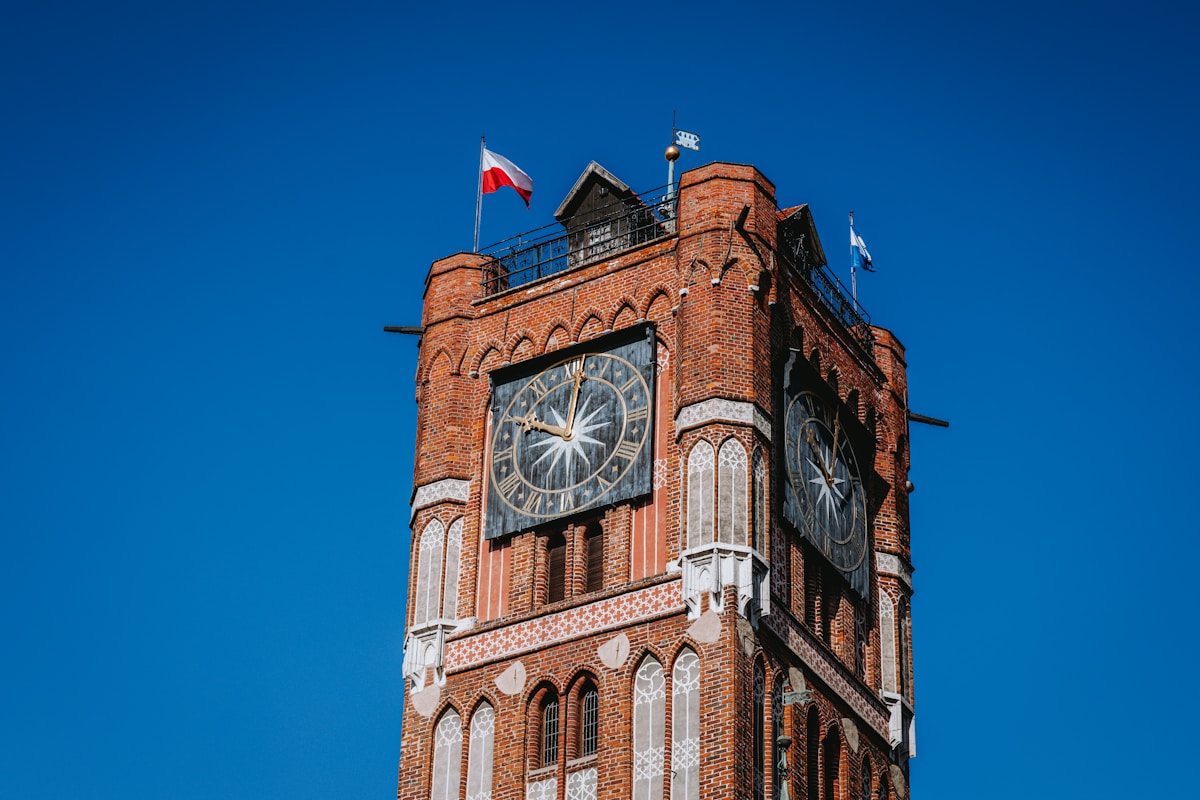
The logical starting point is the Old Town Market Square (Rynek Staromiejski), a large rectangular space dominated by the Town Hall - one of the finest examples of Gothic civic architecture in Poland. The building dates from the late 13th century and was expanded significantly in the 14th and 15th centuries. The tower is open to visitors (tickets approximately PLN 10 as of 2026) and the views from the top take in the full scope of the red-brick city and the Vistula beyond. The ground floor of the Town Hall houses the Regional Museum, which covers the city’s medieval trading history and has a well-presented Copernicus section.
Copernicus House (Dom Kopernika)
The house on ul. Kopernika where Nicolaus Copernicus was born in 1473 is now a museum covering his life and the broader context of the Copernican revolution in astronomy. Entry approximately PLN 15 as of 2026. The museum is more interesting for the building itself - a well-preserved Gothic merchant’s townhouse - than for the exhibits, which are informative but not spectacular. The Copernicus statue in the market square is the city’s most photographed spot and is worth a look as a piece of 19th-century civic pride.
Toruń Cathedral (Cathedral Basilica of SS John the Baptist and John the Evangelist)
The Cathedral is the largest Gothic church in Toruń and one of the oldest in Poland - construction began in the second half of the 13th century and continued for over 150 years. The interior has remarkable medieval frescoes, a Renaissance altarpiece, and the baptismal font where Copernicus was allegedly baptised. The bell tower (separate from the main building) is open to visitors in summer. Free entry to the main church; tower tickets approximately PLN 8 as of 2026.
The Medieval Fortifications
Toruń’s Teutonic Knight fortifications are among the most extensive surviving in Poland. The Teutonic Knights’ Castle (of which substantial ruins remain on the Vistula bank) and the city walls - including the Crooked Tower (Krzywa Wieża), a leaning defensive tower dating from the 14th century - give the city much of its distinctive medieval character. The Crooked Tower leans at a visible angle and is one of the most photographed structures in Toruń; you can enter the base (approximately PLN 5 as of 2026). Walking the full circuit of surviving walls takes approximately 45 minutes.
The Gingerbread Experience
The Piernik Museum (ul. Strumykowa 4) offers hands-on gingerbread-making workshops in a historic setting - you knead dough, press it into traditional wooden moulds, and take your baked piernik home. Workshops run several times daily and cost approximately PLN 40–50 per person as of 2026; book in advance online, especially in summer. The Kopernik brand factory outlet on ul. Żeglarska sells the full range of Toruń-produced gingerbread including formats not available in Warsaw shops.
The New Town
The separate New Town Market Square (Rynek Nowomiejski) is quieter and less touristic than the Old Town equivalent, with a good selection of local cafes and a more authentic daily-life atmosphere. The street connecting the two markets, ul. Różana, is one of the nicest walks in the city. St. Jacob’s Church (Kościół Świętego Jakuba), with its original Gothic furnishings, is worth a short stop.
Guided Tours in Toruń
Walking tours of the Gothic Old Town, Copernicus heritage tours, and guided gingerbread-making workshops are available in Toruń. The city’s architectural history - Teutonic Knights, Hanseatic League trade, and Renaissance prosperity on the Vistula - is considerably richer with a guide who can interpret the surviving buildings rather than simply identifying them.
Browse guided tours in Toruń.
Where to Stay
Toruń has a compact hotel selection concentrated in and around the Old Town. Hotel 1231 in a Gothic granary building on the Vistula bank is the most atmospheric option, with rooms from approximately PLN 350–500 per night as of 2026. Hotel Mercure Toruń Centrum near the Old Town has reliable mid-range rooms from approximately PLN 280–380. For budget options, the Bulvar Hostel near the river offers dorm beds from approximately PLN 70 and private rooms from PLN 200 as of 2026.
Search hotels in Toruń on Booking.com
Where to Eat
Gospoda Pod Modrym Fartuchem on ul. Łazienna is one of the better traditional Polish restaurants in the city centre, specialising in regional dishes with mains approximately PLN 35–55 as of 2026. Restauracja Spichrz in a converted Gothic granary serves more polished Polish and European food with riverfront views - mains PLN 55–90. For something lighter, the cafes around Rynek Staromiejski are reliable for żurek (sour rye soup) and pierogi at PLN 25–35.
Getting There
Toruń has two main train stations; the more convenient for Old Town visitors is Toruń Miasto (closer to the centre) rather than Toruń Główny (the larger hub). From Warsaw, PKP Intercity express trains run 4–6 times daily, journey approximately 2 hours, tickets from approximately PLN 65 as of 2026. From Gdańsk, trains take approximately 1.5 hours via Bydgoszcz, tickets from approximately PLN 35. From the station, the Old Town is a 10-minute walk.
By car, Toruń sits on the A1 motorway corridor making it easily reachable from the north (Gdańsk) or south (Łódź/Warsaw). Hire a car in Poland to combine Toruń with Malbork Castle (70km north) or a Baltic coast run. Parking near the Old Town is paid during the day (approximately PLN 3/hour as of 2026); the riverside lots are cheaper.
More in Toruń
- Things to Do in Toruń - Old Town, Copernicus sites, fortifications, and gingerbread in detail
- Where to Stay in Toruń - hotels and hostels in and around the historic centre
- Food to Try in Toruń - pierniki gingerbread, local restaurants, and the best places to eat
- Malbork Castle - the world’s largest castle, 60 km north; ideal for a Toruń–Malbork day trip
- Gdańsk City Guide - the Baltic port city, 1.5 hours north; a natural pairing with Toruń
- Warsaw City Guide - the capital, 2.5 hours southeast by express train
- Olsztyn City Guide - gateway to the Masurian Lakes, 2 hours east
- 2 Weeks in Poland Itinerary - Toruń features on the complete two-week circuit
Frequently Asked Questions
- Why is Toruń on the UNESCO World Heritage List?
- Toruń's medieval Old Town is one of the best-preserved Gothic brick-built cities in Central Europe. The UNESCO designation covers two separate areas: the Old Town (founded 1233 by the Teutonic Knights) and the New Town (established 1264), together forming an exceptional example of a medieval river-trading city. The surviving fortifications, granaries, churches, and the Town Hall rank among the finest Gothic civic architecture in Poland.
- Is Toruń worth visiting from Warsaw or Gdańsk?
- Yes. Toruń makes an excellent day trip or overnight stop from both cities. Warsaw is approximately 2 hours by express train (PKP Intercity) and Gdańsk is approximately 1.5 hours. The Old Town is compact enough to explore thoroughly in half a day, making a day trip entirely practical, though an overnight stay allows you to see the illuminated Old Town in the evening and visit the gingerbread museums at a relaxed pace.
- What is the connection between Toruń and Copernicus?
- Nicolaus Copernicus (Mikołaj Kopernik) was born in Toruń in 1473. His father was a merchant and the family lived in a house on ul. Kopernika that is now the Copernicus House Museum. The city has a strong association with Copernicus - his statue stands in the Old Town market square and the local university bears his name. Whether or not you find the museum exhibits compelling, the restored medieval townhouse is worth seeing.
- What is Toruń gingerbread and where can you try it?
- Toruń has produced pierniki (spiced gingerbread) for approximately 600 years, making it one of the oldest continuously produced regional foods in Poland. The city's gingerbread tradition derives from medieval spice trading along the Vistula. Today, the best places to try authentic Toruń pierniki are the Piernik Museum (ul. Strumykowa 4) where you can bake your own, and the Copernicus Museum gift shop. The Kopernik brand is the largest commercial producer and its factory outlet on ul. Żeglarska sells the full range.
Upcoming Events in Toruń
Poland Independence Day: 11 November Celebrations
Poland Independence Day, 11 November. Commemorating independence regained in 1918: main march in Warsaw, ceremonies in cities nationwide.
- Great Orchestra of Christmas Charity (WOŚP) Grand Finale 2027
WOŚP Grand Finale 2027, 12 January. Poland's largest charity fundraiser: volunteers collect donations nationwide, ending with a light heart ceremony.
Book an experience
Top experiences in Toruń
Explore the best tours and activities in Toruń - instant confirmation, free cancellation on most bookings.