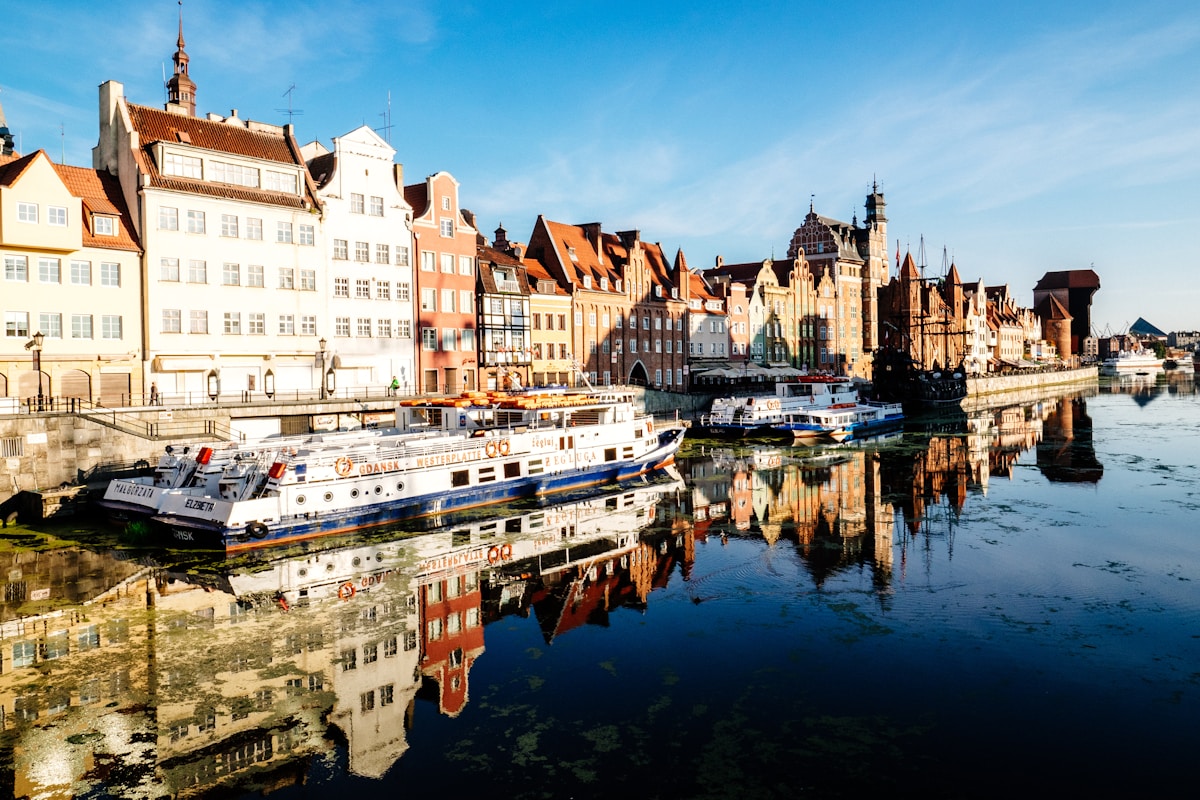
Gdańsk Travel Guide: Long Market, Solidarity & Amber Coast
Plan your trip to Gdańsk: the Long Market, Solidarity history, amber shops, Baltic beaches, and the best places to eat and stay in Poland's north.
Guides for Gdańsk
Gdańsk is the city where the Second World War started and where the Soviet empire began to crack. Its reconstructed merchant houses along the Long Market are among the most photogenic streets in Poland, and its history - as a Free City, as the site of Nazi Germany’s first assault in September 1939, and as the birthplace of the Solidarity trade union movement - gives it a depth that rewards more than a quick afternoon visit.
Gdańsk’s Neighbourhoods: Which Area Suits You
Gdańsk is the anchor city of the Trójmiasto (Tri-City) metropolitan area that also includes Sopot and Gdynia. Within Gdańsk itself, the districts have very different characters.
Główne Miasto (Main Town) The reconstructed historic core - home to the Long Market (Długi Targ), the Motława riverfront, St Mary’s Basilica, and the bulk of the tourist infrastructure. The merchant houses are architectural reconstructions finished in the 1990s, built faithfully from pre-war photographs and records. This is where most visitors spend the majority of their time. Hotels here carry a premium but put you within a 10-minute walk of every major sight. Best for: first-time visitors, short breaks, and anyone who wants to walk to everything.
Śródmieście (City Centre / Oliwa direction) The administrative and commercial district that links the Main Town northward toward Wrzeszcz and beyond. More workaday in character, with good transport links and a wider range of hotel price points. A 15-minute walk from the Long Market.
Wrzeszcz Gdańsk’s lively student district, roughly 4 km northwest of the Main Town along the SKM commuter rail line. Wrzeszcz has a compact high street, independent bars and cafés, and a noticeably local atmosphere that the Old Town lacks. The Galeria Bałtycka shopping centre and Gdańsk University are both here. An easy 8-minute SKM ride to the Main Town. Best for: longer stays, students, and travellers who want to eat and drink alongside locals.
Oliwa A quiet, green suburb at the northern end of Gdańsk, best known for its 12th-century Cistercian cathedral - one of the oldest churches in Poland - and its large park. The Oliwa cathedral’s organ (rebuilt in the 18th century) is considered among the finest in Central Europe; recitals run from May through September. Best visited as a half-day trip from the Main Town; SKM trains run every 15 minutes.
Nowy Port and Westerplatte The working-port district at the mouth of the Motława, where the city meets the open sea. Nowy Port has an emerging café and street-art scene. Westerplatte, the peninsula where Nazi Germany opened the Second World War, is 7 km north of the Old Town by boat or bus. Not a place to stay, but an important visit.
Sopot (15 km north on the SKM) Technically a separate city, Sopot functions as Gdańsk’s beach resort. Its 516-metre wooden pier (Molo), the longest in the Baltic, and the sandy beach below are the primary draws. The SKM train from Gdańsk Główny to Sopot takes 15–20 minutes and costs approximately PLN 5 as of 2026. During July and August Sopot is one of the busiest beach destinations in Poland.
Top Things to See and Do
Long Market (Długi Targ) and Long Street (Długa) The spine of Gdańsk’s Old Town, this pedestrian axis stretches from the Golden Gate in the west to the Green Gate on the Motława River. The merchant houses lining both sides were destroyed in 1945 and rebuilt between the 1950s and 1990s using historical records. The Neptune Fountain at the centre of Długi Targ is a city symbol dating from 1633. Entry to the street is free; the Main Town Hall clock tower (entry approximately PLN 15 as of 2026) provides a view over the rooflines.
Museum of the Second World War (Muzeum II Wojny Światowej) Opened in 2017, this is the most comprehensive museum on the Second World War in Poland. Exhibits trace the conflict from the perspective of civilians across multiple countries - Polish, European, and global - without flinching from either Nazi crimes or Soviet atrocities. Entry approximately PLN 35 for adults as of 2026; closed Mondays. Book timed entry online. Allow at least three hours.
European Solidarity Centre (Europejskie Centrum Solidarności) Built on the site of the Lenin Shipyard where Solidarity was founded in 1980, the Centre documents the trade union movement that eventually contributed to the collapse of communist rule in Eastern Europe. The permanent exhibition is exceptionally well designed. Entry approximately PLN 25 as of 2026; open daily. The building’s rusted steel exterior is a deliberate reference to a ship’s hull.
Mariacka Street A narrow medieval lane lined with amber workshops and jewellers, Mariacka Street is the best place to understand Gdańsk’s centuries-long relationship with Baltic amber. The perrons (stepped porches) in front of each house are a distinctive architectural feature found only in Gdańsk. Most amber workshops welcome visitors to watch craftspeople at work.
Westerplatte The peninsula 7 km north of the Old Town where Nazi Germany opened the Second World War on 1 September 1939. A Polish garrison of 182 soldiers held out for seven days against overwhelming German forces. The ruins of the garrison buildings and a large monument stand on the site. Boat trips from the Motława quay take approximately 30 minutes; entry to the memorial site is free.
St Mary’s Basilica (Bazylika Mariacka) The largest brick Gothic church in the world, completed in the 15th century. The interior holds a 15th-century astronomical clock, medieval altarpieces, and the tomb slabs of prominent Gdańsk burghers. Entry approximately PLN 5 as of 2026; the tower climb costs approximately PLN 10 for views across the city.
Guided Tours in Gdańsk
Gdańsk’s history - spanning the Hanseatic League, the Nazi invasion, and the birth of Solidarity - is rich enough that a guided tour on your first day pays dividends for everything that follows.
| Tour | Duration | Best for | Book |
|---|---|---|---|
| City Sights & History Guided Walking Tour | 2 hrs | A comprehensive first-day overview of the Main Town | Book |
| Old Town 2-Hour Walking Tour | 2 hrs | Quick introduction to the Long Market, St Mary’s, and the waterfront | Book |
| Private Walking Tour - Legends and Facts | 3 hrs | Families or those who prefer a private guide and a deeper narrative | Book |
| Small Group Evening Walking Tour | 2 hrs | Seeing the illuminated Long Market and Motława after dark | Book |
All tours depart from central Gdańsk meeting points. Book at least 48 hours ahead in July–August. See the full range of Gdańsk tours.
When to Visit Gdańsk
Gdańsk has a maritime-influenced continental climate. Summers are warmer than inland cities; winters are grey but rarely harsh.
May–June (best overall) Temperatures average 16–20°C, the Motława terraces are open, and the crowds are manageable. June is particularly good: long daylight hours (past 21:00), comfortable temperatures, and the Baltic Jazz Festival draws visitors to the city. Hotel prices are lower than July peak. The Jarmark Dominikański (St Dominic’s Fair) begins in late July - if that date range suits, aim for the opening weekend before the heat builds.
July–August (peak season) The warmest and most crowded period, with average highs of 22–24°C. The Long Market is packed; Sopot beach is at its liveliest but also most congested. The Jarmark Dominikański - Poland’s largest outdoor market, dating from 1260 - runs through late July and into August, filling the Old Town with market stalls, food vendors, and outdoor performances. Hotel prices peak in this window. Book accommodation and tour spots at least two weeks ahead.
September (excellent shoulder season) Often the best month to visit Gdańsk. Temperatures remain pleasant at 16–19°C, the summer crowds depart after the school return, and hotel prices fall by 20–30% from peak. The beach at Sopot is still warm enough for swimming in early September. The St Dominic’s Fair has ended; the city returns to a more local rhythm. The Solidarity anniversary (31 August) brings commemorations and events to the European Solidarity Centre.
October–November (quiet season) Cooler and occasionally rainy; 10–14°C in October. The Main Town is quiet and hotel prices are at their lowest. St Mary’s Basilica and the museums are at their most unhurried. The Forest Opera in Sopot closes for the season. Not a bad choice for visitors focused on museums and history rather than outdoor activity.
December (Christmas market) Gdańsk’s Christmas market runs from late November through 23 December on and around the Long Market. The illuminated merchant houses make for one of the more atmospheric market settings in Poland, without the extreme tourist pressure of Kraków or Warsaw’s markets.
Key events by month
- May: Gdańsk Running Festival; outdoor Solidarity Centre events
- June: Baltic Jazz Festival; Solidarity Centre anniversary events
- Late July–August: Jarmark Dominikański (St Dominic’s Fair) - Poland’s oldest and largest outdoor market
- August 31: European Solidarity Day - commemorations and special exhibitions at the Solidarity Centre
- September: Solidarity anniversary; Amber Look fashion and amber design festival
- December: Christmas market on Długi Targ
Where to Stay in Gdańsk
Hotel Podewils - from PLN 700/night - Motława Riverfront A Baroque townhouse on the Motława riverfront, Hotel Podewils is the most characterful option in Gdańsk. The rooms are individually furnished with antiques and period details; the restaurant downstairs has one of the better wine lists in the city.
Radisson Blu Hotel Gdańsk - from PLN 500/night - Wrzeszcz A reliable business hotel with modern rooms and a pool, directly connected to the Galeria Bałtycka shopping centre. Well located for both the Old Town (15-minute walk) and transport connections.
Qubus Hotel Gdańsk - from PLN 420/night - Main Town A modern 4-star hotel on the edge of the Main Town, within a 10-minute walk of the Long Market and the European Solidarity Centre. Reliable facilities, comfortable rooms, and a generous breakfast. A practical mid-range choice that avoids the premium of the riverfront address.
Hilton Gdańsk - from PLN 580/night - Old Shipyard Located in the redeveloped Old Shipyard district adjacent to the Solidarity Centre, the Hilton offers contemporary rooms, a spa, and direct walking access to the main museum and the Motława quay. Good for travellers who want modern facilities without a full-service Old Town premium.
Hostel Przy Targu Rybnym - from PLN 90/night - Main Town One of the best-located budget options in the Old Town, a short walk from the Long Market. Clean dorms, a simple common area, and the advantage of being within strolling distance of everything.
Where to Eat
Metamorphosis A long-established Gdańsk favourite for creative Polish cooking with international influences. The menu rotates seasonally; cod, duck breast, and game dishes appear regularly. Warm, unpretentious dining room on a quiet Old Town street. Mains approximately PLN 55–90 as of 2026.
Pod Łososiem Operating since 1598 - or so the restaurant claims - Pod Łososiem specialises in fish, particularly Baltic salmon and herring, prepared according to old Gdańsk recipes. The interior is formal and historically furnished. Mains approximately PLN 60–110 as of 2026. A good choice for a special evening.
Brovarnia A microbrewery restaurant in the Hilton complex, Brovarnia brews its own unfiltered lagers and wheat beers on the premises. The food menu covers Polish pub classics - roast pork knuckle, grilled trout, potato dumplings - at prices that are reasonable given the prime location. Mains approximately PLN 45–70 as of 2026.
Bar Turystyczny An old-fashioned milk bar near the Long Market serving standard Polish canteen food - soups, dumplings, meat dishes - at prices that feel incompatible with the tourist-heavy neighbourhood. Full meal approximately PLN 20–35 as of 2026. Popular with locals at lunchtime.
Getting to Gdańsk
From Warsaw by train: PKP Intercity runs direct express services roughly every two hours; journey approximately 3 hours; fares from approximately PLN 80 to PLN 150 depending on booking date and class as of 2026. By flight from Warsaw Chopin: approximately 1 hour, LOT and Ryanair; fares from approximately PLN 100 to PLN 300 one-way as of 2026. By car on the A1: approximately 3.5 to 4 hours depending on traffic. Hire a car in Gdańsk to reach the Hel Peninsula or the Kashubian lake district. From Gdańsk Lech Wałęsa Airport, a taxi via Bolt to the Old Town costs approximately PLN 50–70; the 210 bus connects the airport to the Wrzeszcz district in approximately 20 minutes for PLN 3.80.
Getting Around Gdańsk
The Main Town is compact and walkable. Trams and buses cover the broader Trójmiasto area; a single ticket costs approximately PLN 3.80 as of 2026. The SKM commuter rail is the most useful service for visitors - it connects Gdańsk Główny to Sopot (15–20 minutes, PLN 5) and Gdynia (35 minutes, PLN 8) every 10–15 minutes throughout the day. Bolt operates for ride-hailing. The Motława boat service to Westerplatte runs from May to October; round-trip approximately PLN 60.
Ticket prices (2026):
- Single ZTM journey (60 minutes, transferable): PLN 3.80
- 24-hour unlimited (ZTM): PLN 16
- 72-hour unlimited (ZTM): PLN 32
- SKM single Gdańsk–Sopot: PLN 5
- SKM single Gdańsk–Gdynia: PLN 8
Gdańsk Tips
- Sopot, 12 km north, has Poland’s most famous beach resort and an 18th-century pier (Molo) that extends 516 metres into the Baltic. It is easily visited as a half-day trip on the SKM train.
- The Trójmiasto card covers public transport and museum entry across Gdańsk, Gdynia, and Sopot; worthwhile if visiting all three cities in two to three days.
- Amber sold without certification is often fake - apply heat to test genuine amber (it does not melt); or buy from workshop-attached shops on Mariacka Street displaying the International Amber Association mark.
- The best views of the Long Market are from a boat on the Motława in the evening, when the illuminated merchant houses reflect in the water.
- Book the Museum of the Second World War timed entry online - walk-in queues in summer can run 45 minutes.
- Welcome Pickups offers fixed-price transfers from Gdańsk Lech Wałęsa Airport to the Main Town, useful for late-night arrivals.
More in Gdańsk
- Things to Do in Gdańsk - deeper dive into attractions, museums, and activities
- Where to Stay in Gdańsk - hotels and hostels by area and budget
- Day Trips from Gdańsk - Sopot, Gdynia, Malbork, and the Hel Peninsula
- Getting Around Gdańsk - trams, SKM rail, bikes, and taxis explained
- Gdańsk vs Wrocław - comparing Poland’s two most underrated gems
- Gdańsk vs Sopot - city break or Baltic beach escape?
- Gdańsk vs Warsaw - which city better suits your trip
- Sopot City Guide - Poland’s premier beach resort 15 km north on the SKM train
- Gdynia City Guide - modernist port city and Emigration Museum, 25 km north
- Malbork Castle - the world’s largest castle by area, 35 minutes by train from Gdańsk
- Toruń City Guide - Gothic UNESCO city and Copernicus birthplace, 1.5 hours south
- Visiting Poland in July - Sopot beach season and the Forest Opera festival
Frequently Asked Questions
- How many days do you need in Gdańsk?
- Two days covers the Long Market, Old Town, European Solidarity Centre, and an evening by the Motława. A third day allows Sopot beach, the Westerplatte peninsula, or the Museum of the Second World War at a relaxed pace.
- Is Gdańsk worth visiting in summer?
- Summer is Gdańsk at its most appealing - the riverfront terraces are open, Sopot beach is busy, and the day-trip options multiply. It is also the most crowded and expensive period.
- How far is Gdańsk from Warsaw?
- Approximately 340 km north on the A1. By PKP Intercity express train the journey takes approximately 3 hours from around PLN 80 to PLN 150 as of 2026. Flights take about 1 hour with prices ranging from approximately PLN 100 to PLN 300 one-way as of 2026.
- Where can I buy amber in Gdańsk?
- Amber workshops and certified shops line the Long Market and Mariacka Street. For genuine Baltic amber buy from shops displaying the International Amber Association certification mark. Avoid street vendors - much of what is sold as amber is glass or plastic.
- Is Gdańsk family-friendly?
- Yes. The waterfront, the amber workshops, the open-air markets, and the nearby beaches at Sopot and Gdynia all suit families. The Museum of the Second World War has exhibits appropriate for teenagers and older.
Upcoming Events in Gdańsk
Poland Independence Day: 11 November Celebrations
Poland Independence Day, 11 November. Commemorating independence regained in 1918: main march in Warsaw, ceremonies in cities nationwide.
- Great Orchestra of Christmas Charity (WOŚP) Grand Finale 2027
WOŚP Grand Finale 2027, 12 January. Poland's largest charity fundraiser: volunteers collect donations nationwide, ending with a light heart ceremony.
Book an experience
Top experiences in Gdańsk
Explore the best tours and activities in Gdańsk - instant confirmation, free cancellation on most bookings.