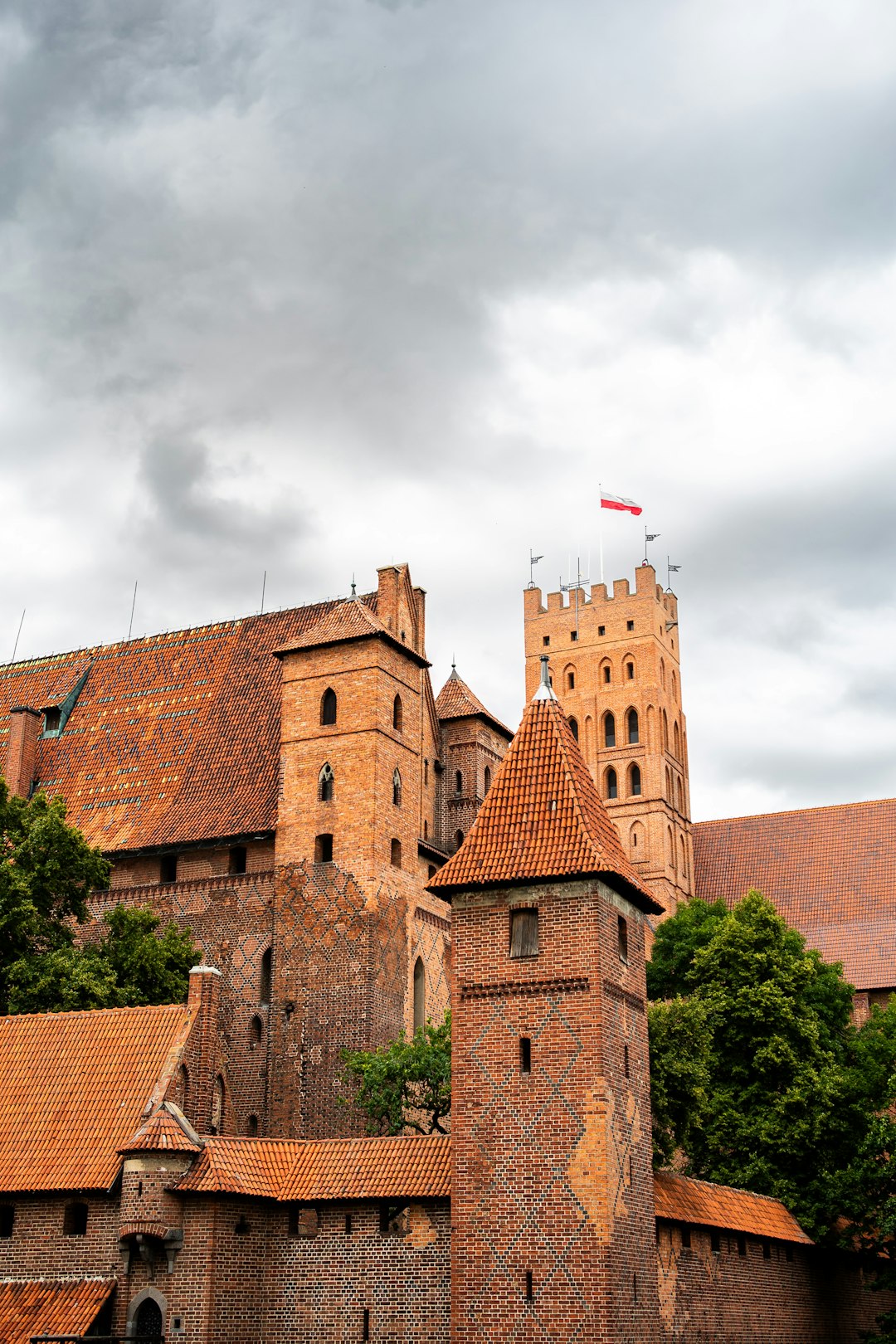
Malbork Castle is the largest castle in the world by surface area, covering approximately 143,000 square metres on the eastern bank of the Nogat River in northern Poland. Built and continuously expanded by the Teutonic Knights from 1274, it served as the headquarters of the Grand Master of the Teutonic Order at the height of their medieval power. UNESCO added it to the World Heritage List in 1997.
Visiting Malbork is one of the most impressive architectural experiences in Poland - a vast Gothic brick complex of towers, courtyards, drawbridges, and fortified walls that genuinely overwhelms on first approach from the river.
History of the Castle
The Teutonic Knights - a German Catholic military order - were invited into Poland in 1226 by Duke Konrad I of Masovia to help pacify and Christianise the pagan Baltic Prussians to the north. They built their first fortifications on the Nogat in 1274 and named the settlement Marienburg (Mary’s Castle). Over the following century, the castle grew into the largest brick structure in medieval Europe.
At its peak in the 14th century, Malbork was a city within a city: the Grand Master lived in the High Castle, the administrative centre occupied the Middle Castle, and the Lower Castle housed economic operations, stables, granaries, and workshops capable of supporting a garrison of thousands.
The Knights held Malbork until 1457, when King Casimir IV Jagiellon purchased the castle from discontented mercenary troops who had not been paid. It became a Polish royal residence and later suffered severe damage during wars with Sweden in the 17th century and again during the Napoleonic era. A major restoration programme beginning in the 19th century - and continuing to this day - has brought the complex back to something approaching its medieval form.
The Three Sections
The High Castle (Zamek Wysoki) is the oldest and most fortified section, housing the Chapel of the Blessed Virgin Mary and the Chapter House where the Knights held formal meetings. This is the spiritual and symbolic core of the complex.
The Middle Castle (Zamek Średni) was the administrative hub and contains the Grand Master’s Palace - a suite of state rooms with grand Gothic vaulted ceilings and large windows that were highly innovative for their time. The Grand Refectory (dining hall) here is among the finest Gothic secular interiors in central Europe.
The Lower Castle (Przedzamcze) was the economic zone: stables, granaries, a hospital, workshops. It gives a sense of how self-contained the castle community was during a siege.
Entry and Opening Hours
- Entry with a guide: approximately PLN 70 per adult as of 2026
- Entry without a guide (self-guided with access to marked routes): approximately PLN 55 per adult as of 2026
- Audio guide: approximately PLN 15 extra; available in English, Polish, German, and other languages
- Children under 7: free
Opening hours:
- April–October: daily 9am–7pm (last entry 5pm)
- November–March: daily 9am–4pm (last entry 2:30pm)
Confirm current hours at zamek.malbork.pl before your visit - hours vary slightly by month.
Museum Highlights
The castle houses several permanent museum collections worth planning time for:
The Amber Collection: One of the finest collections of Baltic amber artefacts in Poland, including medieval jewellery, tools, and artworks. The Baltic coast has produced amber for trade since prehistory, and the Teutonic Knights had a near-monopoly on its export.
Medieval Weaponry: A substantial collection of swords, armour, crossbows, cannons, and siege equipment associated with the Teutonic Knights and the campaigns they fought across the eastern Baltic.
Gothic Architecture and Interiors: The castle itself is the primary exhibit - the vaulted ceilings of the Grand Refectory, the star vaulting of the Chapter House, and the reconstructed Gothic windows of the Grand Master’s Palace are as impressive as any dedicated museum display.
Summer Evening Performances
During July and August, the castle hosts evening sound-and-light shows projected onto the castle walls, accompanied by dramatic audio about the Teutonic Knights. These events typically begin at dusk and last approximately one hour. Ticket prices and dates vary - check zamek.malbork.pl for the current season’s schedule.
Getting There
From Gdańsk: Direct trains from Gdańsk Główny to Malbork run multiple times daily. Journey time approximately 35–40 minutes; cost approximately PLN 20–30 as of 2026. From Malbork station, the castle is visible within a 15-minute walk. This is the easiest and most common approach - many visitors do Malbork as a day trip from Gdańsk. If you prefer a guided excursion from Gdańsk, day trips and guided tours from Gdańsk include Malbork as a dedicated option.
From Warsaw: Trains from Warsaw Centralna to Malbork take approximately 3–3.5 hours (direct or one change) and cost approximately PLN 70–130 as of 2026. A stop at Malbork fits logically into a Warsaw–Gdańsk rail journey.
By car: Hire a car in Poland to combine Malbork with Baltic coast stops - the castle sits on the E77 between Warsaw and Gdańsk. Parking is available near the castle.
Practical Details
Duration: Allow 3–4 hours for the three castle sections and main museum collections. If you include the amber collection, outdoor grounds, and temporary exhibitions, a full day is comfortable.
Guided tours in English: Available, but often need to be booked in advance - contact the castle directly via zamek.malbork.pl or check availability through Tiqets.
Food: There is a café in the castle grounds. The town of Malbork has additional restaurant options a short walk from the main entrance.
Photography: Permitted throughout the castle grounds and most interior sections.
Combining with Gdańsk
Malbork and Gdańsk work very well together as a two-day itinerary based in Gdańsk. Gdańsk’s medieval waterfront, the European Solidarity Centre, and Sopot beach cover a full day, while Malbork covers the second. The train between them is fast and cheap.
Search hotels in Poland on Booking.com
Related Guides
- Gdańsk City Guide - the base for most Malbork day trips
- Day Trips from Gdańsk - Malbork, Sopot, Hel Peninsula, and more
- Sopot City Guide - Baltic resort and pier guide
- Getting Around Poland - trains from Gdańsk to Malbork (direct, 30 minutes)
- Toruń City Guide - another outstanding Teutonic heritage site, 1.5 hours south of Malbork
- Gdynia City Guide - modernist port city with naval museum, 25 km north of Gdańsk
- 2 Weeks in Poland Itinerary - Malbork features as a dedicated day trip on the complete two-week Poland route