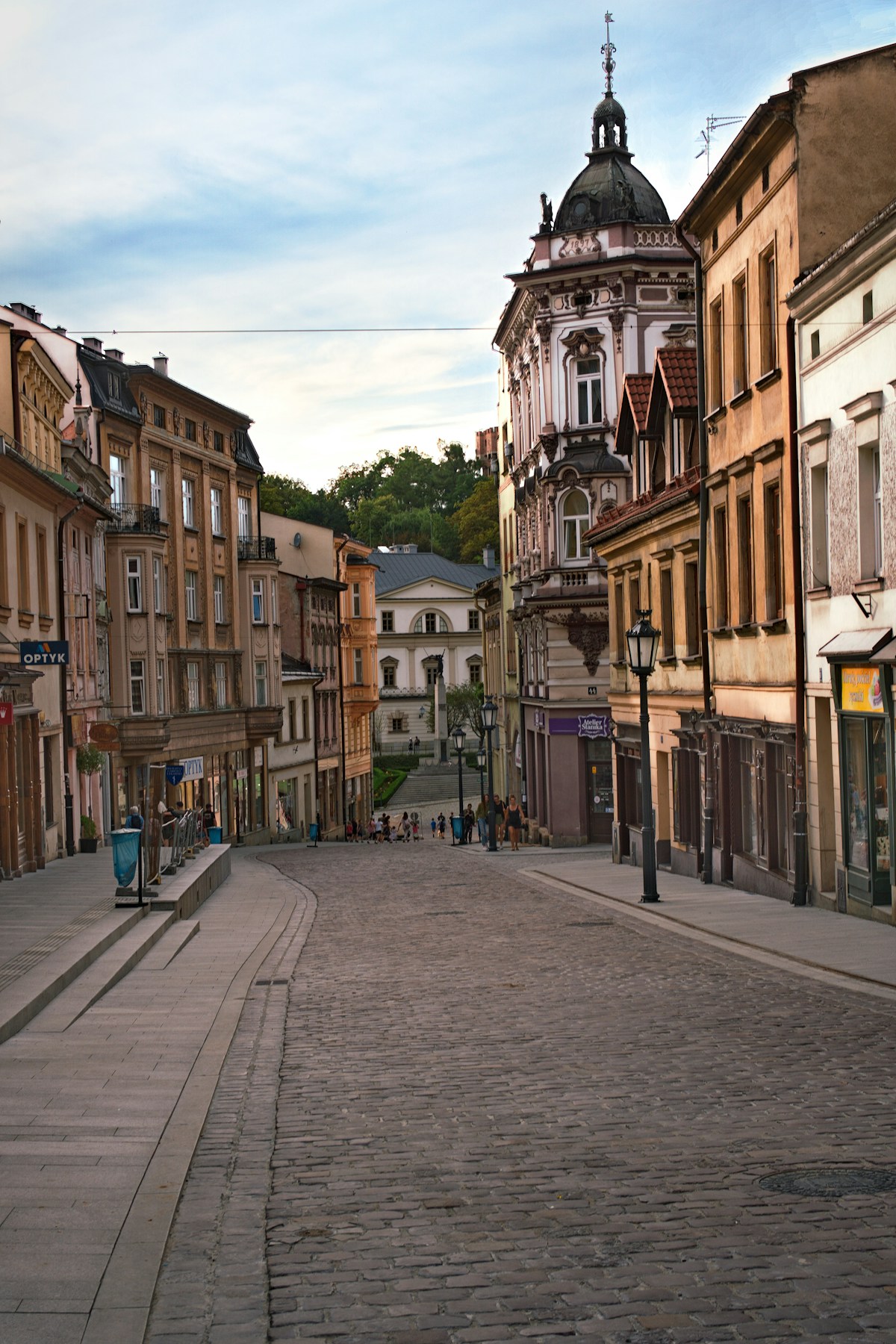
Toruń is one of the most underrated cities in Poland. Its UNESCO-listed Old Town has a density of Gothic red-brick architecture that rivals Gdańsk and Kraków, it was the birthplace of Copernicus, and it is the origin of Poland’s most famous export food: the Toruń piernik (gingerbread). Unlike Warsaw or Kraków, it draws enough visitors to maintain good tourist infrastructure but not so many that the Old Town feels overrun.
The Gothic Old Town
Toruń’s Old Town is a UNESCO World Heritage Site and one of the best-preserved Gothic ensembles in Central Europe. The streets are lined with red-brick tenement houses, Gothic churches, and granaries - many dating from the 13th to 15th centuries when Toruń was a major Hanseatic League trading city on the Vistula.
The central Rynek Staromiejski (Old Market Square) is anchored by the enormous Old Town Hall, one of the largest and finest Gothic town halls in northern Europe. Built between the 13th and 15th centuries, it houses the Toruń Regional Museum - entry approximately 15 PLN / €3.50 as of 2026 - with collections on the city’s history, medieval art, and Toruń faience (a distinctive local pottery style). Climb the tower for views over the roofscape.
At the centre of the square stands a monument to Nicolaus Copernicus, the symbol of the city, surrounded in summer by café tables and gingerbread stalls.
House of Copernicus
The House of Copernicus (Dom Kopernika) at ul. Kopernika 15–17 is built around the merchant townhouse where the astronomer was born in 1473. The museum spans two interconnected houses and includes reconstructed rooms from the late-medieval merchant period, an exhibition on Copernicus’s life and the development of heliocentrism, and a multimedia show. Entry approximately 20–25 PLN / €4.50–6 as of 2026 depending on the exhibition. Allow 60–90 minutes.
The Gothic streetscape around the house is among the most photogenic in the Old Town - narrow lanes, stepped gable facades, and stone-flagged courtyards typical of 15th-century Hanseatic architecture.
Gothic Churches
Toruń has four significant Gothic brick churches worth visiting:
St. John the Baptist and St. John the Evangelist Cathedral (Bazylika katedralna) on the Rynek is where Copernicus was baptised. The interior is remarkably intact - massive Gothic vaulting, medieval frescoes, and a Bell of Tuba Dei (the largest bell in medieval Poland) still hang in the tower. Entry to the interior is free; tower climb approximately 8 PLN / €2 as of 2026.
Church of the Virgin Mary (Kościół NMP) is a Gothic hall church with an exceptionally tall interior and preserved medieval stained glass - worth 20 minutes for the interior alone.
St. James’s Church in the New Town quarter (Nowe Miasto) is the largest church in Toruń by volume and has 14th-century frescoes in the apse.
Teutonic Castle Ruins
The ruined Teutonic castle on the riverbank at the edge of the Old Town dates from the 1230s. It was partially destroyed by the city’s own citizens in 1454 when they rose against Teutonic rule - a fact Toruń locals remain proud of. What survives is a substantial complex of walls, towers, and basement vaults. A small on-site exhibition covers the Teutonic period and the 1466 Peace of Toruń. Entry approximately 12 PLN / €3 as of 2026.
The ruins sit directly on the Vistula embankment - the river walk between the castle and the Old Town bridge is pleasant in all seasons.
Gingerbread Museum (Muzeum Toruńskiego Piernika)
Toruń gingerbread (piernik toruński) has been produced in the city since the 14th century and is probably the city’s most internationally recognised product. The Gingerbread Museum (Muzeum Toruńskiego Piernika) in a historic gingerbread factory at ul. Strumykowa 4 offers interactive workshops where you make your own gingerbread using traditional wooden moulds. The museum space itself displays the history of the trade.
Workshops cost approximately 40–50 PLN / €9–11.50 per person as of 2026 and run several times daily - book online to guarantee a spot in summer. There is also a shop selling traditionally-decorated piernik in dozens of shapes (Copernicus, cathedral, the city coat of arms). A box of piernik makes an excellent souvenir.
Vistula Waterfront and the New Town
The Vistula promenade runs below the Old Town walls along the riverbank and is ideal for walking or cycling. The views back up to the Gothic skyline - towers, church spires, and the castle ruins above the water - are among the most dramatic in Polish urbanism.
The New Town (Nowe Miasto) to the east of the Old Town was historically a separate walled settlement. It has a quieter, more local character with fewer tourists, the large St. James’s Church, and several cafés and restaurants worth exploring.
Practical Details
The Old Town is compact and walkable - the main sights are within 20 minutes of each other on foot. Most museums close on Mondays. Guided tours of Toruń are a good introduction if this is your first visit - the Hanseatic and Copernican history here benefits from local explanation. The Gingerbread Museum workshops should be booked ahead. Toruń is most pleasant in May–September; the Gothic architecture is atmospheric in winter but some outdoor sites have reduced hours. The city hosts a gingerbread festival in autumn with additional street markets and artisan demonstrations.
Search hotels in Toruń on Booking.com
More in Toruń
- Toruń City Guide - overview, hotels, restaurants, and getting there
- Where to Stay in Toruń - hotels in the Gothic Old Town and beyond
- Food to Try in Toruń - piernik gingerbread and Old Town restaurants
- Malbork Castle Visitor Guide - the Teutonic fortress 90 minutes from Toruń by train
- Gdańsk City Guide - the natural pairing for a northern Poland trip, 3 hours from Toruń
- Day Trips from Warsaw - Toruń is one of Warsaw’s most rewarding day trips
- Getting Around Poland - train connections to Warsaw, Poznań, and Gdańsk
- 10 Days in Poland Itinerary - how Toruń fits a northern Poland route