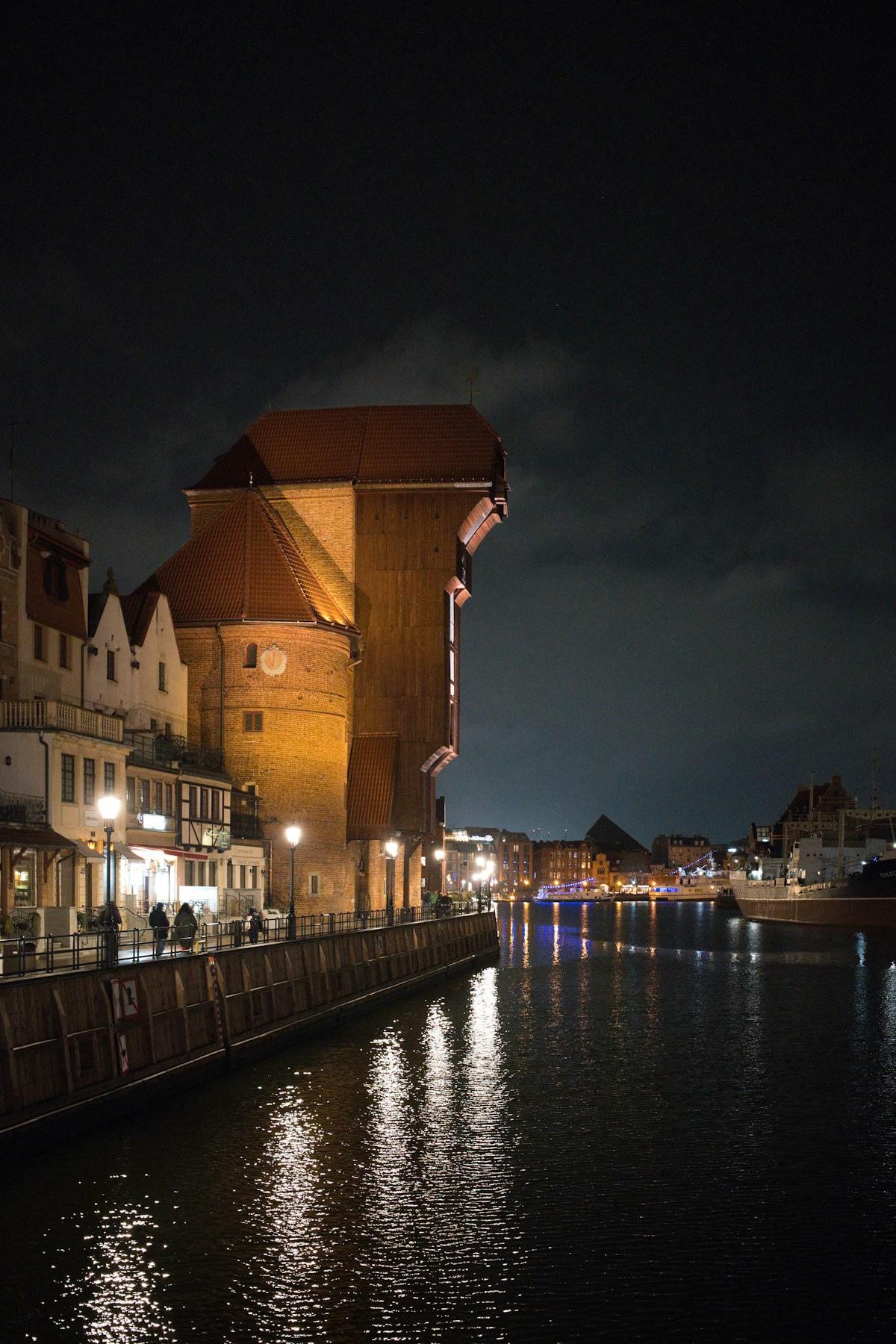
Gdańsk is one of Europe’s most rewarding medium-sized cities - a Baltic port whose amber-coloured facades, medieval crane, and 20th-century labour history pack more weight into three days than many larger capitals manage in a week. This itinerary keeps the pace manageable while covering the Old Town, the defining sites of the Solidarity movement, the cathedral at Oliwa, and a day along the coast to Sopot and Gdynia.
Day 1: Old Town, Długi Targ and Amber Museum
Start at Długi Targ (Long Market), Gdańsk’s main showpiece street, lined with merchant houses in terracotta, ochre, and cream. The Neptune Fountain at its centre has stood here since 1633. Walk eastward to the Green Gate at the street’s far end, which overlooks the Motława River and the iconic Żuraw (The Crane) - a 15th-century port crane and the city’s most photographed landmark. Entry to the Crane (part of the National Maritime Museum) costs approximately PLN 30 for adults as of 2026; the interior mechanism is worth seeing.
From the Crane, walk along the riverside promenade south toward the Mariacka Street - Gdańsk’s amber jewellery hub, a narrow cobbled lane flanked by terraced houses with stone steps leading to amber sellers’ stalls. Prices range from PLN 20 for simple pieces to several thousand for large multi-piece pendants.
St Mary’s Basilica (Bazylika Mariacka) is one of the largest brick Gothic churches in the world. Entry to the church is free; the tower climb costs approximately PLN 15 as of 2026 and gives a view across the rooftops to the river. Allow 30–40 minutes for the interior and tower combined. The astronomical clock inside, built in the 1460s, is the highlight of the interior.
Gdańsk Amber Museum (Muzeum Bursztynu) is located in two connected towers on the route between Długi Targ and the waterfront. The collection traces amber from its Baltic origins through medieval trade routes to contemporary jewellery. Entry approximately PLN 22 for adults as of 2026.
Lunch: Bar Mleczny Neptun (ul. Długa 33/34) is one of the remaining milk bars in the centre - cheap, canteen-style, filling. Bigos (hunter’s stew) or żurek with egg cost approximately PLN 15–25 as of 2026. For a sit-down restaurant lunch, Restauracja Kubicki (ul. Wartka 5) has been serving traditional Polish food since 1918; mains approximately PLN 45–75 as of 2026.
Afternoon: Walk to the Artus Court (Dwór Artusa) on Długi Targ - the rebuilt merchant guildhall with an ornate interior and one of the largest Renaissance tiled stoves in Europe. Entry approximately PLN 18 as of 2026.
Evening: The Motława riverfront bars and restaurants are lively from early evening. Try Chmielna 25 (ul. Chmielna 25) for craft beer and bar food, or walk up Mariacka Street where café-bars spill onto the cobbled outside steps on summer evenings.
Hotels:
- Budget: 3City Hostel (ul. Bogusławskiego) - dormitory beds from approximately PLN 70/night, private rooms from PLN 200 as of 2026
- Mid-range: Hotel Hanza (ul. Tokarska 6) - riverfront location, doubles from approximately PLN 350–500 as of 2026
- Splurge: Radisson Blu Hotel Gdańsk (ul. Długi Targ 19) - directly on Długi Targ, doubles from approximately PLN 600–900 as of 2026
Search hotels in Gdańsk on Booking.com
Day 2: Westerplatte, European Solidarity Centre and Oliwa Cathedral
Westerplatte is where the Second World War began. On 1 September 1939, German warships opened fire on the Polish garrison stationed at this small peninsula, 7 km from central Gdańsk. The site is now a memorial park with ruined barracks, a monument, and an exhibition in the former guardhouse. Entry to the memorial area is free; the museum exhibition costs approximately PLN 15 as of 2026.
Getting there: Boat trips from the Motława riverfront make the journey in approximately 25–30 minutes (tickets approximately PLN 25–35 return as of 2026, running May–October). Year-round, bus 106 from Brama Wyżynna takes approximately 30 minutes.
European Solidarity Centre (ECS) is one of the most significant museums in post-communist Europe. Built adjacent to the Gdańsk Shipyard gate where Lech Wałęsa and the Solidarność trade union movement were born in 1980, the permanent exhibition spans eight rooms tracing Poland’s road from communist rule to independence. Allow 2–3 hours. Entry approximately PLN 30 for adults, PLN 15 for students as of 2026. The building itself - clad in rusted steel panels in the shape of a ship’s hull - is architecturally striking.
Lunch: Stary Maneż (ul. 3 Maja 9) is a restaurant and café near the ECS with a good lunch set menu (approximately PLN 35–50 as of 2026). Alternatively, pick up a Gdańsk-style baked snack from one of the bakeries along ul. Wały Jagiellońskie.
Oliwa Cathedral (Archikatedra Oliwska) in the Oliwa district (approximately 20 minutes by tram from Old Town) is one of the most atmospheric churches in northern Poland. The Baroque pipe organ - one of the finest in Europe - features moving angels, sun symbols, and bells that play during short demonstrations (typically on the hour during visiting hours). Entry to the church is free; the Organ Museum in the cloisters costs approximately PLN 10 as of 2026. The surrounding Oliwa Park, with its formal gardens and duck ponds, is worth a 30-minute walk afterward.
Evening: Return to the Old Town for dinner. Restauracja Metamorfoza (ul. Ogarna 77) serves refined Polish-Baltic cooking; mains approximately PLN 55–90 as of 2026. For something cheaper, Bar pod Rybą (ul. Długa 61/63) does takeaway fish and chips Baltic-style for approximately PLN 20–30 as of 2026.
Day 3: Sopot Pier, Gdynia Waterfront and Aquarium
Sopot is Poland’s most famous seaside resort, 12 km north of Gdańsk by SKM train (approximately 20 minutes, PLN 5–7 as of 2026). The town is built around its 511-metre wooden pier - the longest in the Baltic - which costs approximately PLN 10 to walk in 2026. The beach below the pier is one of the best stretches of Baltic sand in the region; in summer the beach bars are active until late.
Monte Cassino Street (ul. Monte Cassino / Monciak) is Sopot’s pedestrian promenade, flanked by ice cream parlours, restaurants, and the art nouveau Grand Hotel at the seaward end. Coffee and cake at Grand Café (inside the Grand Hotel) costs approximately PLN 30–45 as of 2026 and comes with views of the waterfront.
Gdynia is 20 minutes further north on the SKM. The city’s waterfront has a different character to Gdańsk - more functional port than historical showpiece, but the moored WWII museum ships make it worth the journey.
ORP Błyskawica is a destroyer that served in the Polish Navy and Royal Navy during WWII; it now sits permanently docked at the pier. Entry approximately PLN 15 as of 2026. Akwarium Gdyńskie (Gdynia Oceanarium), run by the Sea Fisheries Institute, houses Baltic and worldwide marine species. Entry approximately PLN 25 for adults, PLN 15 for children as of 2026. It is smaller than major capital aquariums but the Baltic tanks and local species exhibits are genuinely good.
Lunch in Gdynia: Bar Rybny Pojazd (ul. Jana z Kolna 27, near the waterfront) serves smoked Baltic fish, fish soups, and herring plates. Mains approximately PLN 30–50 as of 2026. One of the better-value fish restaurants on the coast.
Return to Gdańsk by SKM in time for a final evening in the Old Town. The amber-lit Motława waterfront is at its best after dark, especially in summer when the terraced restaurants run until midnight.
Budget Guide
| Tier | Accommodation/night | Meals/day | Total/day (excl. transport) |
|---|---|---|---|
| Budget | PLN 70–200 | PLN 50–80 | PLN 120–280 |
| Mid-range | PLN 350–500 | PLN 120–200 | PLN 470–700 |
| Splurge | PLN 600–900 | PLN 250–400 | PLN 850–1,300 |
Attraction entry (Days 1–3 combined) adds approximately PLN 100–150 per person. The SKM day pass (approximately PLN 20) covers all inter-city transport for Day 3.
Book Your Trip
- Flights - Find the best fares to Poland · flights guide
- Travel Insurance - Get covered before you go · insurance guide
- eSIM - Stay connected from landing · eSIM guide
- Airport Transfers - Pre-book your transfer from Warsaw or Krakow
- Trains & Buses - Compare fares with Omio
- Car Rental - Compare prices across providers · car hire guide
- Tours & Activities - Browse Poland tours on GetYourGuide