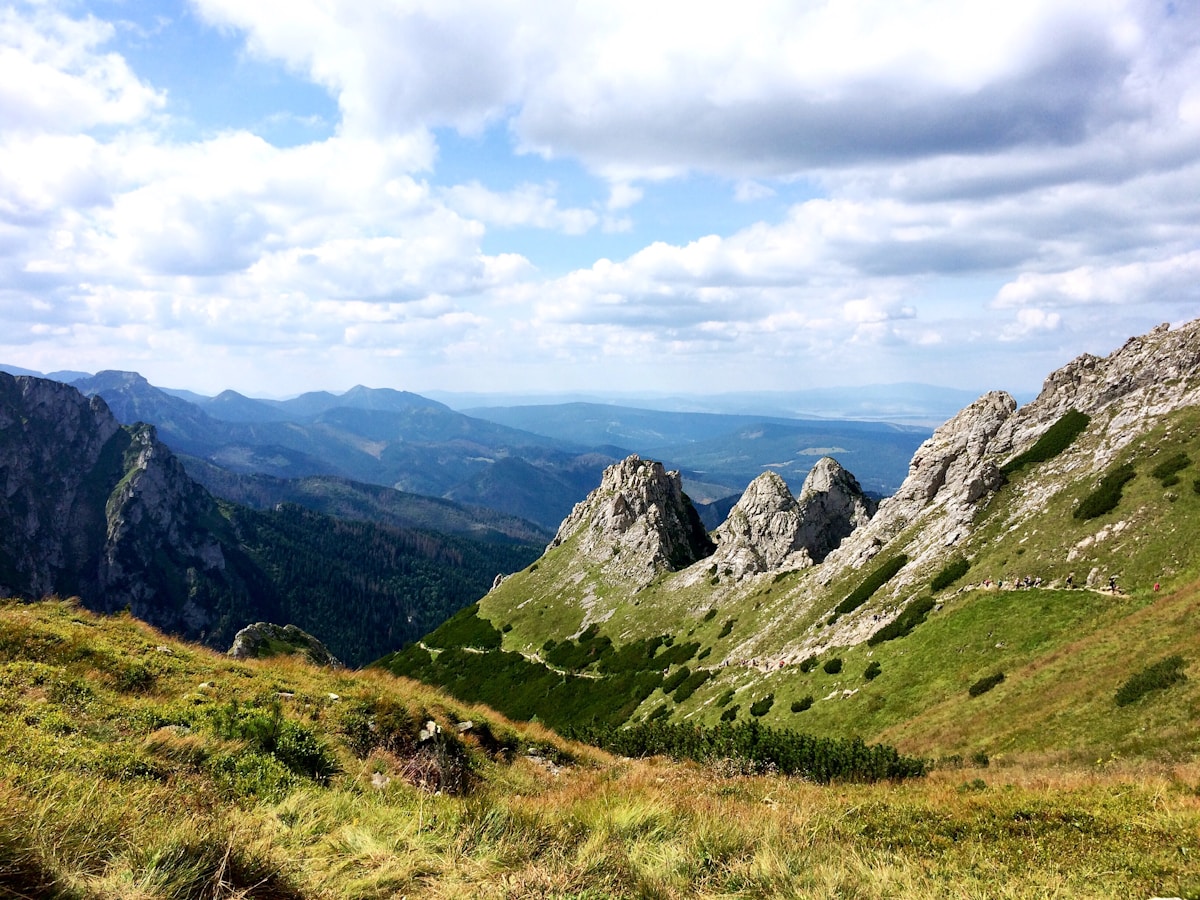
Ten days gives you the space to see Poland beyond its two famous cities. This route starts in Warsaw, dips into Lodz’s post-industrial culture scene, spends three days in Krakow, pushes south to the Tatra Mountains, and finishes in Wroclaw - a city that deserves far more attention than it gets. Every connection is by train or bus, no car required.
Route Overview
- Days 1-2: Warsaw
- Day 3: Train to Lodz (approximately 1.5 hours), explore Lodz
- Day 4: Train to Krakow (approximately 3.5 hours)
- Days 4-6: Krakow (Old Town, Kazimierz, Wieliczka)
- Day 7: Bus to Zakopane (approximately 2 hours)
- Days 7-8: Zakopane and Tatra Mountains
- Day 9: Bus/train to Wroclaw (approximately 5.5 hours via Krakow)
- Days 9-10: Wroclaw
Total intercity transport cost: Approximately PLN 250-450 (EUR 58-105) per person.
Where to Stay
Warsaw (2 nights)
- Budget: Oki Doki Old Town Hostel - dorms from approximately PLN 70/night (EUR 16)
- Mid-range: Hotel Bristol, Krakowskie Przedmiescie 42/44 - from approximately PLN 650/night (EUR 152)
- Upscale: Raffles Europejski - from approximately PLN 1,400/night (EUR 328)
Search hotels in Warsaw on Booking.com
Lodz (1 night)
- Budget: Flamingo Hostel, ul. Sienkiewicza 67 - dorms from approximately PLN 55/night (EUR 13)
- Mid-range: Vienna House Andel’s Lodz, ul. Ogrodowa 17 - from approximately PLN 350/night (EUR 82), inside a converted textile mill
- Upscale: Puro Hotel Lodz, ul. Ogrodowa 16 - from approximately PLN 500/night (EUR 117)
Search hotels in Łódź on Booking.com
Krakow (3 nights)
- Budget: Greg & Tom Hostel, ul. Pawia 12 - dorms from approximately PLN 80/night (EUR 19)
- Mid-range: Hotel Stary, ul. Szczepanska 5 - from approximately PLN 500/night (EUR 117)
- Upscale: Hotel Copernicus, ul. Kanonicza 16 - from approximately PLN 1,200/night (EUR 280)
Search hotels in Kraków on Booking.com
Zakopane (2 nights)
- Budget: Hostel Stara Polana, ul. Kosciuszki 2 - dorms from approximately PLN 60/night (EUR 14)
- Mid-range: Hotel Sabala, ul. Krupowki 11 - from approximately PLN 400/night (EUR 94), on the main pedestrian street
- Upscale: Aries Hotel & Spa, ul. Kasprowicza 28 - from approximately PLN 700/night (EUR 164), spa with Tatra views
Search hotels in Zakopane on Booking.com
Wroclaw (2 nights)
- Budget: Cinnamon Hostel, ul. Kazimierza Wielkiego 67 - dorms from approximately PLN 60/night (EUR 14)
- Mid-range: Hotel & Art Stary Rynek, Rynek 31 - from approximately PLN 450/night (EUR 105), directly on the main square
- Upscale: The Granary, ul. Mennicza 24 - from approximately PLN 900/night (EUR 211), converted granary with rooftop bar
Search hotels in Wrocław on Booking.com
Days 1-2: Warsaw
Day 1 - Old Town and Royal Route
Start at Castle Square (Plac Zamkowy) and the Royal Castle - entry approximately PLN 40 (EUR 9), free on Wednesdays. Walk through the reconstructed Old Town to the Barbican, then south along the Royal Route (Krakowskie Przedmiescie and Nowy Swiat). Stop for lunch at Bar Mleczny Bambino, ul. Hoza 1 - a classic milk bar where a full meal costs approximately PLN 18-25 (EUR 4-6).
Afternoon at the POLIN Museum of the History of Polish Jews, ul. Anielewicza 6 - approximately PLN 35 (EUR 8), free Thursdays, closed Tuesdays. Allow 2-3 hours for the permanent exhibition. Walk to the nearby Monument to the Ghetto Heroes. If you want a guided WWII walking tour of Warsaw, guided Warsaw tours cover the Ghetto, POLIN, and the 1944 Uprising sites.
Dinner at Kieliszki na Hozej, ul. Hoza 25 - modern Polish small plates from approximately PLN 25-50 (EUR 6-12).
Day 2 - Lazienki, Wilanow and the Praga District
Morning at Lazienki Park - Palace on the Isle (approximately PLN 30/EUR 7), free Chopin concerts Sunday noon and 4pm (May-September). Take a bus or taxi south to Wilanow Palace - the “Polish Versailles” with baroque gardens. Entry approximately PLN 35 (EUR 8), open 9:30am-6pm as of 2026.
Afternoon: cross the Vistula to the Praga district. This former working-class neighbourhood on the river’s east bank was the only part of Warsaw to survive the war relatively intact. Walk ul. Zabkowska for street art, bars, and Rozycki Bazaar - Warsaw’s oldest market. The Neon Museum at Soho Factory (approximately PLN 20/EUR 5) displays rescued communist-era neon signs.
Evening drinks at Pawilony - the warren of small bars in courtyards between Nowy Swiat and Chmielna. Beer from approximately PLN 12 (EUR 3).
Day 3: Lodz
Morning - Train to Lodz
Take the PKP train from Warszawa Centralna to Lodz Fabryczna - approximately 1 hour 20 minutes, from PLN 35 (EUR 8). Lodz Fabryczna station itself is architecturally impressive, built beneath a public square.
Afternoon - Textile Mills and Street Art
Lodz was the textile capital of the Russian Empire in the 19th century, and its massive red-brick mills have been converted into cultural venues. Start at Manufaktura, ul. Drewnowska 58 - a former Poznanski factory complex now housing a shopping centre, cinema, and the Museum of Art (ms2). The museum entry costs approximately PLN 20 (EUR 5).
Walk south along ul. Piotrkowska - one of the longest commercial streets in Europe at 4.2 km. The murals on building facades are some of the best street art in Poland. Look for the Piotrkowska Street mural at no. 152 and the Arthur Rubinstein mural near no. 78.
Lunch
Eat at Anatewka, ul. 6 Sierpnia 2/4 - Jewish-inspired cuisine in a restaurant modelled on the fictional shtetl from Fiddler on the Roof. Mains from approximately PLN 35-60 (EUR 8-14).
Evening
Explore OFF Piotrkowska, an old courtyard at Piotrkowska 138/140 converted into a hub of bars, restaurants, and design shops. Good craft beer at Piwoteka and food at ON at Off - modern Polish dishes, mains from approximately PLN 40 (EUR 9).
Days 4-6: Krakow
Take the PKP train from Lodz Fabryczna to Krakow Glowny - approximately 3 hours 20 minutes, from PLN 49 (EUR 11). Alternatively, FlixBus runs the route in approximately 4 hours from PLN 29 (EUR 7).
We cover Krakow in full detail in our 3-day Krakow itinerary. The summary:
Day 4 - Old Town and Wawel Castle. Rynek Glowny, St Mary’s Basilica, Cloth Hall, Wawel Castle State Rooms and Cathedral.
Day 5 - Kazimierz and Schindler’s Factory. Jewish Quarter walking tour, Old Synagogue, Plac Nowy zapiekanki, Schindler’s Factory museum (book ahead), Ghetto Heroes Square. For a guided walk through Kazimierz with historical context, guided tours of Kraków cover the Jewish Quarter and Schindler’s story.
Day 6 - Wieliczka Salt Mine. Morning train to Wieliczka (PLN 5, 25 minutes), Tourist Route tour (approximately PLN 120/EUR 28). Afternoon free in Krakow - visit Stary Kleparz market or the National Museum.
Days 7-8: Zakopane and the Tatra Mountains
Day 7 - Bus to Zakopane and Krupowki
Take a Polski Bus or FlixBus from Krakow bus station (next to the train station) to Zakopane - approximately 2 hours, from PLN 15-30 (EUR 3.50-7). Minibuses run even more frequently from the same station, approximately PLN 20 (EUR 5).
Zakopane sits at approximately 850 metres elevation at the foot of the Tatra Mountains. Walk the length of ul. Krupowki - the pedestrian main street - and try oscypek, the smoked sheep’s cheese sold at street stalls. A piece costs approximately PLN 8-15 (EUR 2-3.50).
Afternoon: take the funicular railway up Gubalowka Hill for a panorama of the Tatra range. Return ticket approximately PLN 38 (EUR 9), runs every 12 minutes. The view from the top covers the full High Tatras skyline.
Dinner at Gazdowo Kuznia, ul. Krupowki 1 - traditional highland cuisine with live folk music. Try the kwasnica (sauerkraut soup) and grilled oscypek with cranberry. Mains from approximately PLN 35-65 (EUR 8-15).
Day 8 - Tatra Mountain Hike
Take a local bus or taxi to the Kuznice cable car station (approximately PLN 5 by bus, 10 minutes). The cable car ascends to Kasprowy Wierch at 1,987 metres - return ticket approximately PLN 90 (EUR 21) as of 2026. Book online at pkl.pl in summer, as the cable car sells out by 9am.
From the summit, experienced hikers can follow the marked red trail along the ridge to Swinica (2,301 metres) and descend via the Gasienicowa Valley - approximately 5-6 hours round trip, moderate-to-difficult. For an easier option, descend from Kasprowy via the blue trail to Hala Gasienicowa and back to Kuznice - approximately 3 hours, moderate.
Alternative: Morskie Oko, Poland’s most famous mountain lake, is accessible by a flat road walk from the Palenica Bialczanska car park - approximately 2 hours each way, 9 km. A horse-drawn carriage covers the first 7 km for approximately PLN 70 (EUR 16) one way. The lake sits at 1,395 metres, surrounded by granite peaks. A bus runs from Zakopane centre to Palenica, approximately PLN 5.
Evening
Return to Zakopane for dinner at Karczma Przy Mlynie, ul. Kasprowicza 41. Traditional Goral (highland) food served in a wooden mill house. Mains from approximately PLN 30-55 (EUR 7-13). Try the placek po zbojnicku - a potato pancake topped with goulash.
Days 9-10: Wroclaw
Day 9 - Travel to Wroclaw
The most efficient route is bus from Zakopane to Krakow (2 hours), then PKP train from Krakow to Wroclaw (approximately 3.5 hours, from PLN 59/EUR 14). Total travel time approximately 6 hours including transfer. Alternatively, FlixBus runs Zakopane to Wroclaw direct in approximately 6 hours from PLN 49 (EUR 11), but departures are limited.
Afternoon - Wroclaw Old Town
Wroclaw’s Rynek (market square) is one of the largest in Poland and among the most colourful, with pastel-painted burgher houses on all sides. The Gothic Town Hall at the centre has an ornate astronomical clock. Walk through to the salt square (Plac Solny), which sells flowers daily.
Start counting the bronze dwarves (krasnale) - over 300 small figurines are hidden around the city, each representing a different character. This started as an anti-communist protest symbol in the 1980s.
Dinner
Eat at Konspira, ul. Szewska 7 - a communist-era themed restaurant where you need a “password” to enter (just ask the door). Polish classics like bigos (hunter’s stew) and golonka, mains from approximately PLN 35-55 (EUR 8-13). The decor recreates a 1980s underground meeting room.
Day 10 - Cathedral Island and Centennial Hall
Morning: walk north across the bridges to Ostrow Tumski (Cathedral Island), the oldest part of Wroclaw. The Gothic Cathedral of St John the Baptist has a viewing tower with elevator access (approximately PLN 10/EUR 2.30). At dusk (not for this morning visit, but worth knowing), a lamplighter manually ignites the gas street lamps - one of the last such traditions in Europe.
Visit the Raclawicka Panorama at ul. Purkyniego 11 - a 360-degree painting of the 1794 Battle of Raclawice, 15 metres high and 114 metres long. Entry approximately PLN 35 (EUR 8), includes audio guide. Open 9am-5pm, closed Mondays.
Afternoon: take tram 2 or 10 to the Centennial Hall (Hala Stulecia) - a 1913 UNESCO-listed reinforced concrete dome, remarkable for its era. The adjacent Multimedia Fountain puts on water shows in the evenings (free, May-October). The Japanese Garden next door costs approximately PLN 15 (EUR 3.50).
Final Lunch
Eat at Bar Mleczny Mis, ul. Kuźnicza 48 - Wroclaw’s best-known milk bar, serving Polish comfort food at student prices. Pierogi from PLN 12 (EUR 3), soups from PLN 8 (EUR 2).
Transport Summary
| Route | Mode | Duration | Cost |
|---|---|---|---|
| Warsaw → Lodz | PKP train | 1h 20min | From PLN 35 (EUR 8) |
| Lodz → Krakow | PKP train | 3h 20min | From PLN 49 (EUR 11) |
| Krakow → Zakopane | Bus/minibus | 2h | From PLN 15-30 (EUR 3.50-7) |
| Zakopane → Krakow | Bus/minibus | 2h | From PLN 15-30 (EUR 3.50-7) |
| Krakow → Wroclaw | PKP train | 3h 30min | From PLN 59 (EUR 14) |
All prices approximate as of 2026. Book PKP tickets at intercity.pl. To compare train and bus fares on any leg, Omio searches PKP, RegioJet, and FlixBus together.
Alternative Route: Warsaw → Toruń → Gdańsk → Wrocław → Kraków
If you want to prioritise the Baltic coast over the mountains, this route covers different ground entirely. It substitutes Łódź and Zakopane for Toruń and Gdańsk, and ends in Kraków rather than starting there.
Route overview:
- Days 1–2: Warsaw
- Day 3: Toruń day trip (2 hours by train, approximately PLN 50–80 as of 2026)
- Days 4–5: Gdańsk
- Days 6–7: Wrocław (Gdańsk to Wrocław approximately 5.5–6.5 hours by train, PLN 80–150)
- Days 8–10: Kraków with Auschwitz day trip
Why Toruń
Toruń is the birthplace of Nicolaus Copernicus (1473–1543) and has one of the most complete Gothic old towns in Poland. Unlike Kraków, which developed through multiple architectural periods, Toruń’s Old Town is overwhelmingly Gothic - brick churches, granaries, towers, and the remains of a Teutonic Knights castle.
Key sites in Toruń:
- House of Copernicus (ul. Kopernika 15/17; approximately PLN 20 per adult as of 2026): the building where Copernicus was born, now a museum of his life and the heliocentric revolution
- Old Town Market Square (Rynek Staromiejski): surrounded by Gothic and Renaissance townhouses in excellent condition; the 14th-century Town Hall houses the Regional Museum (approximately PLN 20)
- Toruń Gingerbread Museum (ul. Strumykowa 4; approximately PLN 32): Toruń’s famous pierniki gingerbread has a protected designation of origin; the museum includes traditional production demonstrations
- Medieval walls and Teutonic Castle ruins: free to walk
Travel: Warsaw to Toruń approximately 2 hours, from PLN 50–80 as of 2026. Toruń to Gdańsk approximately 1.5–2 hours, from PLN 30–50 - making Toruń a logical stopping point on the north-bound rail line.
Gdańsk on This Route
With 2 full days, cover the Długi Targ waterfront (Crane Gate approximately PLN 20, St Mary’s Basilica approximately PLN 5) on Day 4 and the European Solidarity Centre (approximately PLN 20, open 10am–7pm in summer) on Day 5 with an afternoon trip to Sopot by SKM commuter train (20 minutes, PLN 5). See the Gdańsk city guide for full detail.
Where to eat in Gdańsk:
- Budget: Bar Mleczny Neptun (ul. Długa 33/34), approximately PLN 20–30 as of 2026
- Mid-range: Restauracja Stary Dom (ul. Chlebnicka 9/10), approximately PLN 80–110 per person
Where to sleep in Gdańsk:
- Budget: 3City Hostel (ul. Tokarska 15), dorm from approximately PLN 65 as of 2026
- Mid-range: Hotel Podewils (ul. Szafarnia 2), from approximately PLN 320/night
- Upscale: Hilton Gdańsk (ul. Targ Rybny 1), from approximately PLN 650/night
Search hotels in Gdańsk on Booking.com
Daily Budget Summary
| Category | Budget | Mid-range | Upscale |
|---|---|---|---|
| Accommodation (per night) | PLN 55-80 | PLN 350-650 | PLN 700-1,400 |
| Food (per day) | PLN 60-80 | PLN 120-180 | PLN 250-400 |
| Attractions (per day) | PLN 40-60 | PLN 60-100 | PLN 60-100 |
| Transport (total) | PLN 150-250 | PLN 250-450 | PLN 400-700 |
| 10-day total (per person) | PLN 3,000-4,500 | PLN 5,000-8,000 | PLN 10,000-17,000 |
All prices approximate as of 2026.
City Guides for This Route
- Warsaw City Guide - full overview, hotels, and restaurants
- Łódź City Guide - Manufaktura, Piotrkowska, and the film heritage
- Kraków City Guide - full overview, hotels, and restaurants
- Zakopane City Guide - Tatra Mountains, cable cars, and hiking
- Wrocław City Guide - Market Square, Cathedral Island, and dwarfs
- Toruń City Guide - Copernicus birthplace and Gothic Old Town
- Gdańsk City Guide - Solidarity Centre and the Baltic waterfront
Deeper Guides
- Tatra Mountains Trekking - the full hiking guide for Days 7–8 in the Tatras
- Skiing in Poland - Zakopane - winter alternative to the summer hiking route
- 3 Days in Kraków Itinerary - expand the Kraków section of this route
- 1 Week in Poland Itinerary - a shorter route if 10 days is too long
- 2 Weeks in Poland Itinerary - add Gdańsk, Malbork, and Poznań
- Getting Around Poland - PKP trains, buses, and booking tips for every leg
Book Your Trip
- Flights - Find the best fares to Poland · flights guide
- Travel Insurance - Get covered before you go · insurance guide
- eSIM - Stay connected from landing · eSIM guide
- Airport Transfers - Pre-book your transfer from Warsaw or Krakow
- Car Rental - Compare prices across providers · car hire guide
- Tours & Activities - Browse Poland tours on GetYourGuide