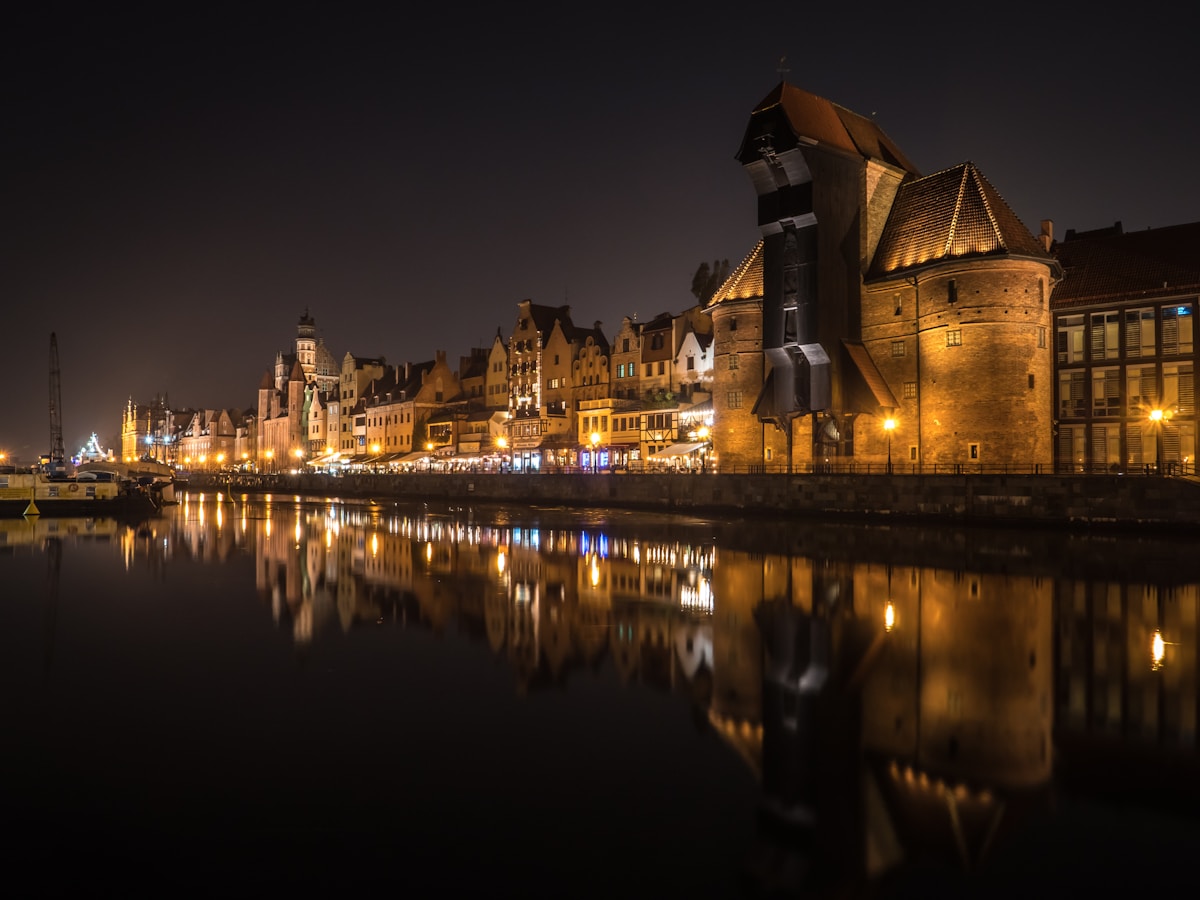
Poland’s three essential cities line up neatly on a south-to-north rail corridor. Krakow gives you medieval streets, Jewish heritage, and one of Europe’s best food scenes. Warsaw mixes wartime history with a modern capital’s energy. Gdansk puts you on the Baltic coast with amber-coloured merchant houses and shipyard history. The trains between them are fast, frequent, and affordable.
Route options: This itinerary runs Krakow → Warsaw → Gdansk (south to north). If you fly into Warsaw, consider flipping the route: start in Warsaw for Days 1–2, continue to Krakow for Days 3–5, finish in Gdansk for Days 6–7. Both directions work on PKP Intercity; book tickets for your chosen direction at intercity.pl.
Budget Tiers
| Tier | Daily budget | Accommodation | Meals | Notes |
|---|---|---|---|---|
| Budget | ~PLN 150/day | Hostel PLN 65–85/night | PLN 40–60 (milk bars, street food) | PLN 20 transport |
| Mid-range | ~PLN 380/day | Hotel PLN 250–350/night | PLN 100–150 (sit-down restaurants) | |
| Upscale | ~PLN 900+/day | Hotel PLN 600–1,400/night | PLN 200–400 (fine dining) |
All prices approximate as of 2026.
Route Overview
- Days 1-3: Krakow (Old Town, Kazimierz, Wieliczka)
- Day 4: Train to Warsaw (approximately 2.5 hours)
- Days 4-5: Warsaw (Old Town, POLIN Museum, Lazienki Park)
- Day 6: Train to Gdansk (approximately 2 hours 40 minutes)
- Days 6-7: Gdansk (Main Town, European Solidarity Centre, Sopot)
Total intercity transport cost: Approximately PLN 190-350 (EUR 44-82) per person for both train journeys.
Where to Stay
Krakow (3 nights)
- Budget: Greg & Tom Hostel, ul. Pawia 12 - dorms from approximately PLN 80/night (EUR 19), private rooms from PLN 200 (EUR 47)
- Mid-range: Hotel Stary, ul. Szczepanska 5 - rooms from approximately PLN 500/night (EUR 117), Old Town location with rooftop terrace
- Upscale: Hotel Copernicus, ul. Kanonicza 16 - rooms from approximately PLN 1,200/night (EUR 280), Renaissance cellar pool
Search hotels in Kraków on Booking.com
Warsaw (2 nights)
- Budget: Oki Doki Old Town Hostel, ul. Domaniewska 2 - dorms from approximately PLN 70/night (EUR 16), private rooms from PLN 220 (EUR 52)
- Mid-range: Hotel Bristol, Krakowskie Przedmiescie 42/44 - rooms from approximately PLN 650/night (EUR 152), Warsaw’s landmark hotel on the Royal Route
- Upscale: Raffles Europejski, Krakowskie Przedmiescie 13 - rooms from approximately PLN 1,400/night (EUR 328), facing the Saxon Garden
Search hotels in Warsaw on Booking.com
Gdansk (2 nights)
- Budget: 3 City Hostel, ul. Grodzka 21 - dorms from approximately PLN 65/night (EUR 15), private rooms from PLN 180 (EUR 42)
- Mid-range: Hotel Podewils, ul. Szafarnia 2 - rooms from approximately PLN 450/night (EUR 105), Granary Island waterfront
- Upscale: Hotel Gdansk, ul. Szafarnia 9 - rooms from approximately PLN 900/night (EUR 211), converted granary on the Motlawa River
Search hotels in Gdańsk on Booking.com
Days 1-3: Krakow
We cover Krakow in full detail in our 3-day Krakow itinerary. Here is the condensed version.
Day 1 - Old Town and Wawel Castle
Morning at Rynek Glowny - St Mary’s Basilica (approximately PLN 20/EUR 5 entry), Cloth Hall, and the Rynek Underground museum (approximately PLN 32/EUR 7.50). Lunch at Milkbar Tomasza for pierogi ruskie (approximately PLN 14). Afternoon at Wawel Castle - State Rooms and Crown Treasury (approximately PLN 60 combined/EUR 14). Evening dinner at Szara Ges on the main square, mains from approximately PLN 65 (EUR 15). For an orientation walk with context, guided tours of Kraków run from the Old Town daily.
Day 2 - Kazimierz and Schindler’s Factory
Morning exploring Kazimierz - Old Synagogue (approximately PLN 15/EUR 3.50), Plac Nowy for zapiekanki. Cross to Podgorze for Schindler’s Factory (approximately PLN 32/EUR 7.50, book online). Ghetto Heroes Square and Pharmacy Under the Eagle. Evening in Kazimierz bars and restaurants - dinner at Starka (ul. Józefa 14, mains from approximately PLN 40/EUR 9) or Hamsa (ul. Szeroka 2) for Israeli-influenced food in the Jewish quarter setting (approximately PLN 60–90 per person as of 2026). For a quieter evening, Marchewka z Groszkiem (ul. Mostowa 2) does excellent modern Polish cooking, approximately PLN 70–100 per person.
Day 3 - Wieliczka Salt Mine
Morning train to Wieliczka (PLN 5, 25 minutes). Tourist Route guided tour of the salt mine (approximately PLN 120/EUR 28, book ahead at wieliczka.eu or via Tiqets). Return to Krakow early afternoon. Free afternoon for shopping at Stary Kleparz market or walking the Planty park ring. Final dinner at Pod Baranem, Rynek Glowny 27 - traditional Polish kitchen, mains from approximately PLN 45 (EUR 11).
Day 4: Train to Warsaw + Afternoon Exploring
Morning - Krakow to Warsaw by train
Take the EIP Pendolino from Krakow Glowny to Warszawa Centralna. The journey takes approximately 2 hours 20-30 minutes. Tickets cost from PLN 99 (EUR 23) booked 30 days ahead on intercity.pl, or approximately PLN 149-199 at shorter notice. First class adds approximately PLN 50-80 and includes a wider seat and power socket. Trains depart roughly every hour from 6am.
Afternoon - Warsaw Old Town
Check in, then head to the Old Town (Stare Miasto). Warsaw’s Old Town was rebuilt brick by brick after being 85% destroyed in 1944 - a reconstruction so faithful it earned UNESCO status. Walk the Castle Square (Plac Zamkowy), the colourful Rynek Starego Miasta, and the Barbican. Guided walking tours of Warsaw departing from the Old Town cover the wartime history alongside the architecture.
Enter the Royal Castle (Zamek Krolewski) - the interior rooms are a mix of original rescued artworks and careful reconstruction. Entry approximately PLN 40 (EUR 9), free on Wednesdays. Open 10am-6pm as of 2026.
Lunch/Dinner
For a budget lunch, try Bar Mleczny Bambino at ul. Hoża 1 - one of Warsaw’s best surviving milk bars. Full meal for approximately PLN 18-25 (EUR 4-6). Bar Mleczny Familijny at ul. Nowy Świat 39 is a similar option slightly south. For dinner, eat at Zapiecek on the Old Town square - handmade pierogi with dozens of filling options, plates from approximately PLN 28 (EUR 7).
Day 5: Warsaw
Morning - POLIN Museum and Muranow
The POLIN Museum of the History of Polish Jews at ul. Anielewicza 6 is one of Europe’s most important museums. The permanent exhibition covers 1,000 years of Jewish life in Poland - from medieval settlement through the Commonwealth’s golden age to the Holocaust and postwar period. Entry approximately PLN 35 (EUR 8), free on Thursdays. Open 10am-6pm, closed Tuesdays. Allow 2-3 hours.
Outside the museum, stand at the Monument to the Ghetto Heroes on the spot where the Warsaw Ghetto Uprising began in April 1943.
Afternoon - Royal Route and Lazienki Park
Walk south along Krakowskie Przedmiescie and Nowy Swiat - Warsaw’s grand boulevard corridor. Stop at the Copernicus Science Centre (approximately PLN 37/EUR 9) if travelling with children, or continue to Lazienki Park.
Lazienki is Warsaw’s finest green space - 76 hectares of landscaped gardens, a palace on a lake, and free Chopin concerts at the Chopin Monument every Sunday at noon and 4pm (May-September). The Palace on the Isle costs approximately PLN 30 (EUR 7) to enter. Walk the park for free anytime.
Evening
Dinner at Kieliszki na Hożej, ul. Hoza 25 - modern Polish small plates, excellent natural wine list. Plates from approximately PLN 25-50 (EUR 6-12). For drinks afterward, head to Pawilony, the cluster of tiny bars in courtyards between Nowy Swiat and Chmielna - beer from approximately PLN 12 (EUR 3).
Day 6: Train to Gdansk + Main Town
Morning - Warsaw to Gdansk by train
Take the EIP Pendolino from Warszawa Centralna to Gdansk Glowny. Journey time approximately 2 hours 40 minutes. Tickets from PLN 89 (EUR 21) booked ahead, approximately PLN 139-189 at shorter notice. Trains run roughly hourly.
Afternoon - Gdansk Main Town
Gdansk’s Glowne Miasto (Main Town) is one of the most photogenic city centres in northern Europe. Walk from the Golden Gate along ul. Dluga (Long Street) to the Green Gate - the entire stretch is lined with ornate merchant houses rebuilt after wartime destruction.
Key stops on the Long Street axis:
- Artus Court: Interior with the world’s tallest tiled stove (approximately PLN 20/EUR 5)
- Neptune Fountain: The city’s symbol, on Dlugi Targ square
- St Mary’s Church: The largest brick church in the world. Climb the 400-step tower for a panorama over the red rooftops (approximately PLN 20/EUR 5)
Walk along the Motlawa River waterfront past the medieval Crane (Zuraw) - a port crane from the 15th century that doubled as a city gate. The National Maritime Museum inside costs approximately PLN 20 (EUR 5).
Evening
Dinner at Goldwasser, ul. Dluga 22 - traditional Gdansk cuisine in a 16th-century merchant house, famous for its gold-flake vodka. Mains from approximately PLN 50-90 (EUR 12-21). Try the Baltic cod or golonka (pork knuckle).
Day 7: European Solidarity Centre and Sopot
Morning - Gdansk Shipyard and European Solidarity Centre
Walk north from the Main Town to the Gdansk Shipyard - the birthplace of Solidarity, the trade union movement that helped end communism in Poland. The European Solidarity Centre at Plac Solidarnosci 1 covers the story from the 1970 strikes through the Round Table talks. The permanent exhibition is outstanding. Entry approximately PLN 35 (EUR 8), free on Wednesdays. Open 10am-7pm as of 2026. Allow 2 hours.
Outside, the three towering crosses of the Monument to the Fallen Shipyard Workers mark the entrance. The original Gate No. 2, where Lech Walesa climbed the wall in 1980, is preserved nearby.
Afternoon - Sopot
Take the SKM commuter train from Gdansk Glowny to Sopot - 20 minutes, PLN 4.50 (EUR 1). Sopot is Poland’s premier seaside resort. Walk the Molo, Europe’s longest wooden pier at 515 metres (entry approximately PLN 10/EUR 2.30 in summer). The beach stretches in both directions.
Walk up ul. Bohaterow Monte Cassino - Sopot’s pedestrian high street - for ice cream and window shopping. For coffee, try Kawiarnia Sopocka on Plac Konstytucji 3 Maja.
Evening
Return to Gdansk for a final dinner. Eat at Czerwone Drzwi (Red Door), ul. Piwna 52/53 - one of the best restaurants in the Tri-City area. Modern Polish tasting menus from approximately PLN 180 (EUR 42) per person. For something more casual, Brovarnia Gdansk on Szafarnia 9 brews its own beer and serves good pub food, mains from approximately PLN 40 (EUR 9).
Transport Summary
| Route | Mode | Duration | Cost (2nd class) |
|---|---|---|---|
| Krakow → Warsaw | EIP Pendolino | 2h 20-30min | From PLN 99 (EUR 23) |
| Warsaw → Gdansk | EIP Pendolino | 2h 40min | From PLN 89 (EUR 21) |
| Gdansk → Sopot | SKM commuter | 20min | PLN 4.50 (EUR 1) |
Book PKP Intercity tickets at intercity.pl. The earlier you book, the cheaper the fare. FlixBus runs the same routes for less (Krakow-Warsaw from PLN 39, Warsaw-Gdansk from PLN 35) but takes 4-5 hours each leg. To compare train and bus fares side by side, Omio searches PKP Intercity, RegioJet, and FlixBus in one place.
Daily Budget Summary
| Category | Budget | Mid-range | Upscale |
|---|---|---|---|
| Accommodation (per night) | PLN 70-200 | PLN 450-650 | PLN 900-1,400 |
| Food (per day) | PLN 60-80 | PLN 120-180 | PLN 250-400 |
| Attractions (per day) | PLN 40-70 | PLN 70-100 | PLN 70-100 |
| Intercity transport (total) | PLN 74 (FlixBus) | PLN 190-350 (train) | PLN 300-500 (1st class) |
| Local transport (per day) | PLN 15-20 | PLN 15-30 | PLN 30-80 |
| 7-day total (per person) | PLN 2,000-3,000 | PLN 3,500-5,500 | PLN 8,000-13,000 |
All prices approximate as of 2026.
City Guides for This Route
- Kraków City Guide - full overview, hotels, and restaurants
- Warsaw City Guide - full overview, hotels, and restaurants
- Gdańsk City Guide - full overview, hotels, and the Solidarity Centre
- Sopot City Guide - Baltic resort guide and pier information
- Wieliczka Salt Mine Guide - booking and tour route details
Deeper Guides
- 3 Days in Kraków Itinerary - expand the Kraków leg with a dedicated day-by-day plan
- 10 Days in Poland Itinerary - add Łódź, Zakopane, and Wrocław to extend this trip
- 2 Weeks in Poland Itinerary - the complete Poland circuit with Toruń, Malbork, and Poznań
- Best Restaurants in Warsaw - where to eat on Days 4 and 5
- Best Restaurants in Kraków - where to eat on Days 1–3
- Getting Around Poland - trains, prices, and booking tips for the full route
- Poland Budget Guide - daily cost breakdown for all three tiers
- Last-Minute Tours in Poland - need flexibility? Check last-minute tour slots across Kraków, Warsaw, and Gdańsk
- Kraków vs Warsaw - deciding how to split your time between the two headline cities
- Warsaw vs Gdańsk - comparing the capital and Baltic port before choosing your northern destination
Book Your Trip
- Flights - Find the best fares to Poland · flights guide
- Travel Insurance - Get covered before you go · insurance guide
- eSIM - Stay connected from landing · eSIM guide
- Airport Transfers - Pre-book your transfer from Warsaw or Krakow
- Car Rental - Compare prices across providers · car hire guide
- Tours & Activities - Browse Poland tours on GetYourGuide