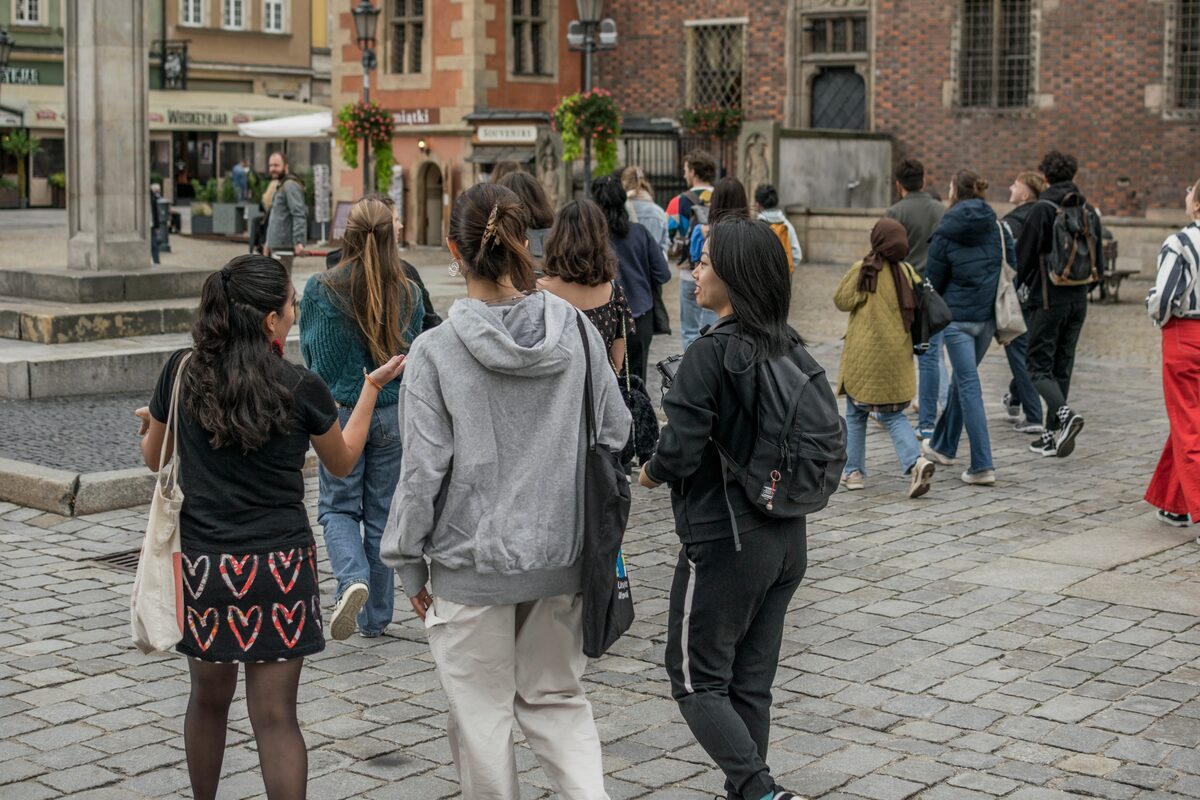
Wrocław’s Market Square is one of the largest and most beautiful in Central Europe, but the city rewards deeper exploration. Cathedral Island - Ostrów Tumski - preserves a medieval atmosphere unlike anywhere else in Poland, and the Panorama Racławicka is one of the most ambitious artworks in the country. Guided tours here open up the architecture, the complex postwar history (the city was German Breslau until 1945), and the stories behind the dwarfs. This page covers the best walking tours, cultural excursions, and day trips from Wrocław, with current prices and booking advice.
Old Town Walking Tours
Market Square & Town Hall Tour
Price: From approximately €15–22 per person (small group) | Duration: 2–3 hours | Highlights: Rynek, Gothic Town Hall, Cloth Hall, dwarf trail
Wrocław’s Market Square (Rynek) measures 213 by 178 metres - one of the largest medieval market squares in Europe - and is surrounded by merchant houses in Gothic and Baroque styles that were painstakingly reconstructed after wartime destruction. The Old Town Hall (Stary Ratusz) at the centre is considered one of the finest examples of Gothic civil architecture in Central Europe; its historical museum charges approximately PLN 20 as of 2026.
Guided tours cover the square’s architecture layer by layer - the merchant houses, the Jaś and Małgosia houses at the Town Hall’s side, the fountains, and the approach to Ostrów Tumski. Most include an introduction to the bronze dwarf (krasnale) statues: over 400 of them are now scattered across the city, each with a different occupation and personality, beginning as a political symbol in the 1980s and becoming the city’s defining cultural quirk.
English-language departures typically run at 10am and 2pm daily in season.
Browse Old Town guided walks in Wrocław to compare small-group and private options.
History & Culture Walking Tour
Price: From approximately €18–25 per person | Duration: 3 hours
A deeper cut through the city’s architecture and history. This format typically covers the layers of Wrocław’s identity - the Hanseatic trading city, the German Breslau of the 19th and early 20th centuries, and the postwar Polish reconstruction. The guide explains why so many streets have two names (German and Polish), why much of what looks medieval was in fact rebuilt in the 1950s–60s, and how the expulsion of the German population and resettlement with Poles from Lwów created the city’s particular dual consciousness.
The Świdnicka Street, the Collegiate Church of the Holy Cross, and Plac Dominikański typically feature. Afternoon departures work better for this tour, when the light on the Market Square tenements is warmer.
Browse Wrocław history and culture walking tours for operator options and current prices.
Secrets of the Oder Metropolis Tour
Price: From approximately €15–20 per person | Duration: 2 hours
A more focused tour of Wrocław as a city of islands and waterways. The Oder River splits into multiple channels through the city centre, creating a series of islands - Ostrów Tumski, Wyspa Piaskowa, Wyspa Słodowa, Kępa Mieszczańska - each with distinct character. This tour covers the island geography, the bridges (over 100 of them in Wrocław), the riverside warehouses and converted industrial buildings, and the candlelit lamplighter tradition on Cathedral Island.
Good for visitors who already know the Market Square and want to explore the less obvious Wrocław. Works well as a second-day tour.
Browse Oder island and waterway tours in Wrocław to book and compare.
Cathedral Island (Ostrów Tumski)
Duration: 1.5–2 hours | Best time: Late afternoon or evening (candlelit lamplighter tradition)
Ostrów Tumski is the oldest part of Wrocław and the most atmospherically preserved. The Cathedral of St John the Baptist (Katedra Świętego Jana Chrzciciela) was destroyed in 1945 and rebuilt by 1951; its twin towers rise dramatically above the island. The tower is climbable in summer for panoramic views across the city and river (entry approximately PLN 10).
The candlelit streets in the evening - where lamplighters still operate, maintaining a tradition that continued even during the communist period when the city’s electrical grid reached the island - are among the most photographed and evocative sights in Poland. Most Old Town walking tours include Cathedral Island; dedicated Cathedral Island tours run from approximately €15 per person.
The nearby Church of St Mary on the Sand (Kościół NMP na Piasku) on Wyspa Piaskowa, built in the 14th century, is often overlooked by tour itineraries but is one of the finest Gothic hall churches in Silesia and worth the short detour.
Panorama Racławicka
Entry: Approximately PLN 40 as of 2026 (timed entry, book ahead) | Duration: Approximately 45 minutes inside the rotunda | Day: Closed Monday in winter
The Panorama Racławicka is a monumental cyclorama painting depicting the 1794 Battle of Racławice - the moment Tadeusz Kościuszko’s peasant infantry, armed with scythes, defeated Russian cannon positions against considerable odds. The painting is 114 metres in circumference and 15 metres high, displayed in a purpose-built rotunda with a recorded audio guide.
This is one of Poland’s most visited attractions and can be booked out weeks ahead in summer. Book timed entry online at panoramaraclawicka.pl. Some guided city tours include the Panorama as part of a half-day programme; the audio guide available on entry is sufficient without a live guide.
Day Trips from Wrocław
Książ Castle
Distance: 55km south-west (approximately 1 hour by train or car) | Entry: Approximately PLN 40–60 for main rooms as of 2026
Książ is the third-largest castle in Poland - a striking layered complex of Gothic, Renaissance, and Baroque architecture perched above a forested valley. The castle was used as a Nazi headquarters during World War II and has underground tunnels (the Riese complex) that were dug by forced labour for an unexplained purpose - the exact project was never completed and records were destroyed. The tunnels can be toured separately from the castle (entry approximately PLN 25).
Day trips from Wrocław by train involve departing from Wrocław Główny to Wałbrzych Główny (around 1 hour, approximately PLN 30 return), then a short taxi or bus to the castle. Organised coach tours from Wrocław take care of the logistics for approximately PLN 80–130 per person including entry.
Karkonosze Mountains & Jelenia Góra
Distance: 110km south-west (approximately 1.5 hours by express train) | Season: Hiking May–October; skiing December–March
The Karkonosze (Giant Mountains) form the border between Poland and the Czech Republic and offer the closest genuine mountain hiking to Wrocław. The main ridge trail runs from Szklarska Poręba to Karpacz, passing Śnieżka (the highest peak in the range at 1,603m) and the Czech border. Day trips are possible but tight - aim for early trains.
Jelenia Góra is the region’s hub and has a pleasantly preserved Baroque market square in its own right. Some operators run combined Jelenia Góra + Karkonosze day trips from Wrocław; others focus on one or the other.
Practical Booking Tips
Peak season (June–August): The Panorama Racławicka books out most reliably; secure a timed slot before you arrive. Old Town tours run multiple daily departures and rarely sell out more than a day ahead.
Off-peak (November–March): Cathedral Island is atmospheric year-round and arguably more evocative in winter when the lanes are quiet. The Karkonosze slopes have ski infrastructure from December; Jelenia Góra’s Baroque square is uncrowded in shoulder months.
Private vs small-group: Private guides charge approximately PLN 300–500 for a 3-hour Old Town tour (the fee covers the whole group, not per person), making private tours cost-effective for parties of 3 or more.
Combinations: A strong two-day Wrocław structure is Old Town + Cathedral Island (Day 1), Panorama Racławicka + Książ Castle day trip (Day 2). For a single day: Old Town walking tour in the morning, Cathedral Island lamplighter walk in the early evening.
Browse all Wrocław tours to compare operators, check availability, and book with flexible cancellation.