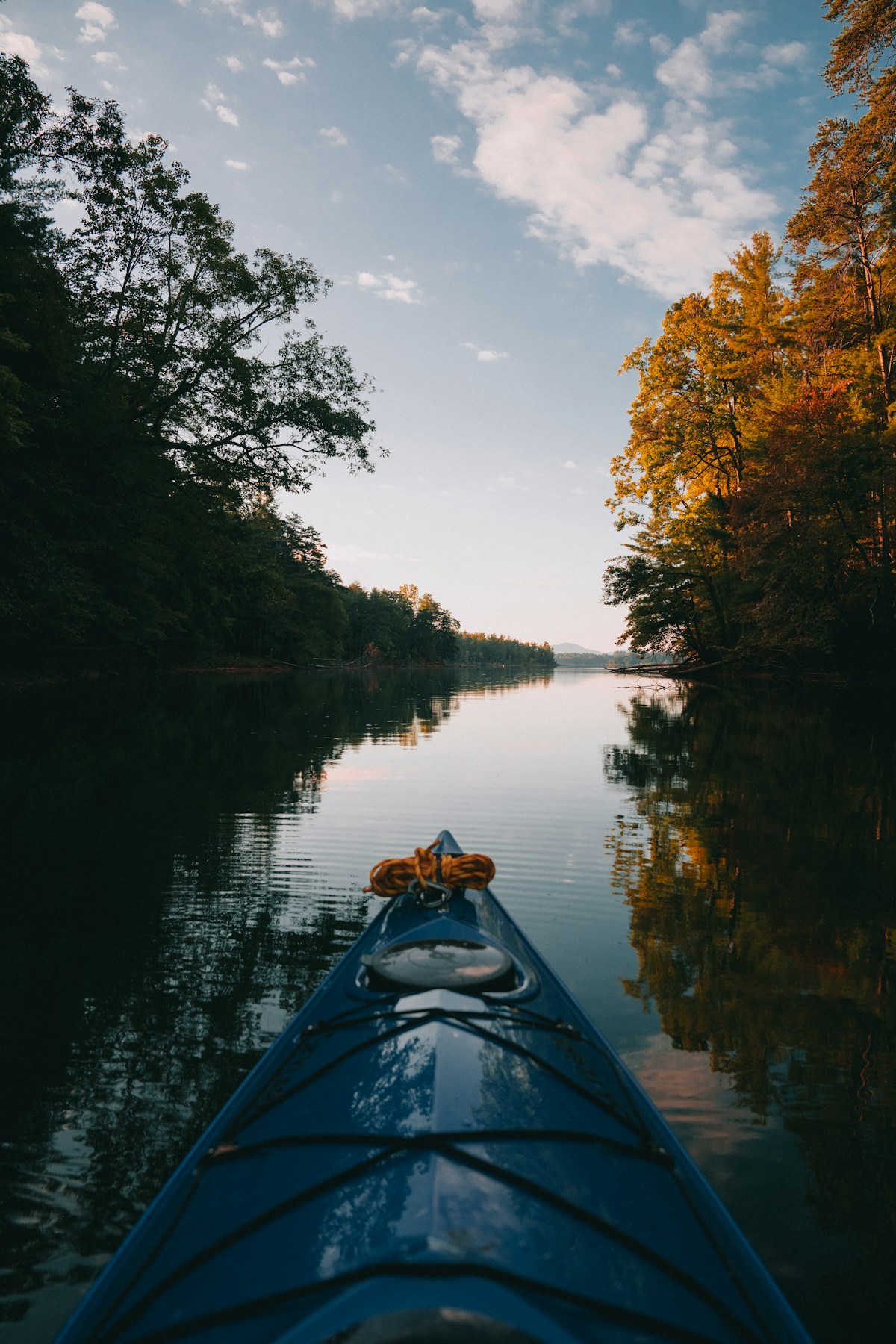
Northeastern Poland holds one of Europe’s largest lake districts - the Masurian Lakeland (Pojezierze Mazurskie) in the Warmia-Masuria region. More than 2,000 lakes are connected by rivers and canals, making it one of the most rewarding paddling destinations on the continent. For kayakers and canoeists, the centrepiece is the Krutynia River: a 100 km marked waterway that threads through forest and wetland with a level of natural quiet that is increasingly rare.
The Masurian Lakeland: Why Paddle Here
The Masurian Lakeland covers roughly 2,000 square kilometres and includes lakes of every size, from small woodland pools to the 105 km² Lake Śniardwy - Poland’s largest. Most of the region is protected as landscape parks or nature reserves, which means no jet skis on the rivers, almost no motorboat traffic on the narrower channels, and stretches where you can paddle for hours without seeing a road.
The lakelands sit in low, glacially-formed terrain, so there is no demanding physical challenge in the paddling itself. This makes it accessible to people with no prior kayaking experience. The draw is the environment: dense mixed forest, wetland meadows, storks nesting on farmhouse rooftops, ospreys fishing overhead.
The Krutynia River Route
The Krutynia is Poland’s most popular kayak route. The full 100 km stretch runs from Sorkwity in the north to Ruciane-Nida in the south, passing through a chain of lakes connected by the slow-moving river. The current is gentle throughout; portages (short overland carries between water sections) are manageable and well-signed.
Most popular section: Sorkwity to Ruciane-Nida, typically covered in two to three days. Paddling time is around five to seven hours per day at a relaxed pace. The scenery is consistently good and the facilities - campsites, small guesthouses, rental points - are spread along the route.
Highlights along the way:
- Lake Mokre and Lake Krutyńskie - broad open water with good birdlife
- Krutyń village - a natural rest stop with cafés and accommodation, roughly the midpoint
- Łuknajno Lake Reserve - a UNESCO Biosphere Reserve with one of Europe’s largest mute swan colonies; a short detour from the main route
- Final approach to Ruciane-Nida through quiet forest channels
Kayak Rental
Rental outfitters operate at most lakeside villages along the Krutynia corridor. Rates for a single kayak run approximately PLN 60–100 per day as of 2026; tandem kayaks are slightly more. Equipment typically includes paddles, a life jacket, and a dry bag or barrel for luggage.
Most rental companies will arrange a shuttle back to your starting point (or to your accommodation) at the end of the route - confirm this when booking, as the logistics depend on the operator.
Notable rental outfitters:
- Krutynia Canoe Rentals (Krutyń village) - day hire and multi-day packages; a two-day guided trip runs approximately PLN 180–250 per person as of 2026, including equipment and a basic shuttle.
- Most lake towns along the route - Sorkwity, Piecki, Ukta - have at least one rental point, though availability in peak season can be tight. Book at least a few days ahead in July and August.
Organised and Guided Tours
If you prefer a structured experience, guided paddling tours are widely available. Mazury Active based in Mikołajki runs day trips on the lakes and shorter river sections, with group prices typically in the range of PLN 120–180 per person as of 2026. This is a good option if you have limited time or want an introduction before committing to a multi-day route. You can also browse guided tours from Warsaw including Masurian kayaking packages bookable from Warsaw.
Multi-day guided trips - where a guide leads the group and logistics (camping, meals, shuttles) are handled - are available from several operators in Mikołajki and Giżycko, Poland’s two main Masurian hub towns. Prices for a three-day guided itinerary typically run approximately PLN 500–800 per person as of 2026, depending on the level of accommodation and group size.
GetYourGuide lists several Masurian kayaking experiences including half-day and full-day options, which is useful if you want to compare and book from abroad before you arrive.
Getting to the Masurian Lakeland
From Warsaw: Trains run from Warsaw Centralna to Olsztyn in approximately two hours; tickets cost approximately PLN 50–80 as of 2026. From Olsztyn, regional buses and trains reach Mikołajki (the main tourist hub), Mrągowo, and Ruciane-Nida. Journey time from Olsztyn to Mikołajki is around one to one and a half hours by bus or regional train.
By car: Renting a car in Poland gives the most flexibility - the drive from Warsaw to Mikołajki takes around two and a half to three hours via the S61 and S7 expressways, and having your own transport makes it easier to reach smaller villages along the Krutynia.
Mikołajki is the best base for a first-time visit. The town sits between lakes Śniardwy and Mikołajskie and has good accommodation options across all price points, plus several rental and tour outfitters within walking distance of the centre.
Camping Along the Route
The Krutynia route has a series of designated campsites at roughly half-day paddling intervals. These are basic facilities - a grassed pitch, toilet, sometimes a simple shelter - and most charge approximately PLN 20–35 per night as of 2026. Casual camping outside of these designated spots is restricted in the nature reserve areas; use the marked sites.
If you prefer comfort, small guesthouses (agroturystyka) are available in villages along the route, typically PLN 100–180 per person per night as of 2026 including breakfast.
What to Pack
Waterproofs: Weather in the Masurian Lakeland can change quickly even in summer. A lightweight waterproof jacket is worth packing regardless of the forecast.
Sun protection: The open lake sections offer little shade. Sunscreen, a hat, and UV-protective clothing are practical in July and August.
Dry bags: Most rental outfitters provide a barrel or dry bag for the essentials. Bring extra waterproof pouches for electronics and documents. A waterproof phone case is worth the small investment.
Footwear: Old trainers or water sandals that can get wet are the practical choice. Bare feet on rough lake banks are not comfortable.
Insect repellent: Mosquitoes are present in forested sections, particularly in the evenings near the waterline. Repellent is worth packing.
Practical Notes
- Book rentals ahead in peak season. July and August see high demand; outfitters at smaller villages can run out of equipment. Call or email a week in advance.
- The Krutynia is relatively sheltered, but strong winds across open lake crossings can be tiring. Check the forecast if your route involves significant time on open water.
- Portages are marked on the standard Krutynia route map, which rental outfitters provide. Download a backup digital copy before you set out.
- Mobile coverage is generally good along the main route but can be patchy in forested stretches. Download offline maps before leaving the town.
Related Guides
- Olsztyn City Guide - the main regional city and practical base for the Masurian Lakes
- Warsaw City Guide - the most common departure point for the lake district
- Visiting Poland in June - the kayaking season on the Masurian Lakes opens in June
- Visiting Poland in July - peak paddling season with warm weather and reliable water levels
- Tatra Mountains Trekking - Poland’s other great outdoor activity destination, in the south
- Cycling in Poland - another way to explore the Masurian Lakeland and Polish countryside