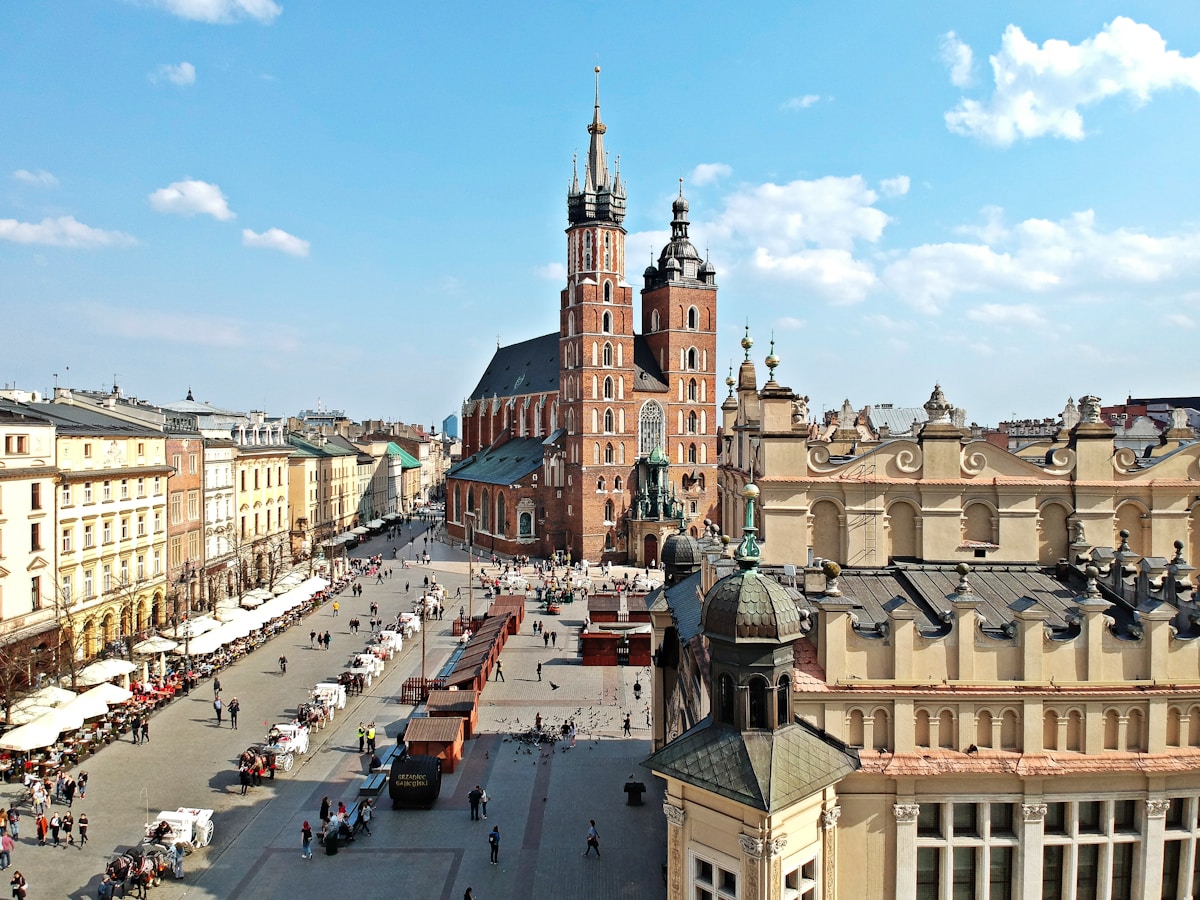
Poland’s two most visited cities could hardly be more different from each other. Kraków survived the Second World War almost entirely intact; Warsaw was systematically demolished and rebuilt from rubble after 1944. That single historical fact shapes everything - the architecture, the atmosphere, the tourist infrastructure, and the way each city presents itself to visitors. Here is a direct comparison to help you decide where to spend your time, or whether to make room for both.
Overview
Kraków is a compact medieval city in southern Poland. Its Old Town - a UNESCO World Heritage Site - is dense with Gothic churches, Renaissance courtyards, and limestone cellars. Wawel Castle dominates the hilltop above the Vistula. The Jewish quarter of Kazimierz, revived since the 1990s, is now the city’s most interesting neighbourhood for food, bars, and independent culture. The city receives around 14 million visitors a year, which means it is busy, particularly in summer.
Warsaw is Poland’s capital and largest city, a place of roughly 1.8 million people. Its rebuilt Old Town is beautiful but compact and tourist-facing. The real Warsaw - government ministries, glass-tower business districts, thriving restaurant scenes, excellent museums - spreads across a much larger urban footprint. It is less immediately picturesque than Kraków but richer in contemporary culture and international energy.
If your primary interest is aesthetics, medieval architecture, and a concentrated sightseeing hit, Kraków wins outright. If you want to understand modern Poland, experience a genuine European capital, or combine sightseeing with business, Warsaw is the better fit.
Getting Between the Cities
The PKP Intercity Pendolino express train connects Kraków Główny and Warsaw Centralny in approximately 2 hours 20 minutes. Advance tickets start from around PLN 50; last-minute tickets can reach PLN 120 or more as of 2026. Standard InterCity trains take around 3 hours and are often cheaper. There are frequent departures throughout the day, making it entirely practical to combine both cities in a single trip - three days in Kraków followed by two days in Warsaw, or vice versa, is a popular itinerary.
By car via the A1/A4 motorway the journey takes approximately 3 hours depending on traffic. The road is well-maintained; tolls apply on certain sections and cost approximately PLN 30–50 for the full stretch.
Budget buses (FlixBus, Polska Bus) connect the two cities for as little as PLN 20–40 but take 4–5 hours and have none of the train’s comfort or reliability.
Things to Do
Kraków concentrates its highlights in a small area. Wawel Castle and Cathedral, the Main Market Square, Kazimierz, Schindler’s Factory, and the Wieliczka Salt Mine (14 km out) are the core sights - all reachable on foot or with a short tram ride. The density of attractions makes it possible to cover the essentials in two days without feeling rushed. For detailed recommendations, see our Kraków things to do guide.
Warsaw rewards a longer visit and some intellectual engagement. The Warsaw Rising Museum and POLIN Museum of the History of Polish Jews are among the best history museums in Europe. Łazienki Park offers one of the most pleasant green spaces in any Central European city, and the Praga district - largely intact after the war - gives a genuine sense of pre-1939 Warsaw. The city’s contemporary arts scene, street food markets, and rooftop bars add a dimension that Kraków, for all its charm, largely lacks.
Edge: Kraków for concentrated beauty; Warsaw for depth and contemporary culture.
Food and Drink
Both cities have excellent restaurant scenes, but they differ in character.
Kraków’s best dining concentrates in Kazimierz, where independent restaurants crowd a few streets. Milk bars (Bar mleczny) survive here in genuine form - Chimera on Świętej Anny is an institution, with soups and pierogi at prices around PLN 25–40 for a full meal as of 2026. Mid-range options: Restauracja Miód Malina (Polish classics, mains PLN 45–75), Zalewajka (regional Małopolska cuisine). For a splurge, Wierzynek on the Market Square dates its founding to 1364. For detailed coverage, see our Kraków food and drink guide.
Warsaw has more diversity. The concentration of diplomatic staff, expats, and a large young professional class has pushed the restaurant scene toward an international range - excellent Japanese, Middle Eastern, and contemporary European options exist alongside refined Polish cooking. Kieliszki na Próżnej stands out for seasonal Polish-European cooking. Bez Glutenu is a genuine institution. Street food markets (Hala Gwardii, Nocny Market) offer a good cross-section of the city’s food culture. Prices are comparable to Kraków.
Edge: Draw. Kraków has more character in a smaller area; Warsaw has more variety.
Where to Stay
Kraków has a very deep hotel market given its tourist volume. The Old Town and Kazimierz are the two best bases. Budget: Greg & Tom Beer House Hostel offers clean dorms from approximately PLN 80 per night and a free breakfast. Mid-range: Puro Hotel delivers design and a rooftop terrace from approximately PLN 450 per night. Top end: Hotel Wentzl on the Market Square from approximately PLN 600 per night. Prices spike significantly in July and August. For the full breakdown, see our Kraków where to stay guide.
Warsaw is a larger market with more variety at the upper end. Budget: Moxy Warsaw Praga from approximately PLN 350 per night with a lively communal bar. Mid-range: Hotel Indigo Nowy Świat from approximately PLN 550 per night. Luxury: Hotel Bristol, the grand dame of Warsaw hotels, from approximately PLN 800 per night. Business-class options (Marriott, Hilton) are well-represented near the Central Station. All prices as of 2026.
Edge: Kraków for location and atmosphere; Warsaw for range at the luxury and business tier.
Search hotels in Kraków on Booking.com
Nightlife
Kraków has one of Poland’s most concentrated bar scenes. The underground cellars below the Old Town - medieval stone vaults repurposed as bars - are genuinely atmospheric. Kazimierz is where the more independent, creative scene lives, with cocktail bars and small clubs spread across a compact area. Stag parties have made parts of the Old Town rowdy on weekend nights, which is either atmosphere or a reason to stay in Kazimierz, depending on your preference. See our Kraków nightlife guide for specific venues.
Warsaw’s nightlife is larger in scale, more varied, and less concentrated. Praga and the Powiśle neighbourhood near the Vistula are the current focal points for the creative scene. The city’s clubs attract international DJs; venues like Jasna 1, Smolna, and Luzztro have established Warsaw as a serious destination for electronic music. The bar scene on Nowy Świat and across the Centre covers every category from hotel rooftop terraces to DIY music bars.
Edge: Warsaw for scale and musical variety; Kraków for atmosphere and walkability.
Budget
Both cities are affordable by Western European standards. As a rough guide:
| Expense | Kraków | Warsaw |
|---|---|---|
| Hostel dorm (per night) | PLN 80–120 | PLN 90–130 |
| Mid-range hotel (per night) | PLN 350–500 | PLN 400–600 |
| Milk bar lunch | PLN 20–35 | PLN 25–40 |
| Restaurant dinner (mid-range) | PLN 50–90 | PLN 55–100 |
| Tram/bus single | PLN 3.40 | PLN 3.40 |
| Museum entry (average) | PLN 20–35 | PLN 25–35 |
All approximate, as of 2026. Warsaw is marginally more expensive, particularly for accommodation, but the difference is not dramatic.
The Verdict
Choose Kraków if: you want a concentrated sightseeing experience, medieval aesthetics, the most walkable old town in Poland, and a base for day trips to Wieliczka, Auschwitz, and Zakopane.
Choose Warsaw if: you want to understand modern Poland, access world-class history museums, experience a cosmopolitan European capital, or combine leisure with business travel.
Visit both if you can. The 2.5-hour train connection makes it entirely practical to combine them - most visitors who do so find the contrast between the two cities the most memorable part of the trip. See our full guides to Kraków and Warsaw for planning detail. Guided tours in each city are a useful starting point: Kraków tours and Warsaw tours both have strong options for first-time visitors wanting an efficient introduction to the main sites.
Plan Your Visit
- Warsaw to Kraków Transport Guide - train, bus, and driving options with booking tips
- 1 Week in Poland Itinerary - the classic route combining both cities with Gdańsk
- 3 Days in Kraków Itinerary - how to structure a short break in Kraków
- Poland Budget Guide - costs across both cities in 2026
- Things to Do in Warsaw - top attractions in the capital
- Things to Do in Kraków - top attractions in the medieval city
More Poland Comparisons
- Kraków vs Wrocław - two southern Polish cities compared on architecture, food, and value
- Warsaw vs Gdańsk - Warsaw’s capital scale vs Gdańsk’s Gothic waterfront for a Baltic break
- Poland vs Czech Republic - if you’re still deciding between Central European countries