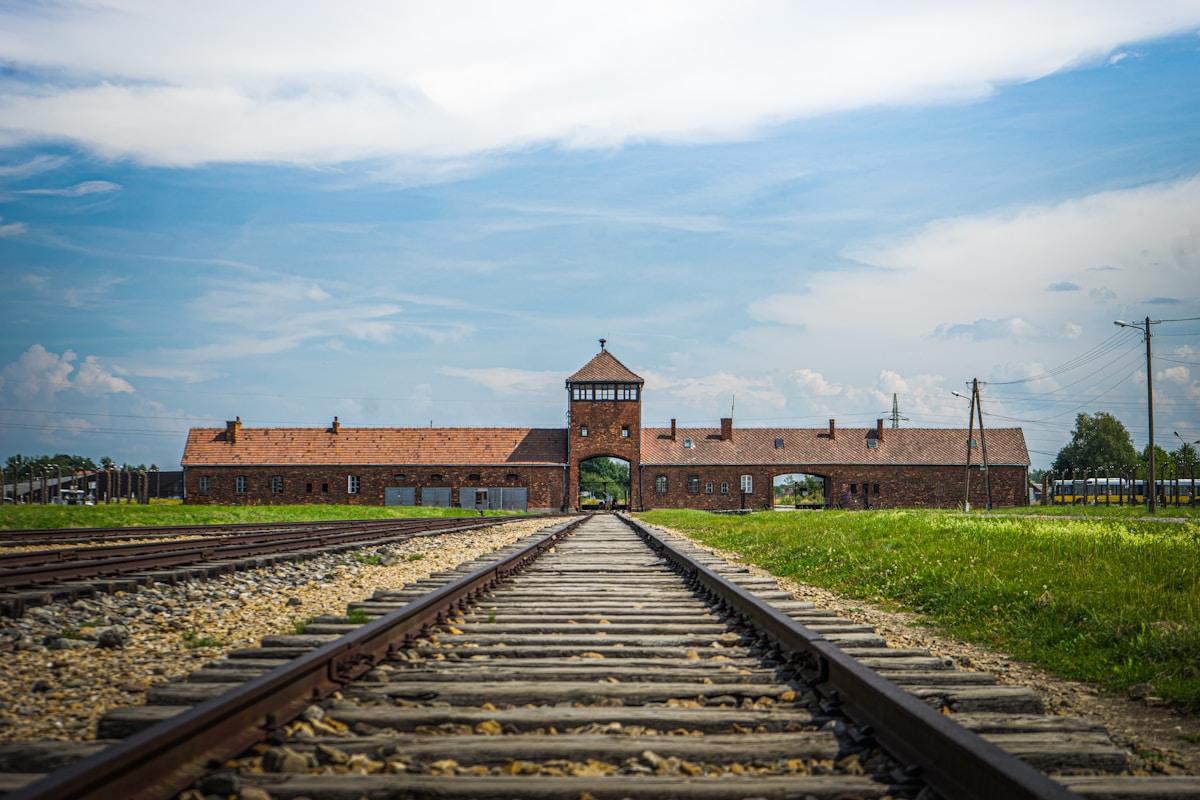
Kraków is the most popular tourist base in Poland, partly because of what the city itself offers, but also because four of the country’s most visited sites are within easy reach. Auschwitz-Birkenau - the largest Nazi concentration and extermination camp - is 70 kilometres west. Wieliczka Salt Mine, a 700-year-old UNESCO World Heritage site, is 14 kilometres southeast. Zakopane sits two hours south in the Tatra Mountains. Ojców National Park, the smallest national park in Poland, is 25 kilometres north. All four are manageable in a single day.
Auschwitz-Birkenau
Between 1940 and 1945, approximately 1.1 million people - the overwhelming majority of them Jewish - were murdered at the Auschwitz-Birkenau complex. The site is now a UNESCO World Heritage memorial and museum, and visiting it is a serious, necessary experience that requires advance planning.
Booking is mandatory. The Auschwitz-Birkenau Memorial and Museum requires timed entry tickets booked in advance at auschwitz.org. During peak season (April–October), same-day entry is rarely available. Guided tours in English typically last 3.5 hours and are conducted by museum-certified guides. A guided tour ticket costs approximately 85 PLN for adults as of 2026; self-guided entry (morning or late afternoon outside guided hours) is free but limited. Book through the official site only - avoid third-party platforms that add unnecessary fees.
Getting there independently: Buses depart from Kraków’s MDA bus station (Dworzec Autobusowy) regularly; journey time approximately 1 hour 30 minutes, ticket approximately 14–18 PLN one-way as of 2026. Trains from Kraków Główny to Oświęcim take approximately 1 hour 30 minutes; ticket approximately 18–22 PLN as of 2026. From Oświęcim station, the memorial is approximately 2 kilometres (walkable or short taxi ride, approximately 12 PLN as of 2026).
Organised tours from Kraków: Multiple operators run dedicated Auschwitz tours from Kraków, typically including transport and a licensed guide. Operators such as Cracow City Tours, Oskar Tours, and Amazing Cracow offer group tours from approximately 130–170 PLN per person as of 2026, or private tours from approximately 400–600 PLN for a group as of 2026. Transport-only minibuses without guide services start from approximately 35–50 PLN as of 2026.
Allow: A full day. The memorial covers two sites (Auschwitz I and Auschwitz II-Birkenau, 3 kilometres apart); combined they require 4–5 hours minimum.
Wieliczka Salt Mine
The Wieliczka Salt Mine has been operating continuously since the 13th century, making it one of the world’s oldest industrial enterprises still in service. The 300-kilometre network of tunnels descends to 327 metres below ground. The tourist route (approximately 3.5 kilometres, 800 steps) passes through chambers carved from salt: chapels with altarpieces, reliefs and chandeliers all cut from rock salt, a subterranean lake, and the extraordinary St. Kinga’s Chapel - a full-size cathedral 101 metres underground with floors, walls, and sculptures entirely in salt. UNESCO listed the mine in 1978.
Booking: Book tickets in advance at wieliczka-saltmine.com, especially between May and September when queues form early. The standard tourist route costs approximately 109 PLN for adults, 89 PLN for students as of 2026. English-language guided tours depart regularly; the tour lasts approximately 2.5 hours.
Getting there: The SKA minibus (line 304) departs from outside Kraków Główny station every 10–15 minutes; journey time approximately 30 minutes, ticket approximately 6 PLN as of 2026. Taxis cost approximately 60–80 PLN from central Kraków as of 2026. The mine entrance is in the centre of Wieliczka town, a short walk from the bus stop.
Allow: Half a day. The 30-minute journey each way plus 2.5-hour tour adds up quickly; most visitors are back in Kraków by early afternoon, leaving time for another activity.
Zakopane
Zakopane is Poland’s mountain capital - a highland resort town at 850 metres beneath the 2,499-metre Rysy peak, Poland’s highest summit, and the Giewont ridge that defines the town’s skyline. In summer it draws hikers; in winter it’s Poland’s main ski destination. The town itself has a distinctive Goral (highlander) architectural style: wooden houses with steeply pitched roofs, carved balconies and decorated gables. Krupówki, the main pedestrianised street, is lined with restaurants, shops selling oscypek (smoked sheep’s cheese) and souvenir stalls.
Hiking options: The cable car to Kasprowy Wierch (1,987 metres) offers the most dramatic alpine views without strenuous effort - a return ticket costs approximately 85 PLN as of 2026; book at pkl.pl. For walkers, the trail to Morskie Oko (Eye of the Sea lake, 1,395 metres) is the most popular in Poland: a 9-kilometre walk each way from the Palenica Białczańska car park, or a horse-drawn cart to the halfway point for approximately 30–40 PLN as of 2026.
Getting there: PKS buses and private minibuses depart from Kraków’s MDA bus station regularly throughout the day; journey time approximately 2 hours, ticket approximately 20–30 PLN as of 2026. Timetables at e-podroznik.pl. Driving takes approximately 1 hour 45 minutes via the S7 road.
Organised tours: One-day Zakopane tours including transport from Kraków cost approximately 80–130 PLN per person as of 2026; most include a guide for the town, with independent time for hiking.
Allow: A full day. The journey is long enough that a half-day feels rushed.
Ojców National Park
Ojców is Poland’s smallest national park (21 square kilometres) and one of its least-visited by international tourists - which makes it one of the better alternatives for those wanting to escape Kraków without the crowds. The park covers the limestone valleys of the Prądnik and Sąspówka rivers, with dramatic rock formations, medieval ruins, and cave systems. The two main landmarks are Pieskowa Skała Castle (a well-preserved Renaissance castle with a museum, entry approximately 25 PLN as of 2026, closed Mondays) and Hercules’s Club - a 25-metre limestone pillar rising from the valley floor, reached by a short trail from the village of Ojców.
The valley is known for bats: over 15 species inhabit the cave systems, making it one of Europe’s most important bat habitats. The Łokietek Cave (open May–October, entry approximately 14 PLN as of 2026) offers a 500-metre guided tour of the largest cave in the park.
Getting there: No direct train serves Ojców. Buses from Kraków (line 904 from ul. Bosacka) run a few times per day to Ojców village; journey approximately 45 minutes, ticket approximately 8 PLN as of 2026 - check timetables at mpk.krakow.pl carefully as services are infrequent. By car: 25 kilometres north of Kraków via the DK94, approximately 35 minutes. Cycling from Kraków is popular - the route follows the Prądnik valley.
Allow: Half a day by car; a full day by bus given infrequent connections.
Planning Your Day Trips
Priorities: If you have limited time, Wieliczka is the most logistically convenient - short journey, half-day commitment, extraordinary underground experience. Auschwitz is essential for anyone wanting to engage with Polish history, but requires a full day and advance booking. Zakopane is best in clear weather; the mountains are less rewarding under cloud. For Auschwitz and Zakopane in particular, guided day tours from Kraków handle the logistics - transport, licensed guides, and timed entry - which removes the complexity of coordinating multiple bookings. For Ojców and the Tatras, car hire in Poland opens up itineraries that public transport can’t easily cover.
Combining: Wieliczka in the morning (back in Kraków by 1pm) pairs with an afternoon in Kraków’s Old Town or Kazimierz. Auschwitz and Zakopane should not be combined - both require a full day. Ojców is easy to combine with a morning in Kraków’s Nowa Huta (the Socialist Realist district, 15 minutes east by tram) given the short drive.
What to book in advance: Auschwitz timed entry is mandatory; Wieliczka tickets are strongly recommended in peak season; Kasprowy Wierch cable car at Zakopane has limited capacity.
Search hotels in Kraków on Booking.com
More in Kraków
- Kraków City Guide - overview, top attractions, and getting there
- Things to Do in Kraków - attractions and activities in depth
- Where to Stay in Kraków - hotels and hostels by neighbourhood and budget
- Food and Drink in Kraków - restaurants, milk bars, and street food
- Kazimierz - Kraków’s Jewish Quarter - history, synagogues, and the neighbourhood in depth
- Kraków Nightlife - bars, clubs, and cellar venues
- Wieliczka Salt Mine Visitor Guide - full guide to tickets, routes, and what to expect underground
- Visiting Auschwitz-Birkenau - practical planning guide for the memorial site
- Auschwitz Tours from Kraków - guided tour options with transport included
- Tatra Mountains Trekking Guide - how to spend a hiking day in the Tatras from Zakopane
- Skiing in Poland - Zakopane - the mountain resort in winter, with lift prices and slopes
- 3 Days in Kraków Itinerary - how day trips fit into a structured short break