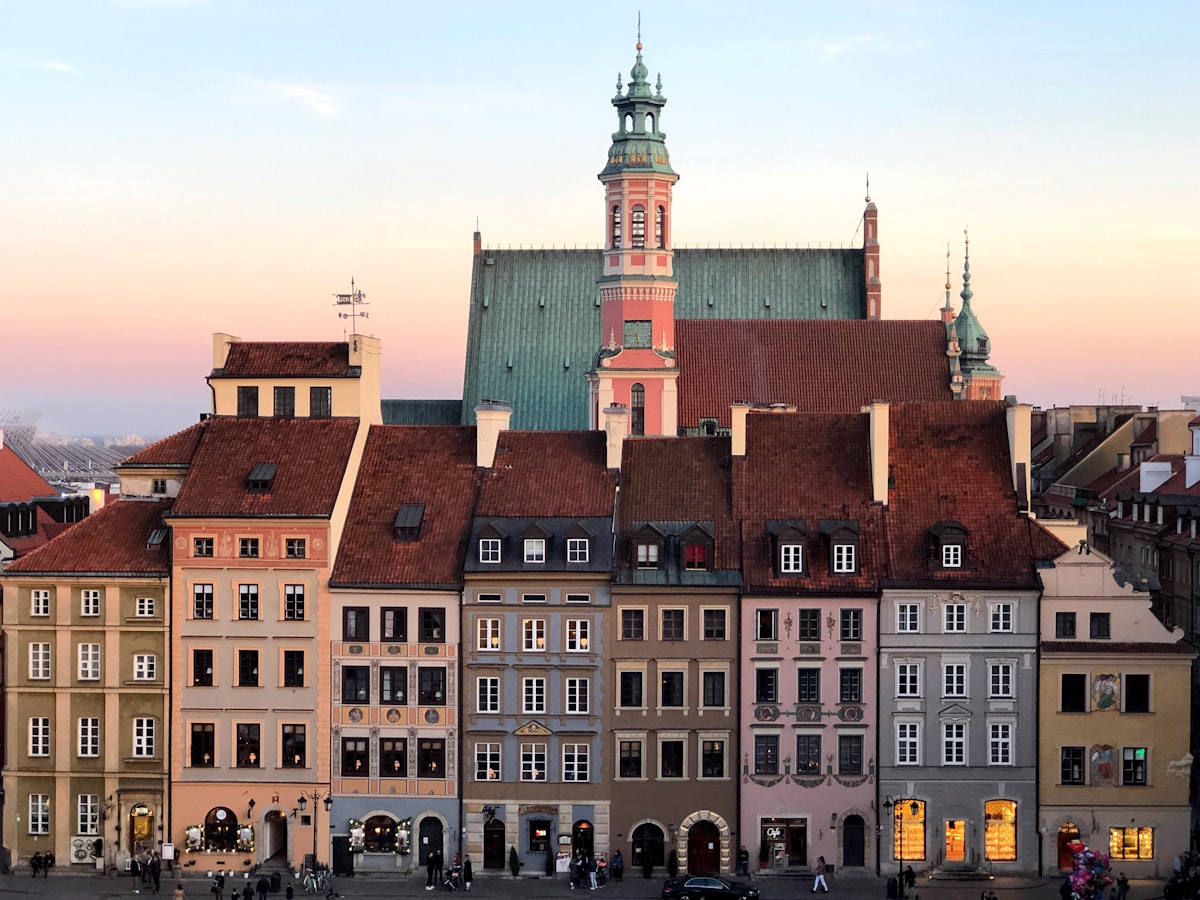
Warsaw and Gdańsk sit at opposite ends of Poland - geographically, historically, and in terms of what they offer visitors. Warsaw is the inland capital, rebuilt after wartime destruction, driven by government and finance. Gdańsk is a Baltic port city with German Gothic architecture, a maritime heritage, and the sea within easy reach. Below is a direct comparison to help you decide which suits your trip.
Overview
Warsaw is Poland’s largest city and its political and economic centre, home to around 1.8 million people. Its rebuilt Old Town is attractive, and the city holds some of the most important history museums in Europe - the Warsaw Rising Museum and POLIN Museum among them. The contemporary restaurant and nightlife scene is the most sophisticated in Poland. Warsaw is a city that rewards a certain kind of curious, engaged visitor; it is not immediately pretty in the way that Kraków or Gdańsk are, but it has more substance than its reputation sometimes suggests.
Gdańsk is one of Poland’s most visually striking cities - a row of tall, richly coloured merchant townhouses along the Długi Targ (Long Market) that look unlike anything else in Poland. The city was a major Hanseatic trading port from the 14th century and its architecture reflects that mercantile wealth. The waterfront is genuinely beautiful, the Old Town compact and very walkable, and the nearby beaches of Sopot and Gdynia are accessible by commuter rail in 15–30 minutes. The Solidarity Museum - covering the 1980 shipyard strikes that began the end of Communist rule in Poland - is one of the most significant history attractions in the country.
Getting Between the Cities
Direct PKP Intercity trains connect Warsaw Centralny and Gdańsk Główny in approximately 2 hours 50 minutes to 3 hours. Advance fares start from around PLN 60; standard fares run PLN 100–140 as of 2026. There are around eight to ten direct departures per day in each direction.
By car the journey takes approximately 3.5–4 hours via the A1 motorway, which runs most of the way north. Tolls apply and cost approximately PLN 40–60. The road is generally in good condition, though traffic around Warsaw and approaching Gdańsk can extend journey times.
Budget buses are slower (4.5–5.5 hours) but significantly cheaper, from around PLN 25–45.
Things to Do
Warsaw has the greater volume and depth of sights. The Warsaw Rising Museum (entry approximately PLN 30 as of 2026) is essential - arguably the most powerful war memorial in Europe. POLIN Museum of the History of Polish Jews (approximately PLN 30) demands at least two and a half hours. Łazienki Park with its free Sunday Chopin concerts (May–September), the Palace of Culture and Science viewing platform (approximately PLN 20), and the Praga district for intact pre-war street architecture fill out a very full few days. For full detail, see our Warsaw things to do guide.
Gdańsk is smaller but the Old Town is exquisitely preserved. The Long Market (Długi Targ), the 14th-century St Mary’s Basilica (one of the largest brick churches in the world), the Crane (Żuraw) on the Motława waterfront, and the medieval Green Gate are the architectural core. The European Solidarity Centre - a copper-clad museum documenting the Solidarity movement - is among the best-designed contemporary museums in Poland (entry approximately PLN 35 as of 2026). The Neptune Fountain and Artus Court on the Long Market are free to view from outside. The Amber Museum in the Torture Chamber is a compact but interesting exhibit on Baltic amber (approximately PLN 20). For more recommendations, see our Gdańsk things to do guide.
Edge: Warsaw for historical depth; Gdańsk for architectural beauty and the coastal add-on.
Food and Drink
Warsaw has the most diverse and sophisticated restaurant scene in Poland, reflecting its size and international population. Kieliszki na Próżną does seasonal Polish-European cooking at approximately PLN 55–90 per main. Dom Polski serves reliable traditional Polish food at PLN 45–80. Milk bars survive across the city; Mleczarnia Jerozolimska near the Central Station is a reliable option for a full meal under PLN 35. The cocktail bar and craft beer scenes are both well-developed. See our Warsaw food and drink guide for the full picture.
Gdańsk has a smaller but high-quality food scene. The Old Town waterfront restaurants are generally tourist-priced; the better-value and more interesting options are one or two streets back. Targ Rybny (Fish Market) area has good options for Baltic fish - smoked eel, marinated herring, and fresh cod are regional staples. Restauracja Kubicki, founded in 1918 and still operating in the Old Town cellar, is Gdańsk’s most historic restaurant (mains approximately PLN 50–80 as of 2026). The craft beer bar scene has developed notably since around 2018.
Edge: Warsaw on range and sophistication; Gdańsk for regional Baltic cuisine and setting.
Where to Stay
Warsaw offers the full spectrum from budget hostels to international luxury chains. Mid-range options: Hotel Indigo Warsaw Nowy Świat from approximately PLN 550 per night as of 2026; Moxy Warsaw Praga from approximately PLN 350 per night. For top-end, Hotel Bristol from approximately PLN 800 per night. The best areas for leisure travellers are Śródmieście (City Centre) and the Old Town. See our Warsaw where to stay guide.
Gdańsk has strong accommodation in the Old Town area, mostly in boutique and design hotels in converted merchant buildings. Hilton Gdańsk on the waterfront is the best-known international hotel, from approximately PLN 500–700 per night as of 2026. For mid-range, Hotel Podewils in a 15th-century townhouse on the Motława offers genuine charm from approximately PLN 450 per night. Budget options are thinner than in Warsaw; look for apartment rentals for the best value in the Old Town. See our Gdańsk where to stay guide.
Edge: Warsaw for range and value; Gdańsk for boutique character.
Search hotels in Warsaw on Booking.com
Nightlife
Warsaw has the most active and varied nightlife in Poland - a large student population and significant expat presence sustain clubs, live music venues, cocktail bars, and rooftop terraces across multiple neighbourhoods. Praga and Powiśle are the current focal areas for the creative scene. The city’s electronic music clubs (Smolna, Jasna 1) attract international bookings. Bars along Nowy Świat cover the full range from hotel rooftops to basement dive bars.
Gdańsk has a more compact nightlife focused on the Główne Miasto (Main City) area and the Dolne Miasto district. Craft beer bars and independent music venues have developed alongside the Old Town tourist bars. The scene is smaller than Warsaw but very walkable. In summer, the Tricity nightlife extends to beach clubs in Sopot - less than 20 minutes away by commuter rail.
Edge: Warsaw on scale; Gdańsk on Baltic summer atmosphere.
Budget
| Expense | Warsaw | Gdańsk |
|---|---|---|
| Hostel dorm (per night) | PLN 90–130 | PLN 85–120 |
| Mid-range hotel (per night) | PLN 400–600 | PLN 400–550 |
| Restaurant lunch (mid-range) | PLN 35–60 | PLN 35–55 |
| Restaurant dinner (mid-range) | PLN 55–100 | PLN 50–90 |
| Museum entry (average) | PLN 25–35 | PLN 20–35 |
| Public transport (single) | PLN 3.40 | PLN 3.80 |
All approximate, as of 2026. The cities are broadly similar in cost; Gdańsk tends to be slightly cheaper outside the Old Town waterfront tourist strip.
The Verdict
Choose Warsaw if: you want to explore Poland’s capital in depth, engage with its extraordinary museums, experience a full-size cosmopolitan European city, and have the broadest range of food and accommodation options.
Choose Gdańsk if: you want beautiful waterfront architecture, a compact and very walkable Old Town, easy access to Baltic beaches, and a specific focus on the Solidarity story and maritime history.
Both cities can be combined in a single trip given the reasonable train connection. A long weekend (4–5 days) covering Warsaw and Gdańsk gives a rounded picture of Poland’s range - from inland capital to Baltic port. See our full guides to Warsaw and Gdańsk for detailed planning. For guided experiences in each city, browse Warsaw tours and Gdańsk tours - both have strong options for walking tours and day trips.
More Poland Comparisons
- Kraków vs Warsaw - Poland’s most-searched city comparison: medieval depth vs capital energy
- Gdańsk vs Sopot - choosing between Baltic city and beach town, just 15 minutes apart
- Poland vs Czech Republic - extending into Central Europe? See how Poland compares to its southern neighbour