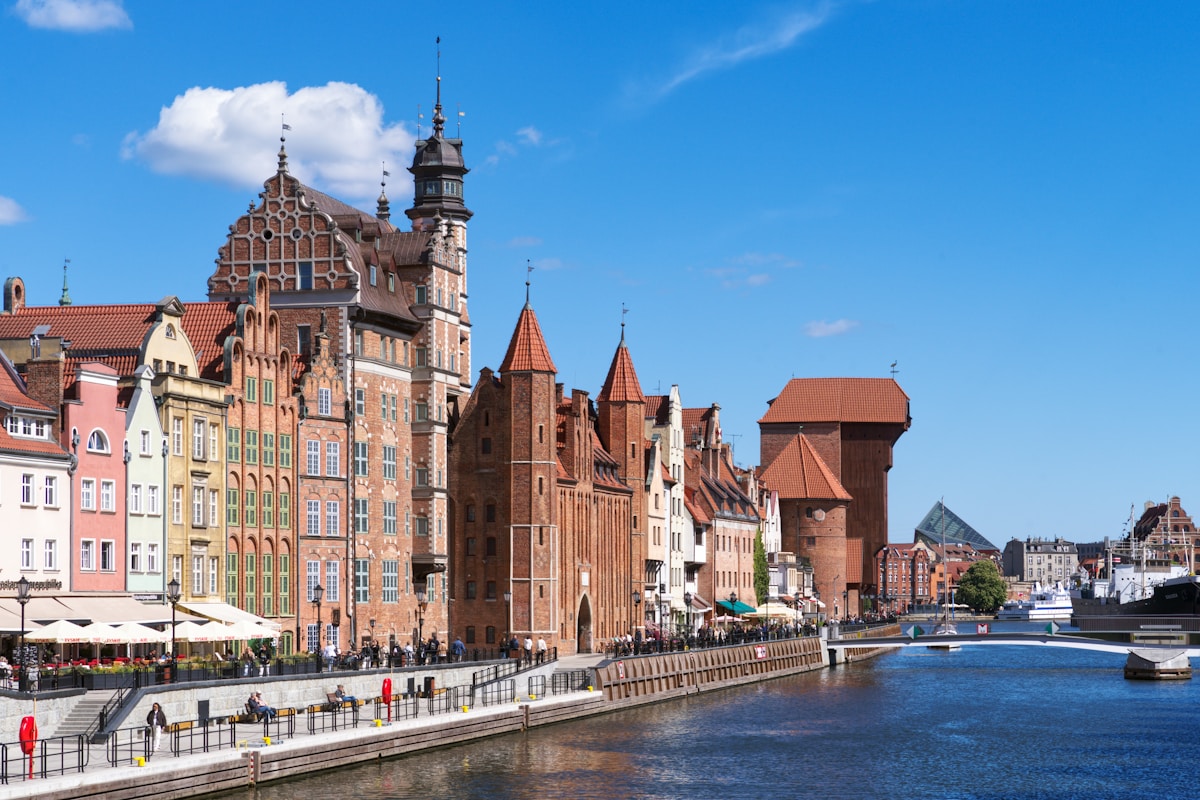
Gdańsk covers a surprising range in a compact area - medieval architecture, 20th-century history, amber craft, Baltic waterways, and beach access within a short train ride. Here is how to make the most of the city across different types of visit.
The Old Town
Walking the Long Street and Long Market axis from the Golden Gate to the Green Gate takes less than 20 minutes at a stroll, but most visitors spend considerably longer - photographing the merchant house façades, stopping at the Neptune Fountain, and exploring the narrow lanes that run north and south of the main axis. Mariacka Street is the most atmospheric side street - its amber shops and Gothic porches make it one of the most photographed lanes in Poland.
St Mary’s Basilica is the largest brick Gothic church in the world. The interior is cavernous and pale - much of the stained glass was lost in the war. The 15th-century astronomical clock is the highlight. Tower entry costs approximately PLN 10 as of 2026 for views across the rooftops.
The Central Maritime Museum occupies several buildings along the Motława and the historic Crane (Żuraw). The crane, which dates from the 14th century, functioned both as a loading mechanism and a city gate. Entry to the museum and crane costs approximately PLN 25 as of 2026.
History and Solidarity
Museum of the Second World War is an essential stop for visitors interested in 20th-century European history. The permanent galleries cover the lead-up to war, the German and Soviet occupations of Poland, the Holocaust, and the post-war settlement. Entry approximately PLN 35 as of 2026; closed Mondays. Timed entry online recommended.
European Solidarity Centre tells the story of the Solidarity trade union movement, from the 1980 shipyard strikes to the Round Table negotiations and the 1989 elections. The exhibition design - interactive, well-lit, multilingual - makes it accessible without requiring prior knowledge. Entry approximately PLN 25 as of 2026. Book attraction tickets online to avoid queues at peak times.
Westerplatte is a 7 km boat or bus trip north of the Old Town. The ruins of the Polish garrison barracks and the 1960s monument stand on the peninsula where the first shots of the Second World War were fired on 1 September 1939. The boat trip from the Motława quay takes approximately 30 minutes and is the most scenic approach. Entry to the site is free. History enthusiasts visiting northern Poland may also want to see Malbork Castle, just 60 km south-east of Gdańsk.
Amber Workshops
Baltic amber has been worked in Gdańsk for centuries. The concentration of amber workshops on Mariacka Street and Długi Targ means it is possible to watch craftspeople at work, understand how genuine amber is identified (inclusions, texture, UV fluorescence), and purchase directly from the maker. A guided Gdańsk Old Town tour often includes the amber district alongside the Solidarity and maritime sites. Pieces range from approximately PLN 30 for simple pendants to PLN 500 and above for complex designs as of 2026. Look for the International Amber Association certification to ensure authenticity.
Day Trips: The Trójmiasto and Beyond
Sopot: 12 km north by SKM train (approximately 20 minutes, PLN 5 as of 2026). A 19th-century Baltic resort with a famous wooden pier (Molo), sandy beach, casino, and the main street of Bohaterów Monte Cassino filled with cafés and bars. Worth a half-day in summer.
Gdynia: 24 km north by SKM. A modernist city built largely in the 1930s with a naval museum, a ship museum (the Błyskawica destroyer moored at the quay), and calmer beaches. The modernist architecture - particularly around the central boulevard - is striking. See our Gdynia things to do guide for a full breakdown.
Malbork Castle: 60 km south-east. The largest castle in the world by land area, built by the Teutonic Knights in the 14th century. Entry approximately PLN 65 as of 2026; direct trains from Gdańsk take approximately 40 minutes. A full half-day is needed.
Hel Peninsula: A narrow spit of land extending 35 km into the Baltic, reached by boat from Gdańsk in summer (approximately 2 hours) or by PKP train. Beaches, a seal sanctuary, and a lighthouse at the tip. The seal sanctuary entry costs approximately PLN 20 as of 2026.
Search hotels in Gdańsk on Booking.com
Top Guided Tours in Gdańsk
Verified walking tours and experiences from GetYourGuide as of 2026. All depart from central Gdańsk.
| Tour | Duration | From | Book |
|---|---|---|---|
| Gdańsk: Old Town 2-Hour Walking Tour | 2h | from $21 | Book → |
| Gdańsk: City Sights & History Guided Walking Tour | 2.5h | from $26 | Book → |
| Gdańsk: Private Walking Tour - Legends and Facts | 3h | from $99 | Book → |
| Gdańsk: Small Group Evening Walking Tour | 2h | from $63 | Book → |
Browse the full range of Gdańsk tours to compare operators and time slots.
More in Gdańsk
- Gdańsk City Guide - overview, top sights, restaurants, and getting there
- Where to Stay in Gdańsk - hotels and hostels by area and budget
- Day Trips from Gdańsk - Sopot, Gdynia, Malbork, and the Hel Peninsula
- Malbork Castle Visitor Guide - the world’s largest Gothic castle, 60 km from Gdańsk by train
- Sopot City Guide - the Baltic resort town 12 km north, with beach and pier
- Gdynia City Guide - the modernist city 24 km north with its naval museum and beaches
- Gdańsk vs Sopot - which Baltic city to base yourself in
- Warsaw vs Gdańsk - comparing Poland’s capital with its Baltic port city
- 2 Weeks in Poland Itinerary - how Gdańsk fits into a longer Polish trip