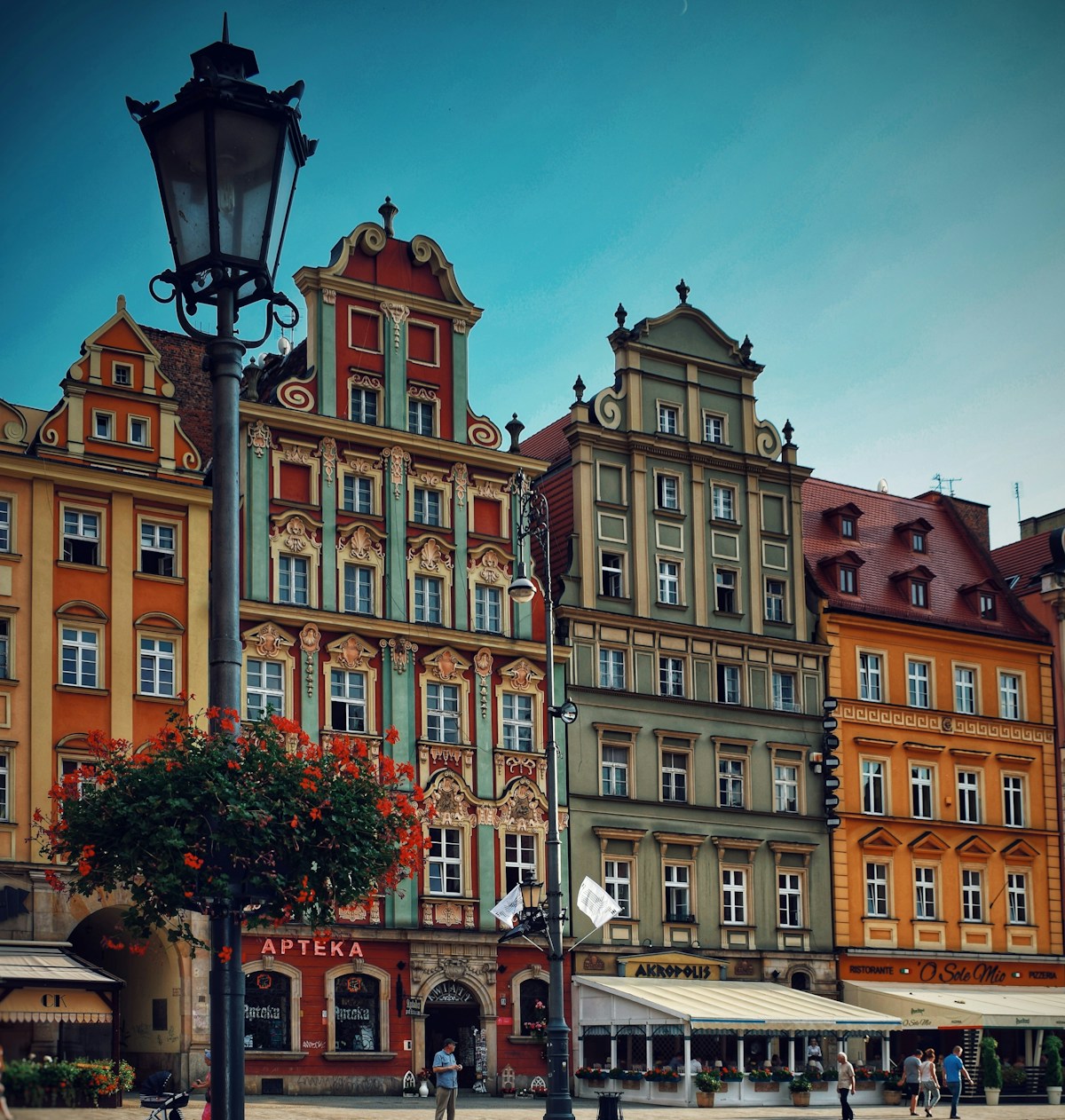
Wrocław rewards both structured sightseeing and purposeless wandering. The main attractions are genuinely excellent; the side streets between them reward exploration; and the Oder islands provide a different tempo entirely.
The Market Square and Old Town
The Rynek (Market Square) is the starting point for almost every visit to Wrocław. The Gothic Old Town Hall (Ratusz) at its centre is one of the finest in Central Europe; its historical museum (entry approximately PLN 20 as of 2026) covers the city’s complex Silesian and German history. The basement of the Ratusz holds the Piwnica Świdnicka - one of the oldest restaurants in Europe, operating since 1273.
Dwarfs (krasnale): The bronze miniatures placed around the city since 2005 are a genuine local institution rather than a tourist gimmick. The original dwarfs were placed by opposition artist Waldemar Fydrych as a protest symbol; they were adopted city-wide after 2001. A free map from the Tourist Information Centre on the Rynek identifies the main clusters. Allow 1–2 hours for a thorough hunt.
St Elizabeth’s Church on the northern edge of the Market Square has a tower (entry approximately PLN 10 as of 2026) that provides the best elevated view of the Rynek. The tower was damaged by fire in 1976; the rebuilt spire is now slightly shorter than the medieval original.
Cathedral Island (Ostrów Tumski)
Walking across the Tumski Bridge - decorated with padlocks in the European tradition - leads to the oldest part of Wrocław, a district of Gothic churches, ecclesiastical buildings, and gaslit lanes that operates on a different timescale from the rest of the city. The Cathedral of St John the Baptist is the dominant structure; its Gothic towers are a landmark from anywhere in the city. The tower climb (entry approximately PLN 10 as of 2026) is worthwhile in clear weather.
The Church of the Holy Cross (Kościół Świętego Krzyża), built on two levels in the 14th century, is one of the most unusual sacred buildings in Poland and typically uncrowded.
Panorama Racławicka
The massive 19th-century cyclorama depicting the 1794 Battle of Racławice is displayed in a purpose-built rotunda a short walk from the Market Square. At 114 metres in circumference, it is the largest painting in Poland. Entry approximately PLN 40 as of 2026; timed entry is enforced. Book online to guarantee your preferred time. The viewing platform in the centre of the rotunda provides the immersive perspective the painting was designed for.
The Zoo and Afrykarium
Wrocław Zoo (entry approximately PLN 60 adults as of 2026; book tickets in advance during peak months - queues can be substantial in July and August) houses over 10,000 animals in a park setting on Kępa Mieszczańska island. The Afrykarium - a vast building opened in 2014 housing ocean and freshwater African biomes - is the main draw: sharks, manatees, rays, and Nile crocodiles in large, well-designed tanks. Allow 3–4 hours for a full visit.
Day Trips from Wrocław
A guided tour from Wrocław is the easiest way to cover Książ Castle and Świdnica without juggling bus timetables.
Książ Castle (70 km south-west; train to Wałbrzych, then bus): the third-largest castle in Poland, built on a rock spur above the Pełcznica valley. Used by the Nazis as a regional command post; underground tunnel systems carved by concentration camp prisoners are partly accessible. Entry approximately PLN 30 for the castle; tunnel tour approximately PLN 40 as of 2026.
Świdnica Church of Peace: 55 km south. A vast timber church built in 1657–58 under strict conditions imposed by Habsburg authorities (no stone, no towers, no bells, no cellars). One of the largest timber-framed religious buildings in the world; UNESCO listed. Entry approximately PLN 15 as of 2026. Train from Wrocław Główny takes approximately 50 minutes.
Złoty Stok Gold Mine: 100 km south-west. A former gold mine open to tourists with underground tours and a waterfall inside the tunnels. Entry approximately PLN 35 as of 2026. Best combined with Kłodzko town (historic fortress town 15 km away).
Search hotels in Wrocław on Booking.com
Top Guided Tours in Wrocław
Verified walking tours from GetYourGuide as of 2026. All depart from central Wrocław.
| Tour | Duration | From | Book |
|---|---|---|---|
| Wrocław: Secrets of the Oder Metropolis Walking Tour | 2h | from $154 | Book → |
| Wrocław: Private Old Town Guided Walking Tour | 3h | from $91 | Book → |
| Wrocław: 3-Hour History and Culture Walking Tour | 3h | from $199 | Book → |
Browse the full range of Wrocław tours to compare operators and departure times.
More in Wrocław
- Wrocław City Guide - overview, top attractions, and getting there
- Where to Stay in Wrocław - hotels and hostels by area and budget
- Day Trips from Wrocław - Książ Castle, Jelenia Góra, and the Sudeten region
- Gdańsk vs Wrocław - comparing the two most popular alternatives to Kraków
- Hiking in Karkonosze National Park - the Śnieżka summit and Giant Mountains, 100 km from Wrocław
- Jelenia Góra City Guide - the main transport hub for the Karkonosze region, reachable by train in 2 hours
- Kraków vs Wrocław - comparing Poland’s two most visited cities
- Cycling in Poland - the Oder cycling route through Wrocław is one of Poland’s best urban rides