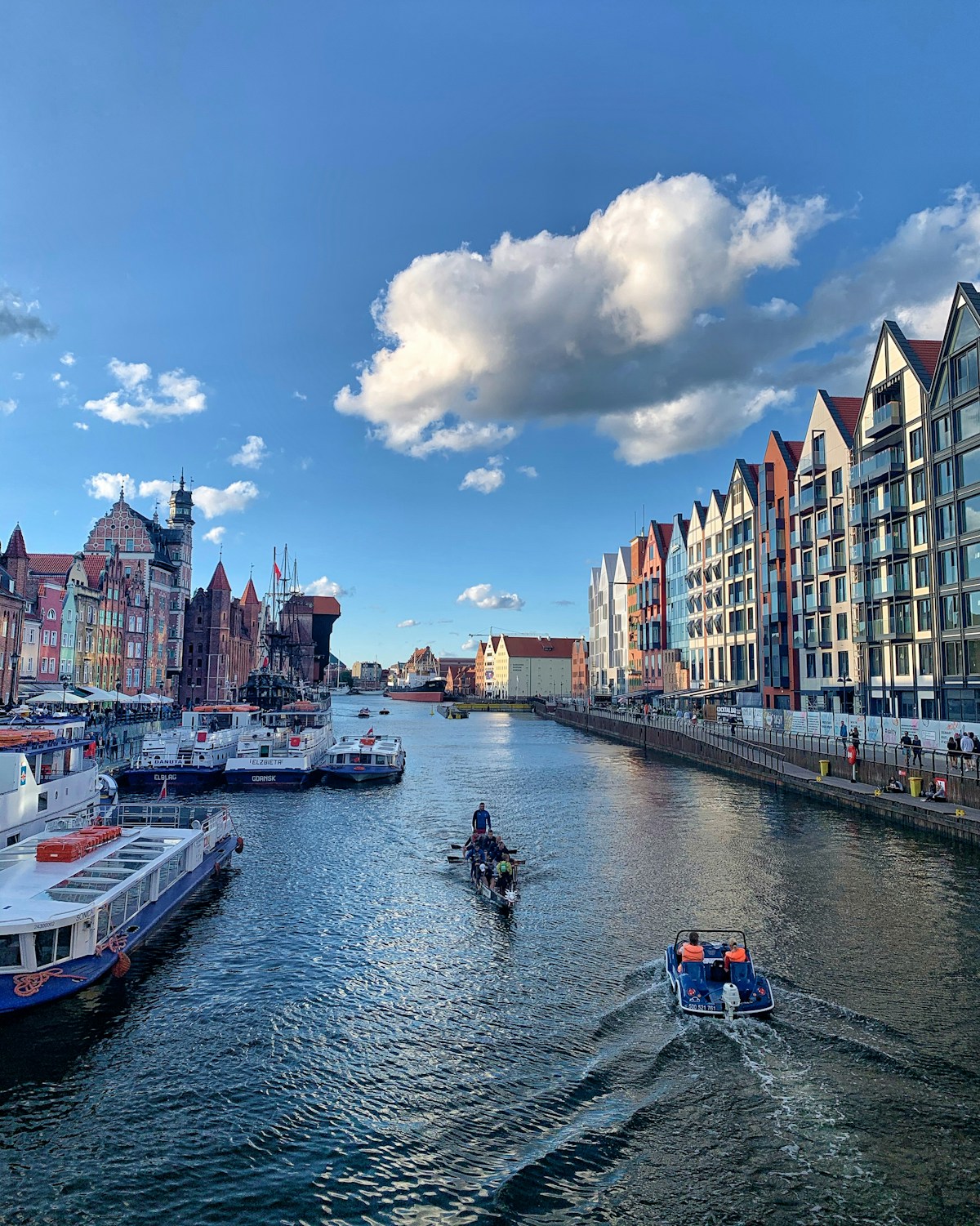
Gdańsk and Wrocław are two of Poland’s most appealing cities outside Kraków, and the two most frequently mentioned in the same breath when travellers are debating where to spend a few days. They are separated by roughly 350 km and connected by train, but the comparison is more than geographic - they represent two very different strands of Polish urban life. Here is what sets them apart.
Overview
Gdańsk is a Baltic port city with a history tangled up in the Hanseatic League, the Free City of Danzig between the wars, the outbreak of the Second World War at the Westerplatte peninsula, and the 1980 Solidarity strikes that cracked Communist rule in Poland. Its Long Market (Długi Targ) - a row of restored 17th-century merchant townhouses in reds, greens, and golds - is among the most photographed streetscapes in Poland. The sea, sandy beaches, and the resort towns of Sopot and Gdynia are all within 30 minutes by commuter rail, giving Gdańsk a coastal dimension that most Polish cities lack.
Wrocław is a city that has changed hands and identity multiple times across its thousand-year history - Czech, Habsburg, Prussian, German (as Breslau), and Polish in its most recent chapter since 1945. Its Old Town is built around a network of canals and bridges across the Oder River, earning it the nickname the “Venice of Poland” - a comparison that is slightly generous but not entirely unearned. The Market Square (Rynek) is one of the largest and most elegant in Poland, ringed with coloured baroque townhouses. A population of around 650,000 and a large university community give it a lively, youthful energy.
Getting Between the Cities
Wrocław and Gdańsk are not on a direct high-speed rail line. The most practical route requires a change in Warsaw or Łódź. Total journey time is typically 5–6 hours by the fastest connections; advance tickets from approximately PLN 80–120 as of 2026.
Alternatively, a direct bus connection (FlixBus) covers the route in approximately 6 hours for as little as PLN 40–60. For those who hire a car in Poland, the journey by road via the A1/A8 takes approximately 4.5–5 hours.
Given the distance, most travellers visit these cities as separate stops rather than paired day trips - both are worth at least two nights on their own terms.
Things to Do
Gdańsk packs a strong set of sights into a compact Old Town area. The European Solidarity Centre (ECS) is the essential visit - a beautifully designed museum documenting the 1980 strikes and the Solidarity movement, housed in a copper-clad building near the historic Lenin Shipyard (entry approximately PLN 35 as of 2026). St Mary’s Basilica, the largest brick Gothic church in the world, dominates the skyline and rewards the climb to its tower (approximately PLN 15 for the tower view). The Crane (Żuraw) on the Motława waterfront is a 15th-century port crane and one of the largest surviving in medieval Europe (approximately PLN 20 entry). The Long Market is free to walk and photogenic at any time of day. For more, see our Gdańsk things to do guide.
Wrocław is anchored by its Market Square, where the 13th-century Town Hall - one of the finest examples of Gothic civic architecture in Central Europe - sits at the centre. The Old Town is laced with islands connected by around 100 bridges; walking across them with a map is one of the most pleasant ways to spend a morning. The Cathedral Island (Ostrów Tumski), the oldest part of the city, has a concentration of Gothic and baroque churches and is particularly atmospheric after dark when the gas lamps are lit. Wrocław is also famous for its dwarves (krasnale) - small bronze figurines hidden across the city, originally a Solidarity-era protest symbol, now a city-wide scavenger hunt involving over 400 figures. For more, see our Wrocław things to do guide.
Edge: Close. Gdańsk has the Solidarity Museum and coastal access; Wrocław has the rivers, islands, and more architectural variety.
Food and Drink
Gdańsk has a distinctive regional food identity built around Baltic seafood. Smoked eel, marinated herring, and fresh cod are local staples; look for them at the Targ Rybny (Fish Market) area or at restaurants along the Motława waterfront. Be aware that the most prominent waterfront restaurants are tourist-priced - better value and quality is found one or two streets back. Restauracja Kubicki (mains PLN 50–80 as of 2026), operating in a cellar since 1918, is the city’s most established Polish restaurant.
Wrocław has an energetic food and drink scene driven by its large student population. The Rynek and the streets immediately around it have restaurants covering every category. Wrocław has a well-developed craft beer culture - several excellent taprooms operate in the Old Town. Restauracja Jadka is a consistently praised address for refined Polish cuisine (mains PLN 65–110 as of 2026). The milk bar scene is alive: Bar Wegetariański Vega near the Rynek offers vegetarian Polish classics at under PLN 30.
Edge: Wrocław for range and price; Gdańsk for regional Baltic fish specialities.
Where to Stay
Gdańsk accommodation concentrates in and around the Long Market area. Hilton Gdańsk on the waterfront is the most recognisable international option (from approximately PLN 500–700 per night as of 2026). Hotel Podewils, in a renovated 15th-century townhouse on the Motława, is the most atmospheric mid-range choice (from approximately PLN 450 per night). Budget options are limited within the Old Town; apartments tend to offer the best value for solo travellers or couples. See our Gdańsk where to stay guide.
Wrocław has more accommodation diversity and generally better budget options. The Stay Hostel near the Rynek is well-regarded among backpackers. Mid-range: Hotel Monopol, a restored art nouveau hotel on Świdnicka Street, from approximately PLN 400–550 per night as of 2026. Ibis Wrocław Centrum offers reliable three-star comfort from approximately PLN 280–380 per night. The Rynek area is the best base for first-time visitors. See our Wrocław where to stay guide.
Edge: Wrocław on budget range; Gdańsk on waterfront character.
Search hotels in Gdańsk on Booking.com
Nightlife
Gdańsk has a compact bar and club scene mostly in the Główne Miasto (Main City) and the developing Dolne Miasto district. Craft beer bars have multiplied in the last decade; Brovarnia, a brewpub in the former Royal Granary on the Motława, is one of the most atmospheric venues in the city. In summer, the action spills out along the waterfront terraces. Sopot’s beach clubs and casino add a different dimension a short train ride away.
Wrocław has a livelier and more sustained nightlife, sustained year-round by around 150,000 students. The streets south of the Rynek - particularly Świdnicka and Ruska - have a density of bars and live music venues. Wrocław hosts several major music festivals throughout the year. Clubs range from underground electronic venues to large mainstream spaces.
Edge: Wrocław on volume and year-round energy; Gdańsk on Baltic summer atmosphere.
Budget
| Expense | Gdańsk | Wrocław |
|---|---|---|
| Hostel dorm (per night) | PLN 85–120 | PLN 70–110 |
| Mid-range hotel (per night) | PLN 400–550 | PLN 300–500 |
| Lunch (milk bar / budget) | PLN 25–40 | PLN 20–35 |
| Restaurant dinner (mid-range) | PLN 50–90 | PLN 50–85 |
| Museum entry (average) | PLN 20–35 | PLN 15–30 |
| Public transport (single) | PLN 3.80 | PLN 3.40 |
All approximate, as of 2026. Wrocław is marginally cheaper, particularly for accommodation and food away from the Rynek tourist zone.
The Verdict
Choose Gdańsk if: you want a Baltic port city with striking mercantile architecture, strong maritime and Solidarity history, easy access to beaches and Sopot, and a very compact, walkable Old Town.
Choose Wrocław if: you want a vibrant university city with canal-island topography, one of the most beautiful market squares in Poland, a lively year-round student scene, and generally better value for money.
Both cities reward at least two nights. They pair naturally with Kraków and Warsaw in a two-week Polish itinerary. See our full guides to Gdańsk and Wrocław for full planning detail. For guided introductions to each city, Gdańsk tours and Wrocław tours both offer solid walking tour options that cover the architectural and historical highlights efficiently.
Plan Your Visit
- Things to Do in Gdańsk - Old Town, Solidarity Centre, and Baltic day trips
- Things to Do in Wrocław - Market Square, Cathedral Island, and the dwarf trail
- 2 Weeks in Poland Itinerary - how to fit both cities into a single trip
- Hiking in Karkonosze National Park - Wrocław’s mountain day trip advantage
- Malbork Castle Visitor Guide - Gdańsk’s major historical day trip
- Poland Budget Guide - what your money buys in each city
More Poland Comparisons
- Gdańsk vs Sopot - choosing between Baltic city and beach town, just 15 minutes apart
- Warsaw vs Gdańsk - how Gdańsk stacks up against the capital for a short break
- Kraków vs Wrocław - medieval depth vs canal charm: Poland’s two most-visited southern cities