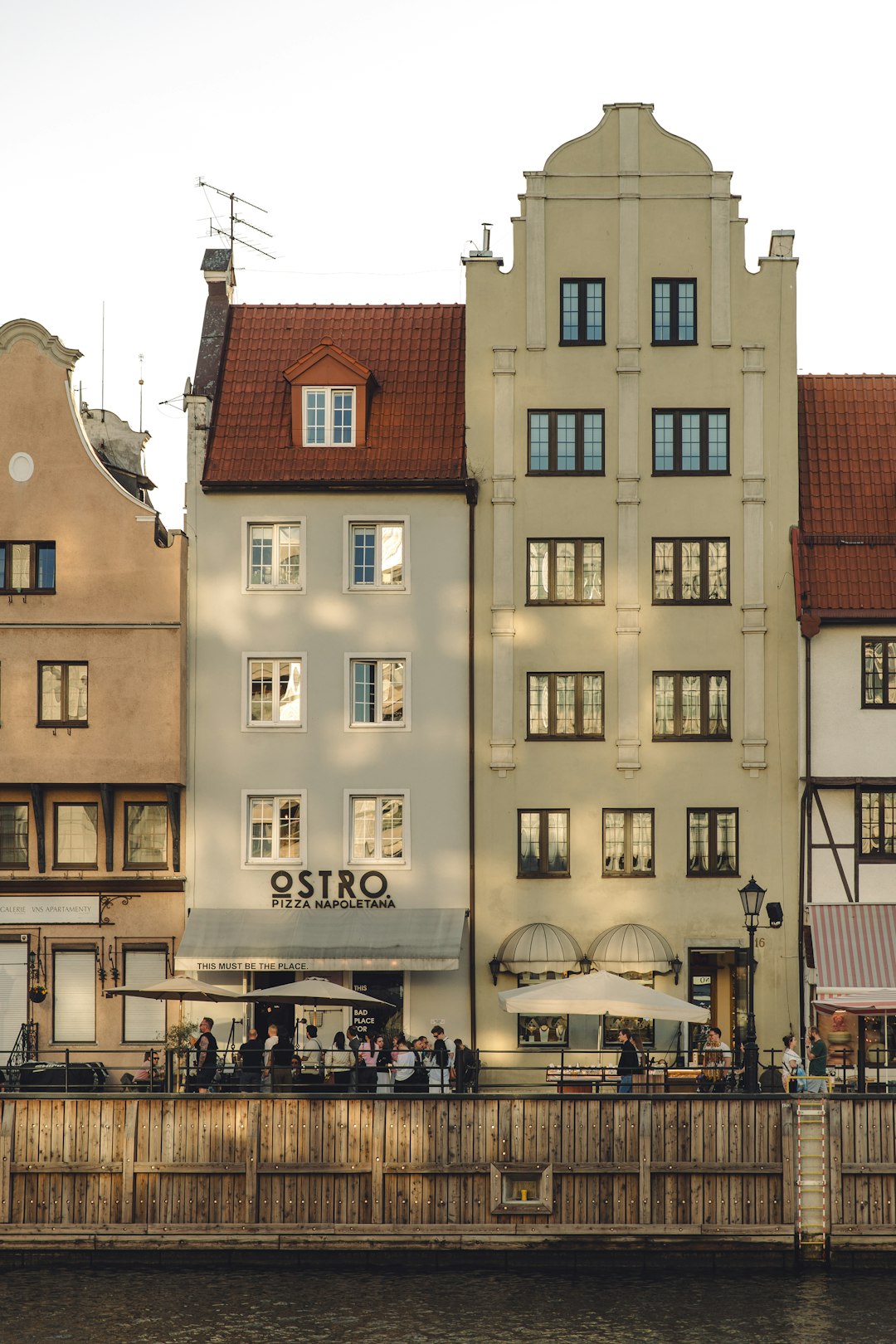
Gdańsk is the most seafood-focused of Poland’s major cities. The Motława River waterfront - a string of restored brick townhouses with restaurant terraces facing the water - is the obvious starting point, but the best eating extends beyond the postcard strip into Granary Island across the footbridge, the quiet lanes of Stare Miasto, and the neighbourhood restaurants of Wrzeszcz, a district popular with students and locals.
Old Town: Mariacka and Długa Streets
Mariacka Street - the amber-amber-shop-lined lane running south from St. Mary’s Basilica - is Gdańsk’s most photogenic stretch and has a small cluster of sit-down restaurants between its Gothic portals.
Restauracja Kubicki on nearby Wartka Street (steps from Mariacka’s southern end) is one of the city’s oldest continuously operating restaurants, with records stretching to 1918. The menu is rooted in Baltic and Polish cooking: herring in cream sauce, Baltic cod with dill butter, żurek in a bread bowl, and a strong bigos (hunter’s stew). Mains run PLN 65–110 as of 2026. The interior feels like a preserved bourgeois dining room - dark timber panels, white tablecloths, unhurried service. Book ahead for dinner; lunch walk-ins are easier.
Restauracja Podewils, a few minutes north in a restored Gothic granary on Szafarnia Street, pitches itself as special-occasion dining. The Baltic fish menu - smoked eel, pike-perch in caper sauce, fish tartare - is executed with care, and the setting in a stone-vaulted interior with river glimpses justifies the prices: mains PLN 85–130. It tends to fill with business diners and older tourists; the food quality holds up.
Kamienica (Mariacka 37, the amber-gallery strip itself) is a smaller, more casual option: a wine-forward restaurant with a shorter menu of Polish plates - duck leg confit, mushroom pierogi, smoked trout rillettes. Mains PLN 60–95. Tables spill onto the Mariacka cobbles in summer and fill quickly by 19:00.
For Długa Street itself - Gdańsk’s main pedestrian artery running east toward Długi Targ - the restaurant density is high but quality uneven. Restauracja Fischmarkt, just off the eastern end at Długi Targ, is the most reliable: Baltic fish specials change daily (PLN 65–100 for mains), the terrace has views toward the Neptun Fountain, and the kitchen doesn’t overcook.
Waterfront: The Motława Strip
The stretch along Długie Pobrzeże (Long Waterfront) is the most visited - and for good reason. The setting, with merchant-house facades reflected in the Motława and boats moored alongside, is genuinely beautiful. Quality varies; skip the places with laminated menus pushed by touts and focus on the ones with shorter, seasonally adjusted dishes.
OSTRO Pizza Napoletana occupies a prime ground-floor position facing the river. It sounds incongruous for a Baltic city, but the wood-fired Neapolitan base is correct, toppings are restrained, and the price - approximately PLN 45–70 per pizza as of 2026 - is fair for the location. Tables outside are perpetually full in summer; arrive early or book.
Restauracja Targ Rybny (Fish Market Restaurant) takes the seafood angle seriously. The menu runs to Baltic herring five ways, fried plaice, smoked eel with horseradish, and a good fish soup with cream and dill. Mains average PLN 65–95. It is not the cheapest option on the waterfront, but the sourcing is noticeably fresher than neighbours.
Goldwasser, named for the city’s historic gold-fleck liqueur, occupies a multi-level townhouse on Długie Pobrzeże with views from upper floors. The menu leans Polish-European - duck breast, venison stew, żurek in a bread bowl - with prices at the upper end: PLN 85–140 for mains. The interior, all dark timber and amber lighting, is worth seeing even if you only stop for a Goldwasser aperitif.
Budget: Pierogi Spots and Milk Bars
For budget pierogi in the Old Town, Pierogarnia Mandu (Piwna Street, a lane parallel to Długa) is the most consistent option - ruskie (potato and curd cheese), with spinach and feta, and a seasonal Baltic fish filling rotate through the menu at PLN 22–38 for a plate of eight. No reservations; expect a short queue at lunch.
Bar Mleczny Neptune on Długa Street is one of the better surviving milk bars in the city. Żurek, bigos, kotlet schabowy (breaded pork cutlet), and pierogi are all priced PLN 12–25 per portion. It is canteen-style with trays, cash-preferred, and no frills - exactly what it should be. Open from early morning through afternoon.
Hala Targowa, Gdańsk’s covered market on Pańska Street, sells fresh local produce and has a handful of stalls serving prepared food: smoked fish by the piece (approximately PLN 8–15), open sandwiches, and seasonal vegetables. Best visited on weekday mornings when it is busiest.
Price Reference: What to Expect
| Tier | Examples | Main course (PLN, 2026) |
|---|---|---|
| Budget | Milk bars, Hala Targowa stalls, pierogi spots | 12–38 |
| Mid-range | Targ Rybny, OSTRO, Brovarnia, Kamienica | 55–110 |
| Higher-end | Kubicki, Podewils, Goldwasser, Gospoda Pod Łososiem | 85–155 |
Waterfront and Mariacka locations command a 10–20% location premium versus equivalent quality one or two streets back.
Granary Island (Wyspa Spichrzów)
Cross the pedestrian bridge from the waterfront and the atmosphere shifts. Wyspa Spichrzów is a more recent development - converted granaries and new buildings housing boutique hotels, bars, and restaurants. The crowd is younger and the vibe more relaxed than the tourist-heavy main strip.
Brovarnia is the island’s best-known restaurant, attached to a hotel and brewery of the same name. House-brewed lagers and ales accompany a substantial Polish menu - żeberka (ribs), pierogi with various fillings, kielbasa plates, and a good beet soup (barszcz). Mains run PLN 55–95. The outdoor terrace on the water side books out quickly in summer.
Stary Port (Old Port) nearby concentrates more on grilled fish and seafood - useful if Targ Rybny is full. Baltic trout, salmon, and cod are regulars on the menu; expect PLN 70–110 for a fish main with sides.
Neighbourhood Eating: Wrzeszcz
The tram ride north to Wrzeszcz drops you into a district that functions as Gdańsk’s everyday restaurant strip. Grunwaldzka and the streets around the Galeria Bałtycka mall have everything from Vietnamese pho to Georgian khinkali, but the worthwhile stops are the Polish spots.
Gospoda Pod Łososiem (The Salmon Inn) is a Gdańsk institution, one of the oldest restaurants in the city, dating its recipes back centuries and specialising in Baltic fish with formal table service. It is expensive by local standards - mains PLN 95–155 - but the historic interior, the salmon dishes, and the house Goldwasser-based cocktails make it a valid special-occasion choice.
Bar Mleczny Neptun in Wrzeszcz (note: different from the Downtown Neptune) is purely local - no tourists, Polish-only menu on a chalkboard, daily soups for PLN 8–12 and hot mains under PLN 30. Exactly where Gdańsk office workers eat lunch.
What to Drink
Craft beer has grown substantially in Gdańsk. Browarnia produces its own, and Degustatornia on Chlebnicka has a rotating tap list from Polish microbreweries alongside a short food menu. For something local and historic, order Goldwasser (the original amber liqueur, approximately PLN 18–25 per glass) or a szot of Żubrówka (bison grass vodka) at any traditional bar.
Seasonal: St. Dominic’s Fair (Jarmark Świętego Dominika)
In late July and through August, Gdańsk’s St. Dominic’s Fair transforms the Old Town into one of the largest outdoor markets in Central Europe - more than 1,000 stalls spread from Długi Targ across Długa Street and down to the waterfront. The food section is genuinely worth planning around.
Regulars include stalls selling oscypek (smoked sheep’s cheese from the Tatra region, grilled on a stick for approximately PLN 8–12), regional kielbasa grilled over open coals, pierogi with seasonal fillings, and smoked Baltic fish at lower-than-restaurant prices. Regional producers from across Poland bring cured meats, honey, and artisan preserves; several Eastern European vendors add borscht and khinkali to the mix.
The fair’s food quality is inconsistent - the closer you are to the main Długi Targ square, the more tourist-priced things become. Walk one or two streets off the main drag (toward Chlebnicka or Świętojańska) to find the producers rather than the vendors selling mass-produced goods with a handmade aesthetic.
Restaurant bookings during the fair: the entire Old Town fills for the duration. Waterfront restaurants in particular should be booked 2–4 days ahead for dinner. If you cannot book, a meal assembled from fair stalls (fish, cheese, bread, pickles) on the steps of one of the Gothic townhouses is a perfectly good alternative and considerably cheaper.
Take a Food Tour of Gdańsk
Gdańsk’s food identity is inseparable from its Baltic location and Hanseatic trading history - herring preparations that vary by season, Goldwasser liqueur with centuries of guild tradition, and craft beer influenced by the same English-Baltic porter trade that shaped the city’s economy. A guided food tour of the Old Town and waterfront covers all three in a single outing, moving from smoked fish at a market stall to a traditional restaurant for żurek in a bread bowl, finishing with an amber spirit tasting at a historic townhouse bar. Book a Gdańsk food tour for a structured introduction to a cuisine that differs more from Warsaw and Kraków than most visitors expect.
Practical Notes
Most waterfront restaurants accept cards; smaller milk bars and market stalls prefer cash. Lunch service typically runs 12:00–15:00 with lower prices than dinner. In high summer (July–August), booking a waterfront table by 17:00 for dinner is advisable - walk-in availability shrinks fast. Off-season (November–March) the waterfront is quieter and prices drop at several spots.
Plan Your Trip to Gdańsk
- Travel insurance for Poland - medical, cancellation, and trip interruption cover; get a quote before departure
- Poland eSIM - data coverage from arrival; activate before you fly
- Book a Gdańsk food tour - guided tastings of smoked fish, żurek, and Goldwasser through the Old Town and waterfront
- Find hotels in Gdańsk - accommodation across all budgets in Gdańsk