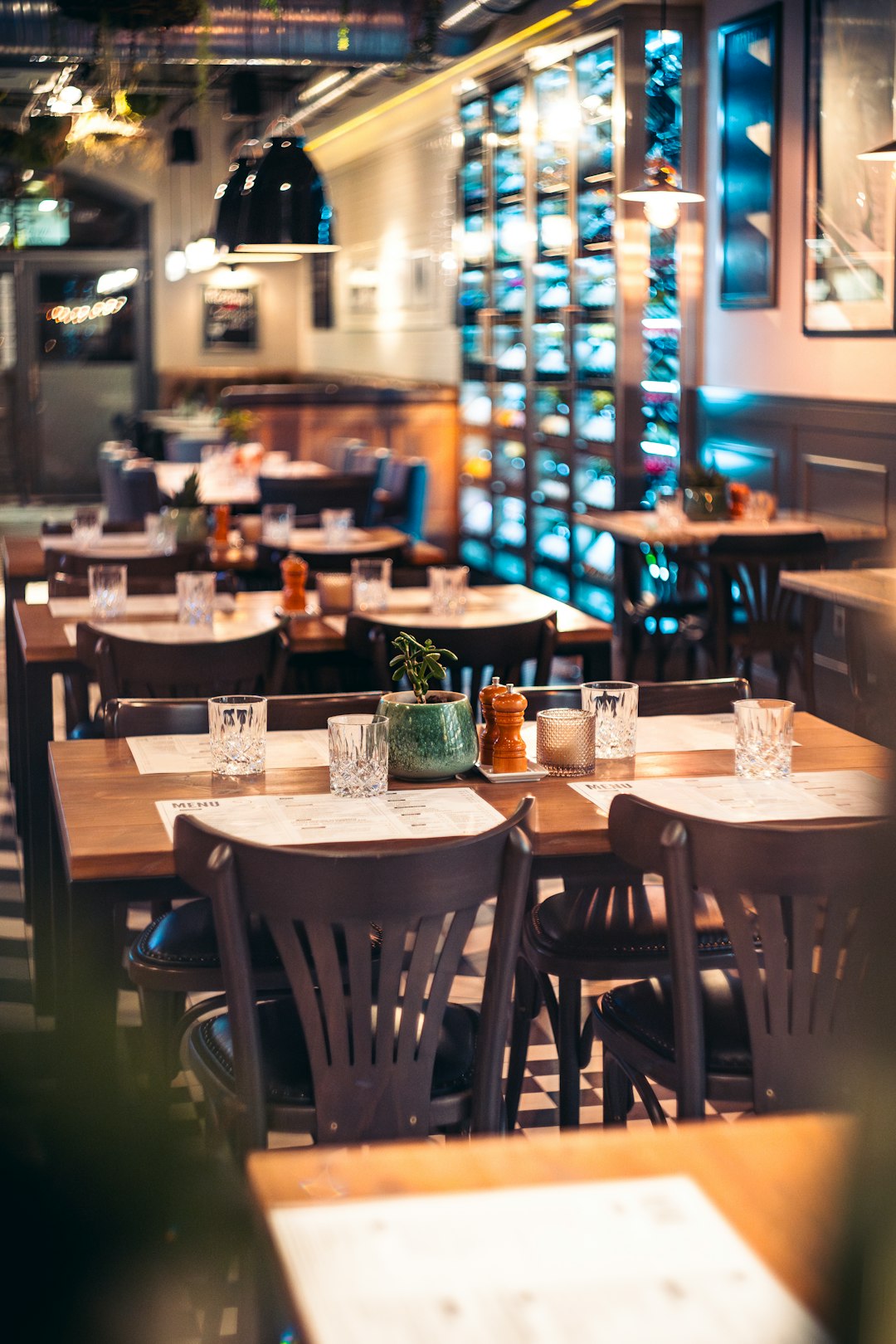
Poznań is one of Poland’s oldest cities and arguably its most commercially confident - it hosts Europe’s largest trade fairs, has a large, well-funded student population, and sits at the intersection of rail lines connecting Warsaw, Berlin, and Wrocław. The food scene reflects this: solid traditional Polish cooking anchored in Wielkopolska (Greater Poland) regional cuisine, a growing craft beer and café culture, and enough international variety to satisfy the trade-fair crowd.
The local identity dishes - rogale świętomarcińskie and pyry z gzikiem - are worth seeking out specifically, not just as novelties but because they are genuinely good.
Stary Rynek and Old Town
The Stary Rynek (Old Market Square) is one of Poland’s finest market squares: a large Renaissance rectangle with coloured merchant houses and the Town Hall at the centre. The restaurants ringing it range from tourist trap to genuinely good.
Brovaria occupies the northern side of the square with a ground-floor restaurant and brewery visible through glass. The house-brewed beers - a pale lager, a darker amber, and rotating seasonals - are the main draw alongside a menu of hearty Polish dishes: żeberka (pork ribs with honey-mustard glaze, approximately PLN 65 as of 2026), pierogi selections (PLN 32–45), duck breast with red cabbage and kopytka (potato dumplings, PLN 78). The square-facing terrace is excellent in summer. Book ahead for weekend evenings.
Gospoda Pod Kogutkiem (Under the Rooster) is one of the more reliable traditional restaurants just off the Rynek on Klasztorna Street. Regional Wielkopolska dishes dominate: grey dumplings (szare kluski), fasolka po bretońsku (Breton-style beans with sausage and tomato), and a good kapuśniak (sauerkraut and rib soup, PLN 22 as of 2026). Mains PLN 42–75. The room is cramped and unpretentious in the best possible way.
For rogale świętomarcińskie, Cukiernia Sowa is one of the more established bakery chains and almost always has them in stock; for the finest versions, ask a local for the current recommended artisan bakery - the quality of rogale varies significantly between producers and the top spots change.
Śródka: The Neighbourhood Worth Crossing The River For
Śródka is reached via a short footbridge east of the Cathedral Island. It is one of the oldest parts of Poznań, long overlooked, and now slowly filling with independent cafés and small restaurants that function as a neighbourhood hub rather than tourist destinations.
Kredens Bistro in Śródka is the area’s most-discussed restaurant: a small room with changing daily menus built around market produce. Lunch is typically PLN 35–55 for a main; dinner runs PLN 65–90. The cooking is personal and changes frequently - the kind of place where the day’s soup depends on what arrived that morning. Reservations strongly advised for dinner.
The Śródka Market on weekend mornings sells local produce, smoked cheeses from rural Wielkopolska, and seasonal vegetables. Small stalls also offer żurek, grilled kielbasa (approximately PLN 12–18 per portion), and freshly baked bread. The weekend morning market draws a strong local crowd and is one of the better informal food experiences in the city.
Budget Eating: Milk Bars and Student Haunts
Bar Caritas on Długosza Street is old-school - a surviving milk bar where lunches of soup plus main course cost PLN 20–35. It operates on canteen principles: choose from the day’s dishes, pay at the till, collect your tray. Żurek, beet soup with hard-boiled egg, kotlet mielony (minced meat patty), and various potato preparations rotate daily.
The streets around plac Wolności and the university buildings on Ratajczaka have the highest concentration of budget eating: Vietnamese pho, kebab and falafel spots, sushi chains, and several student-oriented Polish canteens. For quality-per-złoty this area outperforms the Rynek substantially.
Jeżyce: Locals’ Dining District
Jeżyce, northwest of the centre, is Poznań’s most established neighbourhood for day-to-day eating. Oberża pod Dziczyzną specialises in game: venison stew (gulasz z jelenia), wild boar with mushroom sauce, duck leg with plum - dishes rooted in the Wielkopolska hunting tradition. Mains run PLN 65–95. The interior, dark wood and antlers, fits the menu.
Kawiarnia Drukarnia in Jeżyce does excellent coffee and pastries and moonlights as an evening bar with a short but good food menu. The rogale here are among the better versions available outside dedicated pastry shops.
Craft Beer and Evening Drinking
Beyond Brovaria, Tapas Bar Poznań on Wrocławska combines Spanish-inspired small plates with a good Polish and European beer list. Blow Up Hall at the Stary Browar (Old Brewery, a converted 19th-century brewery now functioning as a shopping and arts complex) has a bar and restaurant on site. The Stary Browar itself is worth visiting - the building conversion won architecture awards and the Saturday farmers’ market inside the courtyard is one of the best in the city.
Take a Food Tour of Poznań
Poznań’s food identity is distinctive enough to reward a guided introduction: rogale świętomarcińskie (the city’s protected-origin pastry), pyry z gzikiem (boiled potato with cottage cheese and chives - the emblematic local dish), and a craft beer scene built around converted 19th-century breweries. A guided food tour typically covers the Stary Rynek with Wielkopolska cooking at Brovaria, the Śródka neighbourhood for the independent restaurant scene, and a rogale tasting at one of the artisan bakeries. Given that Poznań’s culinary identity is genuinely distinct from the rest of Poland, a food tour is the quickest way to understand what makes Wielkopolska cooking different from Kraków or Warsaw. Book a Poznań food tour to eat your way through the market square and beyond.
Practical Notes
Poznań is cheaper than Warsaw for comparable quality. Mid-range restaurant dinner with drinks runs approximately PLN 80–130 per person as of 2026. The Stary Rynek area commands a location premium; equivalent food a few streets away is typically 15–25% cheaper. Trade fair weeks (particularly in June and September) fill hotels and push restaurant bookings; if you’re visiting during a fair, book well ahead.
Plan Your Trip to Poznań
- Travel insurance for Poland - medical, cancellation, and trip interruption cover; get a quote before departure
- Poland eSIM - data coverage from arrival; activate before you fly
- Book a Poznań food tour - rogale tastings, pyry z gzikiem, and the Stary Rynek craft brewery scene with a local guide
- Find hotels in Poznań - accommodation across all budgets in Poznań