Poland was home to the largest Jewish population in pre-war Europe - approximately 3.3 million people, roughly 10% of the country’s total population. The Second World War destroyed most of that world, but enough survived to form a trail of extraordinary depth and meaning: medieval synagogues in Kraków, a world-class museum in Warsaw, cemeteries in Łódź, and the Memorial and Museum at Auschwitz-Birkenau in Oświęcim. This guide covers the key sites on the heritage trail, with practical transport links and a suggested multi-day order.
Suggested route and timing
The trail works best in a linear direction: Kraków (2–3 days) → Auschwitz day trip → Warsaw (2 days) → Łódź (1 day). This follows logical train connections and builds chronologically - Kazimierz as a living Jewish neighbourhood before the war, Auschwitz as the site of its destruction, POLIN in Warsaw as the definitive historical account, and Łódź’s Manufaktura area as an example of post-war urban reconstruction on a former Jewish industrial site.
If time is limited, prioritise Kraków and Warsaw. The POLIN Museum alone justifies the Warsaw stop.
Kraków: Kazimierz quarter
Kazimierz was established as a separate town in 1335 by King Casimir III and grew into one of the most important centres of Jewish life in Central Europe. By the early 20th century its narrow streets housed dozens of synagogues, yeshivas, and Jewish-owned businesses. The district was emptied during the German occupation: Kraków’s Jewish residents were relocated to the Podgórze ghetto across the Vistula River, and most were subsequently murdered at Bełżec and Auschwitz.
Today Kazimierz is both a heritage district and a living neighbourhood, with cafés, independent bookshops, and cultural institutions alongside the synagogues. Allow a full day to explore at walking pace.
Remuh Synagogue and Cemetery
Ul. Szeroka 40, Kraków
The Remuh Synagogue (built 1553) is the only still-functioning synagogue in Kazimierz. Friday evening and Saturday morning services are held here. Adjacent to the synagogue is the Remuh Cemetery, one of the oldest surviving Jewish cemeteries in Poland, containing graves from the 16th and 17th centuries including that of Rabbi Moses Isserles (Remuh), one of the most important Ashkenazi legal scholars.
Opening hours: Monday–Friday and Sunday 09:00–16:00, Friday closes before Shabbat. Closed Saturday. Entry approximately PLN 15 per adult as of 2026.
Old Synagogue (Stara Synagoga)
Ul. Szeroka 24, Kraków
The oldest surviving synagogue building in Poland, dating to the early 16th century. Severely damaged during WWII, it was restored in the 1950s and now operates as the Judaica branch of the Historical Museum of Kraków. The permanent exhibition covers the history of Kraków’s Jewish community from the Middle Ages through the Holocaust.
Opening hours: Monday 10:00–14:00, Tuesday–Sunday 10:00–17:00 (extended hours in summer). Closed the first Tuesday of each month. Entry approximately PLN 18 per adult, free on Mondays as of 2026.
Book tickets at Tiqets for skip-the-queue entry to Kraków Jewish sites.
Schindler’s Enamel Factory
Ul. Lipowa 4, Kraków (Podgórze district)
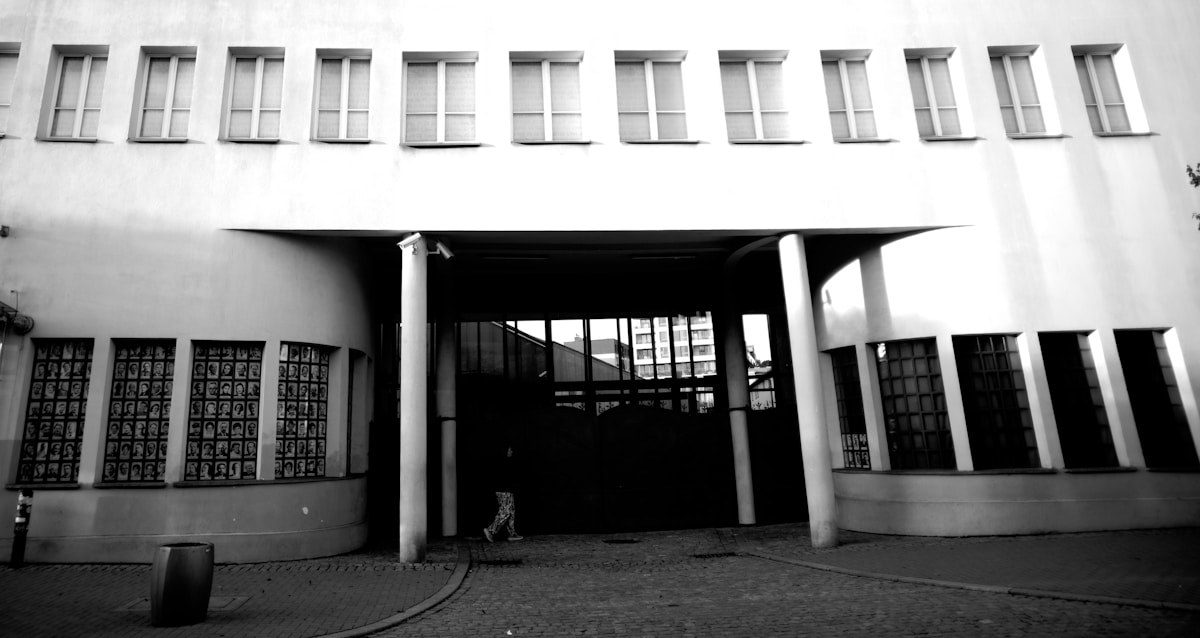
Oskar Schindler’s factory operated in the Podgórze district, across the river from Kazimierz - a 20-minute walk from the Old Synagogue. The museum, operated by the Historical Museum of Kraków, covers the German occupation of Kraków and the fate of its Jewish population through testimony, reconstructed spaces, and documentary evidence. It is one of the most emotionally powerful museums in Poland.
Opening hours: Monday 10:00–14:00, Tuesday–Sunday 10:00–18:00 (extended in summer). Closed the first Monday of each month. Entry approximately PLN 27 per adult; free entry on Mondays (limited capacity, book ahead at muzeumkrakowa.pl). Advance booking strongly recommended - the museum sells out, particularly in summer.
Kraków Jewish tours
A guided walking tour of Kazimierz and Podgórze is the most efficient way to cover both districts with historical context. Tours typically run 3–4 hours and cost approximately PLN 100–150 per person for a small group. See guided Kraków Jewish heritage tours.
Auschwitz-Birkenau, Oświęcim
No heritage trail in Poland is complete without the Memorial and Museum at Auschwitz-Birkenau, 70 km west of Kraków. The site preserves the two main camps: Auschwitz I (the original camp, including the Death Wall and gas chambers) and Auschwitz II-Birkenau (the vast extermination camp where the majority of the approximately 1.1 million victims - mostly Jews from across occupied Europe - were murdered between 1942 and 1945).
We have a dedicated guide to visiting Auschwitz-Birkenau covering transport from Kraków, ticket booking, and what to expect.
Getting from Kraków to Auschwitz: PKS Oświęcim buses from Kraków bus station take approximately 1.5 hours and cost approximately PLN 15–18 as of 2026. Organised tours including transport and a guide cost approximately PLN 100–150 per person. Train services also run to Oświęcim station, from where the Memorial is a 20-minute walk or short taxi ride.
Warsaw: POLIN Museum and Jewish Historical Institute
Warsaw before 1939 had a Jewish population of approximately 375,000 - the largest in any European city outside of New York. The Warsaw Ghetto, established in November 1940, confined over 400,000 people into an area of 3.4 km². Most were deported to Treblinka extermination camp in the Aktion Reinhardt deportations of summer 1942. The Ghetto Uprising of April 1943 ended in its systematic destruction. Almost nothing survived above ground.
The Muranów district, where the ghetto once stood, is now a residential area. The Memorial Route of the Warsaw Ghetto Heroes traces the ghetto’s boundaries and key sites, including the Monument to the Ghetto Heroes and the Umschlagplatz Memorial marking the deportation site.
POLIN Museum of the History of Polish Jews
Ul. Mordechaja Anielewicza 6, Warsaw
POLIN is the essential stop on any Jewish heritage trip to Poland. Its 4,000 m² core exhibition - developed over a decade with contributions from historians worldwide - tells the story of Jewish life in Poland from the Middle Ages to the post-war era across eight chronological galleries. The architecture by Finnish firm Lahdelma & Mahlamäki is itself significant: a wave-form structure that references both the Hebrew word for Poland (Po-lin, “rest here”) and the parting of the Red Sea.
Opening hours: Monday, Wednesday–Thursday, Saturday–Sunday 10:00–18:00; Friday 10:00–20:00. Closed Tuesday. Entry approximately PLN 35 per adult as of 2026, free on Thursdays (advance reservation recommended even for free entry). Book at polin.pl.
Explore guided Jewish heritage tours in Warsaw.
Warsaw Jewish Historical Institute (ŻIH)
Ul. Tłomackie 3/5, Warsaw
The Jewish Historical Institute occupies the former Main Judaistic Library building - one of the few Jewish institutions in Warsaw to survive the war. It houses an archive of documents preserved by the Oyneg Shabes underground group, including the Ringelblum Archive, a collection of testimonies, diaries, and documents buried in milk cans during the ghetto uprising and partially recovered after the war. The archive is a UNESCO Memory of the World document.
The institute runs a small permanent exhibition and hosts temporary exhibitions. Opening hours: Monday–Friday 10:00–17:00. Entry approximately PLN 10 per adult as of 2026. The archive room itself can be accessed by researchers by appointment.
Getting from Kraków to Warsaw: Fast intercity trains (IC/EIP) run from Kraków Główny to Warszawa Centralna every 1–2 hours, journey time approximately 2 hours 15 minutes to 3 hours. Book at intercity.pl. Fares are approximately PLN 50–180 depending on class and advance purchase. Airport and city transfers are available if arriving by air.
Łódź: cemetery, ghetto, and Manufaktura
Łódź (pronounced roughly “Woodge”) had a pre-war Jewish population of approximately 230,000, around a third of the city’s total. The Łódź Ghetto, established in 1940, was the second largest in occupied Poland after Warsaw. Unlike the Warsaw Ghetto, Łódź’s ghetto was not liquidated until 1944 - its residents were deported to Auschwitz-Birkenau in the summer of that year.
Jewish Cemetery, Łódź
Ul. Brackiego 40, Łódź
The Łódź Jewish Cemetery, founded in 1892, is the largest Jewish cemetery in Poland and one of the largest in Europe, covering approximately 41 hectares and containing over 180,000 graves. A walled section contains a mass grave and individual grave markers for approximately 43,000 victims who died in the Łódź Ghetto.
Entry is free. Opening hours: Monday–Friday 10:00–17:00, Sunday 09:00–16:00. Closed Saturday and Jewish holidays. A small information point near the entrance provides maps.
Manufaktura and the Poznański factory complex
Ul. Ogrodowa 19, Łódź
Izrael Kalmanowicz Poznański was one of Łódź’s most prominent 19th-century industrialists, a Jewish factory owner whose cotton mills made him one of the wealthiest men in the Russian Empire. His factory complex - stretching over several blocks near the city centre - was the industrial heart of Jewish-owned Łódź. Today it has been converted into the Manufaktura shopping and cultural complex, housing the Museum of the City of Łódź (Museum Miasta Łodzi) in the Poznański Palace adjacent to the mills. The palace itself retains its original opulent interiors. Entry to the palace museum is approximately PLN 20 per adult as of 2026.
Getting from Warsaw to Łódź: Intercity trains from Warszawa Centralna to Łódź Kaliska or Łódź Fabryczna run regularly, journey time approximately 1 hour 15 minutes to 1 hour 30 minutes, fares approximately PLN 30–80.
Planning your trip
The trail can be covered in five days at a reasonable pace: two days in Kraków (with an Auschwitz day trip), two days in Warsaw, and one day in Łódź before returning to Warsaw or continuing onward. Accommodation in all three cities covers every budget tier.
Search hotels in Poland on Booking.com
For pre-booked museum entry and combined attraction tickets, Tiqets Poland offers skip-the-queue access to many sites on this trail. If you plan to cover multiple cities independently rather than on tours, car hire in Poland gives flexibility for sites outside city centres.