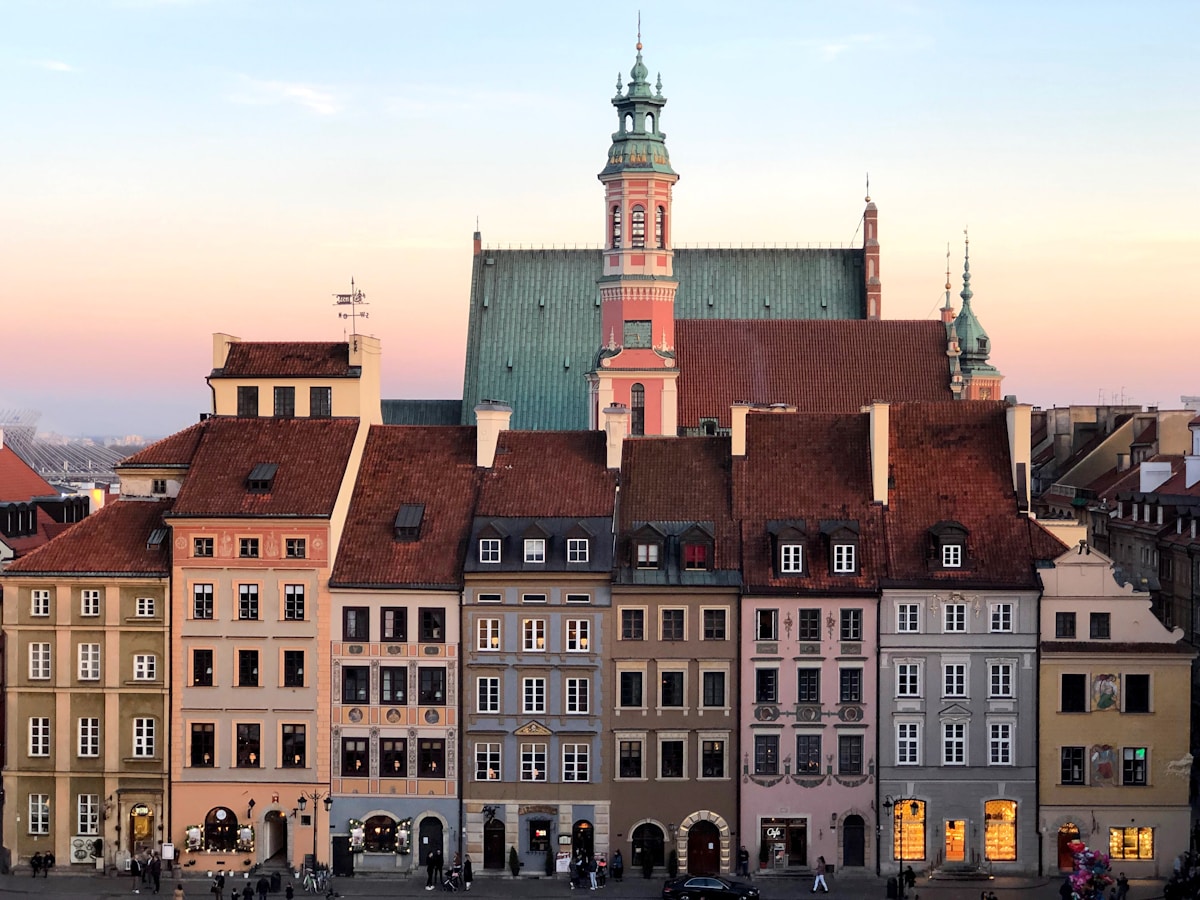
Poland is one of Central Europe’s most rewarding destinations and, by any measure, one of its most underrated. It has world-class medieval cities, two UNESCO World Heritage cultural sites, a mountain range, a Baltic coastline, vast forests, and one of Europe’s most compelling 20th-century histories. It’s also significantly cheaper than Germany, France, or the UK. Here’s what every first-time visitor needs to know before arriving.
Visas and Entry
Poland is a full member of the Schengen Area. Citizens of the following countries can enter without a visa for stays up to 90 days within any 180-day period:
- European Union - all member states
- UK - visa-free post-Brexit for tourism
- USA, Canada, Australia, New Zealand - visa-free
- Japan, South Korea, Singapore - visa-free
Your passport must be valid for the duration of your stay (some Schengen states require 3-6 months validity beyond the trip end date - check requirements at the Polish Ministry of Foreign Affairs website: msz.gov.pl).
Poland is not in the Eurozone - it uses the Polish zloty (PLN). Having a valid passport and a travel card is all you need to enter.
Currency and Money
Currency: Polish zloty (PLN). Not euros - Poland uses PLN exclusively.
Exchange rate (approximate, as of 2026): PLN 4.3 to 1 EUR; PLN 4.0 to 1 USD. Check live rates before travel.
Best way to get PLN: Use an ATM on arrival (look for Euronet, PKO, or bank-branded machines). Withdraw PLN directly rather than allowing the ATM to convert to your home currency (decline “Dynamic Currency Conversion” - it adds a poor exchange rate).
Kantors: Currency exchange offices (kantors) are widely available in city centres and offer competitive rates. Avoid airport exchange booths, which typically offer worse rates.
Cards: Contactless payment (Visa, Mastercard) is widely accepted in restaurants, shops, and hotels across cities. Carry approximately PLN 200-300 in cash for markets, rural areas, smaller eateries, and transport edge cases.
Typical Costs
| Item | Approximate Cost (2026) |
|---|---|
| Street food (zapiekanka, kiełbasa) | PLN 8-15 |
| Coffee at a café | PLN 10-15 |
| Budget restaurant meal | PLN 25-40 |
| Mid-range restaurant (2 courses + drink) | PLN 50-100 |
| Beer at a bar | PLN 10-18 |
| Budget hotel (per night) | PLN 150-250 |
| Mid-range hotel (per night) | PLN 300-500 |
| City tram/bus ticket | PLN 3.40-5.20 |
| Warsaw–Kraków express train (advance) | PLN 50-80 |
| Museum admission (major) | PLN 25-45 |
Getting a SIM Card
eSIM or physical SIM cards are available at Warsaw Chopin Airport arrivals hall, at mobile stores in city centres, and at major train stations.
The main Polish operators are Play, Orange, Plus, and T-Mobile. All offer tourist-suitable prepaid options. A data-only SIM with 10-20 GB costs approximately PLN 30-50 as of 2026. For EU citizens, EU data roaming rules apply - your home SIM may work without additional cost.
Consider an eSIM from a provider like Airalo or Holafly before departure to avoid airport queues on arrival.
Language
Polish is a Slavic language with complex grammar. Very few visitors learn it fluently, and English is spoken widely in hotels, restaurants, and tourist services in Warsaw, Kraków, Wrocław, and Gdańsk. Older Poles and those in rural areas are less likely to speak English.
Useful Polish words:
- Dziękuję (jen-KOO-yeh) - Thank you
- Proszę (PRO-sheh) - Please / Here you go / You’re welcome
- Przepraszam (psheh-PRA-sham) - Excuse me / Sorry
- Tak / Nie (tak / nyeh) - Yes / No
- Ile to kosztuje? (EE-leh toh kosh-TOO-yeh) - How much does this cost?
- Gdzie jest…? (g-DJEH yest) - Where is…?
Making even minimal effort with Polish pronunciation is warmly received.
Transport Apps to Download
- PKP Intercity - book intercity express trains (warsaw–kraków, gdańsk etc.)
- KOLEO - aggregates all train operators including regional services; often better for non-PKP routes
- Bolt - taxi/rideshare, significantly cheaper than street taxis
- Uber - reliable in Warsaw and larger cities
- FreeNow - taxi app, alternative to Bolt
- Jakdojade - public transport route planner for trams, buses, and metro
Never take unmarked taxis from outside stations or airports - overcharging of uninformed tourists is a known issue. App-based transport eliminates this completely.
Tipping
Tipping in Poland is expected at sit-down restaurants and for some services. The standard is approximately 10%, or rounding up the bill. If paying by card, tell the server the total amount you want to pay before they put it through - most card machines don’t have a tip field.
Tips for taxi drivers and hairdressers are appreciated but optional. Tipping hotel housekeeping is not standard practice.
Travel Insurance
Poland has a well-developed healthcare system. EU citizens should carry a valid EHIC or GHIC card (free, covers emergency treatment). Non-EU visitors should carry comprehensive travel insurance.
For visitors from outside the EU, private medical care is available and of good quality in cities but can be expensive without insurance. Adequate travel insurance covering medical evacuation is recommended.
Climate and Best Time to Visit
Poland has a continental climate with four distinct seasons. The best overall travel window is May through September. May and September offer mild temperatures, fewer crowds than July-August, and excellent value. December is worth considering specifically for Christmas markets.
For month-by-month detail - weather, crowds, what’s on, and practical notes - see our guides: January · February · March · April · May · June · July · August · September · October · November · December. If you’re planning a solo trip, our Poland solo travel guide covers the best solo bases, hostel pub crawl options in Kraków, and how to meet other travellers.
Search hotels in Poland on Booking.com
City Guides
- Warsaw - the capital, rebuilt after WWII with world-class museums
- Kraków - medieval city with the finest Old Town in Poland
- Gdańsk - Baltic port city and birthplace of Solidarity
- Wrocław - cathedral islands, dwarfs, and a lively market square
- Zakopane - Poland’s mountain capital in the Tatras
- Poznań - medieval croissants and a goat-clock Town Hall
- Łódź - industrial heritage reborn as a cultural arts city
- Lublin - multicultural Old Town and gateway to eastern Poland
- Toruń - Copernicus birthplace and Gothic UNESCO city
Start Planning
- 1 Week in Poland Itinerary - the classic Kraków–Warsaw–Gdańsk route with daily costs and transport details
- Poland Budget Guide - what things cost in 2026 across budget, mid-range, and upscale tiers
- Traditional Polish Food Guide - what to eat, where to find it, and what a meal should cost
- Poland vs Czech Republic - still deciding between Central European countries? A direct comparison for first-time visitors
Plan Your Trip
✈️ Book your flights to Poland 🛡️ Get travel insurance 📱 Stay connected with an eSIM 🚗 Rent a car