Poland sits at the crossroads of Central European formality and warm Slavic hospitality. Poles are generally welcoming to tourists but do have strong cultural norms around politeness, religion, and social behaviour. Knowing the basics before you arrive makes a real difference — both in avoiding awkward moments and in building genuine connections with the people you meet.
Dress Codes
Religious Sites
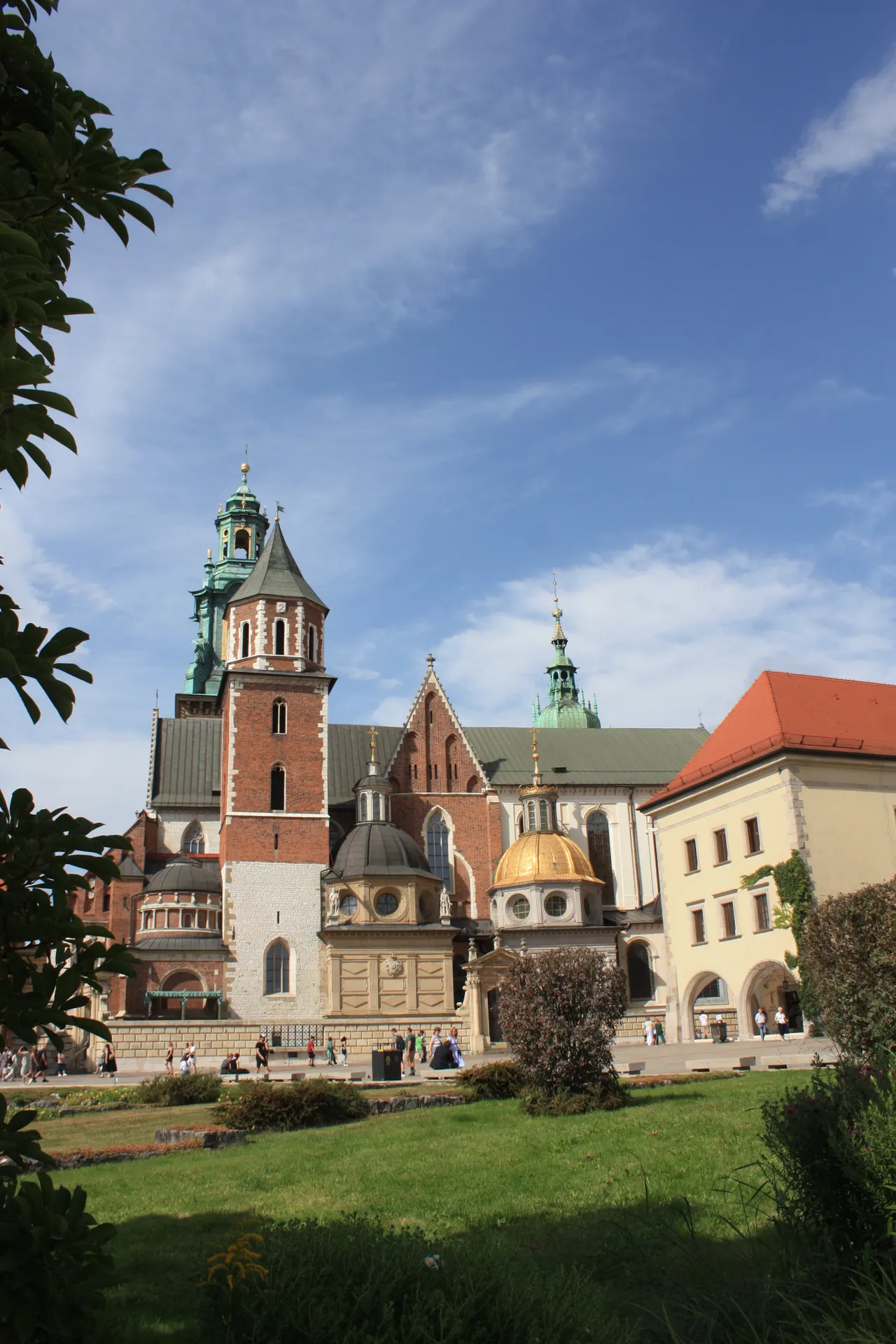
Poland is a majority Catholic country and churches are active places of worship, not just tourist attractions. When visiting Wawel Cathedral in Krakow, St. Mary’s Basilica on the Main Market Square, or the Jasna Gora Monastery in Czestochowa (one of the most visited pilgrimage sites in Europe), you are expected to cover your shoulders and knees. Women do not need to cover their heads, but sleeveless tops and short skirts or shorts are not appropriate.
The same applies to synagogues in the Kazimierz district of Krakow. Men should wear a kippah (head covering), which is usually provided at the entrance to active synagogues.
Avoid loud conversation inside churches, and silence your phone. Services happen throughout the day at major churches — if a mass is in progress, either wait outside or observe quietly from the back.
Beaches and Lakes
Poland has Baltic Sea beaches at Sopot, Gdynia, and Leba, plus freshwater lakes in the Mazury region. Topless sunbathing is legally permitted but uncommon — expect mixed reactions outside the most cosmopolitan beaches in Sopot. Family areas on municipal beaches tend to be more conservative. Swimwear is strictly for the beach and water areas; cover up when moving through towns or entering shops.
Restaurants and Evenings Out
Smart casual is appropriate for mid-range and upmarket restaurants. Poles generally dress well for evenings out, especially in Warsaw and Krakow. Turning up to a formal restaurant in shorts and flip-flops is not technically banned but stands out unfavourably. For fine dining venues like Senses in Warsaw or Copernicus in Krakow’s Old Town, a collared shirt and smart trousers are the right call.
Tipping Culture
Restaurants
A 10% tip is the standard expectation in sit-down restaurants. For service you found exceptional, 15% is generous and appreciated. The Polish custom is to tell the server how much change you want rather than leaving cash on the table — if your bill is 85 PLN and you hand over 100 PLN, say “dziekuje” (thank you) without specifying change, and this signals you are leaving the whole amount as a tip.
Tipping is not expected at milk bars (bar mleczny) — the state-subsidised canteen-style diners that serve traditional Polish food cheaply. Places like Bar Mleczny Pod Barbakanem near the Barbican in Krakow operate on a self-service, tray-return model where tipping would be out of place.
Taxis and Ride-Hailing
Round up taxi fares to the nearest round number. On a 23 PLN fare, giving 25 PLN is appropriate. For longer airport transfers, a 10% tip is reasonable. Uber and Bolt drivers receive tips through the app — not mandatory but common for good service.
Hotels and Other Services
Leave 5—10 PLN per night for hotel housekeeping (left on the pillow at checkout). Hotel porters expect 5 PLN per bag. Tour guides expect around 20—30 PLN per person for a half-day tour, more for a full day. Spa and hairdresser tips follow the restaurant 10% norm.
When Not to Tip
Do not tip at fast food counters, bakeries, supermarkets, petrol stations, or self-service cafes. Tipping at a Żabka convenience store or a Biedronka checkout would be unusual and unnecessary.
Social Customs and Greetings
First Meetings
Poles greet formally on first meeting. A firm handshake with eye contact is standard for both men and women in professional or semi-formal situations. Use Pan (Mr) and Pani (Ms/Mrs) plus the surname until you are invited to use first names — this applies in business contexts and when meeting older Poles. Among younger people and in casual situations, first names and a simple “Czesc” (hi) are fine.
When entering a small shop, doctor’s surgery, or lift with strangers, say “Dzien dobry” (good day). Leaving without acknowledging people in a small space would be considered rude.
Physical Contact
Male friends greet with a handshake or, if close, a brief hug. Women friends typically kiss on the cheek — one kiss on each cheek is normal. Men greeting women in formal contexts stick to a handshake, though a slight bow over a woman’s hand (without actually kissing it) is an old-fashioned courtesy still occasionally seen from older gentlemen.
Photography Rules
Photography is generally permitted outdoors throughout Poland, including in public squares, markets, and parks. Inside churches, most allow photography in the nave but not during services. Check for a camera icon sign at the entrance — a crossed-out camera means no photography at all. Wawel Cathedral charges a small additional fee for photography.
The Auschwitz-Birkenau Memorial in Oswiecim has specific photography rules: photography is permitted throughout the site except in some of the interior memorial spaces, and you must behave with appropriate solemnity. Taking selfies or appearing cheerful in photos at the memorial is seen as deeply disrespectful.
Always ask before photographing individuals, particularly in rural areas, at religious gatherings, or at traditional folk events.
Bargaining
Poles do not bargain in shops, restaurants, or markets that sell new goods. Prices are fixed and negotiating them is not culturally normal. At flea markets, antique fairs, and secondhand stalls — Krakow’s Stary Kleparz or the Praga district flea market in Warsaw are the main examples — a polite “czy mozna potargowac?” (can we negotiate?) on individual items is sometimes acceptable. Keep any negotiation friendly and low-key.
Religious and Cultural Sensitivities
Poland has one of Europe’s highest rates of Catholic observance. Sunday mass attendance is culturally significant for many families, and Sundays in smaller towns can feel quiet with many shops closed. Be respectful of this rhythm, particularly if you are staying somewhere with a strong local church community.
The history of Poland’s Jewish population is central to understanding the country. Around 3 million Polish Jews were murdered during the Second World War — roughly 90% of the pre-war Jewish population. The Auschwitz-Birkenau Memorial, the Warsaw Ghetto Uprising memorial, and the POLIN Museum of the History of Polish Jews in Warsaw address this history in depth. Approach these sites with genuine respect, not as photo opportunities.
Polish national identity is strong and tied to complex 20th-century history, including Soviet occupation and the struggle for independence. Comments that diminish Polish sovereignty, joke about wartime suffering, or conflate Polish culture with Russian culture will land badly.
Dining Etiquette
Traditional Polish meals follow a clear structure: soup (zupa) first, then a main course (drugie danie), and often tea or dessert after. Lunch (obiad) between noon and 3pm is the main meal of the day; the evening meal (kolacja) is lighter.
Wait to be seated in sit-down restaurants — wandering in and picking any table without being shown to one is considered impolite. If asked if you enjoyed the meal, “pyszne” (delicious) is a reliable response that will get a warm reaction.
Bread is often left on the table as a starter without butter. Butter costs extra in traditional restaurants and you should ask for it specifically. Poles do not split bills in the same way as in the UK or Australia — the person who invited the group often pays, and returning the favour on another occasion is the expected form. Among friends, splitting is normal, but expecting an itemised split at a formal dinner would be unusual.
Poles eat with their elbows off the table and keep both hands above the table during a meal, which is general European table manner convention. Finishing everything on your plate signals that you are satisfied; leaving food is not considered an insult.
Behaviour in Polish Homes
Being invited to a Polish home is a genuine honour. Bring a gift: a bottle of wine, chocolates, or flowers. Odd numbers of flowers are for joyful occasions; even numbers are for funerals — so bring an odd number of stems. Carnations are strongly associated with funerals and are best avoided as a gift.
Remove your shoes at the entrance unless you are clearly told not to. Your host may offer slippers (kapcie) — accept them. Refusing is seen as slightly standoffish.
Polish hosts will press food and drink on guests repeatedly. Refusing once is polite; refusing three times in a row may be taken seriously. Accept the first refusal gracefully if you genuinely do not want more, but be prepared to be asked again. Toasts (na zdrowie — to health) are the norm at meals with any alcohol. Clink glasses with everyone present and make eye contact with each person as you do so.
Compliment the food. Polish home cooking, from bigos (hunter’s stew) to pierogi to barszcz (beetroot soup), is a matter of pride, and genuine appreciation is warmly received.