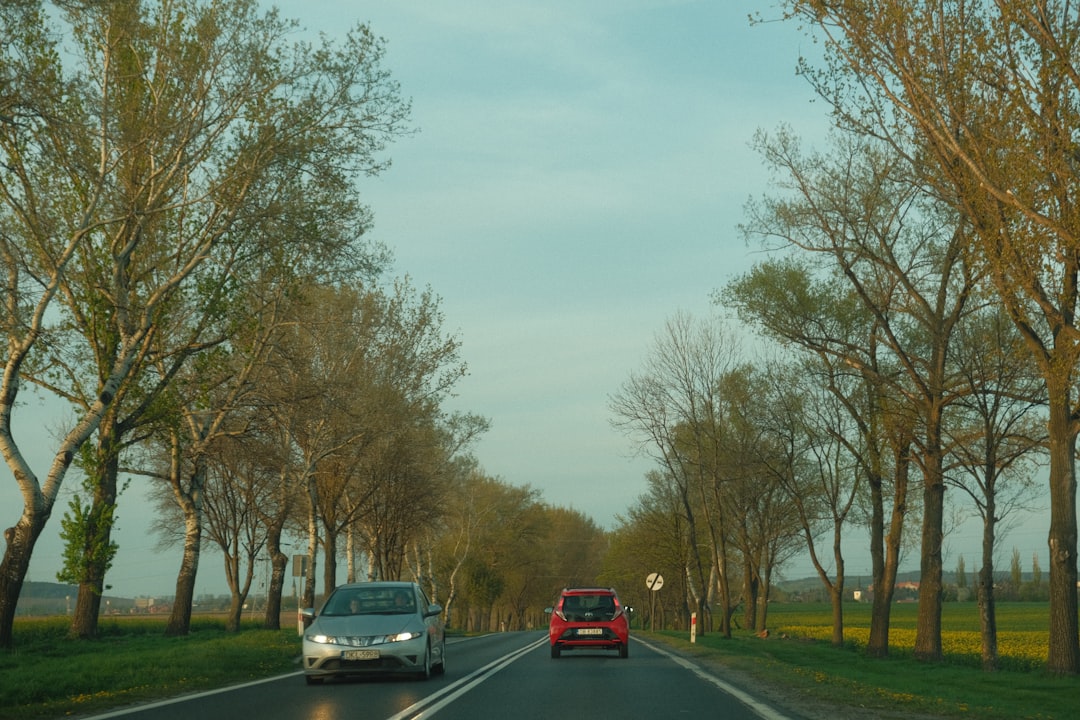
Driving in Poland opens up the country in a way that trains and buses simply cannot match - the Tatra foothills, the Mazurian lake district, the Białowieża Forest, and dozens of smaller historic towns are all far easier to reach by car. Poland’s road network has improved dramatically over the past decade, with motorway links between the major cities now complete.
This guide covers everything you need before you pick up the keys: documents, legal requirements, the e-TOLL system, city parking, seasonal tyre rules, fuel costs, and how to choose the right rental for your trip.
Driving Licence Requirements
EU and EEA licence holders can drive in Poland on their standard national licence with no additional paperwork. Your licence is valid for the full rental period.
Non-EU drivers - including visitors from the USA, UK, Canada, Australia, and New Zealand - are legally required to carry an International Driving Permit (IDP) alongside their home-country licence. The IDP translates your licence details into multiple languages and must be issued in your home country before you travel; you cannot obtain one in Poland. In practice, rental desks rarely check for an IDP at pickup, but Polish traffic police can issue on-the-spot fines if you are stopped without one.
UK licence holders: since Brexit, UK licences are technically foreign documents in Poland, so carry an IDP to avoid any ambiguity during a roadside stop.
Age Restrictions and Young Driver Surcharges
Most rental companies in Poland apply the following age rules:
- Minimum age: 21 years (some operators accept 19–20 with an additional fee)
- Young driver surcharge: typically applies from 21–24, ranging from €5–€12/day depending on the company
- Senior drivers: no upper age limit at most companies, though some insurers cap coverage at 75
- Premium/luxury vehicles: often restricted to drivers aged 25 and over
If you are travelling with a second driver, declare them at booking - most companies allow one additional driver free of charge, but undeclared drivers are typically excluded from insurance cover.
The e-TOLL System
Poland operates a national electronic tolling system called e-TOLL for motorways and express roads. Physical toll booths still exist on a few sections, but the majority of the network is now run electronically.
For rental cars: The most practical approach is the e-TOLL transponder pre-fitted by the rental company. Many larger operators (Hertz, Avis, Europcar, Sixt) offer this as an optional extra - typically €3–€6/day - which covers toll deductions automatically. Ask at booking whether a transponder is included or available.
Main toll roads:
| Road | Approximate section | Approximate cost (car) |
|---|---|---|
| A2 | Warszawa – Łódź – Konin | PLN 5–25 depending on section |
| A2 | Konin – Nowy Tomyśl (to German border) | PLN 28–45 |
| A1 | Łódź – Piotrków Trybunalski | PLN 5–10 |
| A4 | Kraków – Katowice | PLN 12–18 |
| A4 | Wrocław – Kraków | PLN 30–50 |
Toll costs are approximate as of 2026 and vary by vehicle category. Passenger cars (category 1) pay the lowest rate. If you use the A4 Kraków–Katowice section frequently, the tolls add up - factor this in if you are driving between Kraków and the Silesian cities.
Avoiding the transponder fee: If you plan to use motorways only occasionally, you can pay at physical booths (cash or card accepted) on sections that still have them, or register your vehicle in advance on the e-TOLL app using a payment card. The app approach works but requires setup before you drive; the transponder is simpler for most visitors.
Parking in Warsaw and Kraków
Warsaw
Warsaw’s Paid Parking Zone (Strefa Płatnego Parkowania) covers the city centre and inner districts. It operates Monday–Friday, 08:00–20:00; evenings and weekends are free. Rates as of 2026:
- Zone A (central): approximately PLN 6/hr (first hour), PLN 7.20/hr (second hour), PLN 8.64/hr (third hour), flat rate thereafter
- Zone B (inner ring): approximately PLN 3/hr standard rate
- Zone C (outer ring): approximately PLN 1.50/hr
Pay at roadside meters (cash and card) or via the mPay or SkyCash apps. Underground car parks are widely available near the Old Town - the car parks under Plac Defilad and at Złote Tarasy are well-signed and charge approximately PLN 7–10/hr.
Overnight stays in the paid zone are free but check for street-cleaning restrictions (signs show restricted days and times).
Kraków
Kraków’s paid zone is divided into an A zone (immediate Old Town area) and a B zone (inner Kazimierz and surrounding districts). Rates:
- Zone A: approximately PLN 5/hr rising in increments
- Zone B: approximately PLN 2.50/hr
The Old Town is largely pedestrianised, so the nearest practical parking is at Park & Ride facilities on the tram lines (Czerwone Maki, Nowy Kleparz, Wielicka). These cost approximately PLN 4/day with a tram ticket included - a far better option than driving into the centre.
Winter Tyre Rules (November–March)
Poland does not legally mandate winter tyres, unlike some neighbouring countries. However:
- Police can hold you liable for an accident if you were driving on summer tyres in winter conditions, even if you were not at fault
- Mountain roads in the Tatras and Beskidy are routinely closed to vehicles without winter tyres or chains during heavy snowfall
- Reputable rental companies in Poland will fit winter tyres automatically during the November–March window
When booking in winter months, confirm explicitly that the vehicle will have M+S-rated winter tyres (not all-season tyres). Tyre chains are rarely necessary for standard lowland routes but are worth renting if you plan to drive into the Tatras.
Speed Limits
| Road type | Speed limit |
|---|---|
| Built-up area (urban) | 50 km/h (07:00–23:00); 60 km/h (23:00–07:00) |
| Single carriageway outside towns | 90 km/h |
| Dual carriageway | 100 km/h |
| Motorway (autostrada) | 140 km/h |
| Expressway (droga ekspresowa) | 120 km/h |
Speed cameras are common on national roads and near school zones. The Polish Traffic Police (ITD) operates mobile enforcement vehicles on motorways. Speeding fines start at approximately PLN 50 for minor violations and reach PLN 2,500 for extreme excess speed; fines are payable on the spot by card.
Mandatory rules: seatbelts in all seats; children under 150 cm or 36 kg require a child seat; daytime running lights are compulsory at all times; blood alcohol limit is 0.02% (effectively zero tolerance).
Fuel Costs
Petrol (benzyna) and diesel (olej napędowy) are widely available at station chains including Orlen (Poland’s dominant supplier), BP, Shell, Circle K, and Lotos. LPG is also common.
Approximate pump prices as of 2026:
- Petrol 95 (Pb95): PLN 6.30–6.70/L
- Diesel (ON): PLN 6.20–6.60/L
- LPG: PLN 2.80–3.10/L
Prices fluctuate with global oil markets and Polish government fuel duty adjustments. Motorway service stations typically charge PLN 0.20–0.40/L more than independent or city stations. The Orlen card app sometimes offers small loyalty discounts at Orlen forecourts.
Rental Company Comparison
Compare car hire options in Poland and book online →
| Company | Price tier | Notable strength | Typical daily rate (economy) |
|---|---|---|---|
| Europcar | Mid | Wide airport presence | €35–45 |
| Hertz | Mid–premium | Strong loyalty programme | €40–55 |
| Avis | Mid–premium | Flexible one-way rentals | €38–52 |
| Sixt | Mid–premium | Clean, newer fleet | €40–60 |
| Budget | Budget | Lowest base rates | €20–32 |
| Enterprise | Budget–mid | Good local network | €28–42 |
| Panek | Budget (local) | Poland-based, low rates | €18–28 |
| Payless | Budget | Airport locations, no frills | €20–30 |
Budget tier (€18–30/day): Panek, Budget, Payless, and Interrent offer the lowest base prices. Watch for mandatory extras at pickup (GPS, child seat, additional driver) that can push the total higher. Excess/deductible amounts are often large - €800–1,500 - so a CDW waiver becomes more important.
Mid tier (€35–50/day): Europcar, Enterprise, and Avis offer a better balance of price and service. Fleet quality is more consistent and the pickup process is typically faster.
Premium tier (€60+/day): Sixt and Hertz premium categories, plus prestige operators in Warsaw and Kraków. Appropriate for business travellers or longer trips where comfort matters.
Local operators: Polish company Panek CarSharing operates short-term rentals in Warsaw, Kraków, and Wrocław. For stays of several days, their per-day rates undercut the international chains significantly. Their app-based pickup can save time at the airport.
Insurance Add-Ons Worth Taking
Every car hire in Poland includes third-party liability (mandatory by Polish law). Beyond that:
Collision Damage Waiver (CDW) / Loss Damage Waiver (LDW) - reduces or eliminates your excess if the car is damaged or stolen. The standard excess on a Polish rental is typically €600–1,200. Full CDW removes this, for approximately €8–18/day. Worth taking unless your credit card provides rental car coverage (check the terms carefully - many cards exclude certain countries or vehicle categories).
Personal Accident Insurance (PAI) - covers medical costs and accidental death for you and passengers. If you have comprehensive travel insurance that includes personal accident cover, you can skip this.
Roadside Assistance / Breakdown Cover - most reputable companies include 24-hour assistance, but confirm this. If you are driving into rural eastern Poland or mountain areas, breakdown cover matters more.
Super CDW (zero excess): for peace of mind on narrow city roads and poorly maintained rural routes, upgrading to zero excess is worth the extra €5–10/day.
What to skip: GPS rental (use Google Maps offline), additional driver cover for a spouse/partner (often free - just ask), and premium fuel pre-fill packages (return the tank full and save PLN 30–50).
Booking Tips
Search across multiple platforms - GetRentacar aggregates rates from local and international suppliers and frequently shows lower prices than booking directly. The best rates are usually found 3–6 weeks ahead; last-minute airport pickup pricing can be double the advance rate.
When comparing quotes, always check:
- Whether CDW is included or priced separately
- The excess/deductible amount
- Whether unlimited mileage is included (important for longer Poland road trips)
- Fuel policy (full-to-full is the fairest; avoid prepaid fuel schemes)
- Cross-border restrictions (relevant if you plan to drive into Germany, Czech Republic, or Slovakia)
Most Polish rental companies allow cross-border travel within the EU with advance notice. Some budget operators restrict this - confirm before booking if you plan to cross any border.
Getting Around Without Driving
If a car feels like more than you need for your trip, Poland’s train network covers all major cities efficiently. For the full picture of transport options - trains, buses, and internal flights - see our Getting Around Poland guide.
For city-specific transport and what to do once you arrive, the Warsaw and Kraków city guides have practical neighbourhood-by-neighbourhood coverage.
Search hotels in Poland on Booking.com
Plan Your Trip
✈️ Book your flights to Poland 🛡️ Get travel insurance 📱 Stay connected with an eSIM 🚗 Rent a car