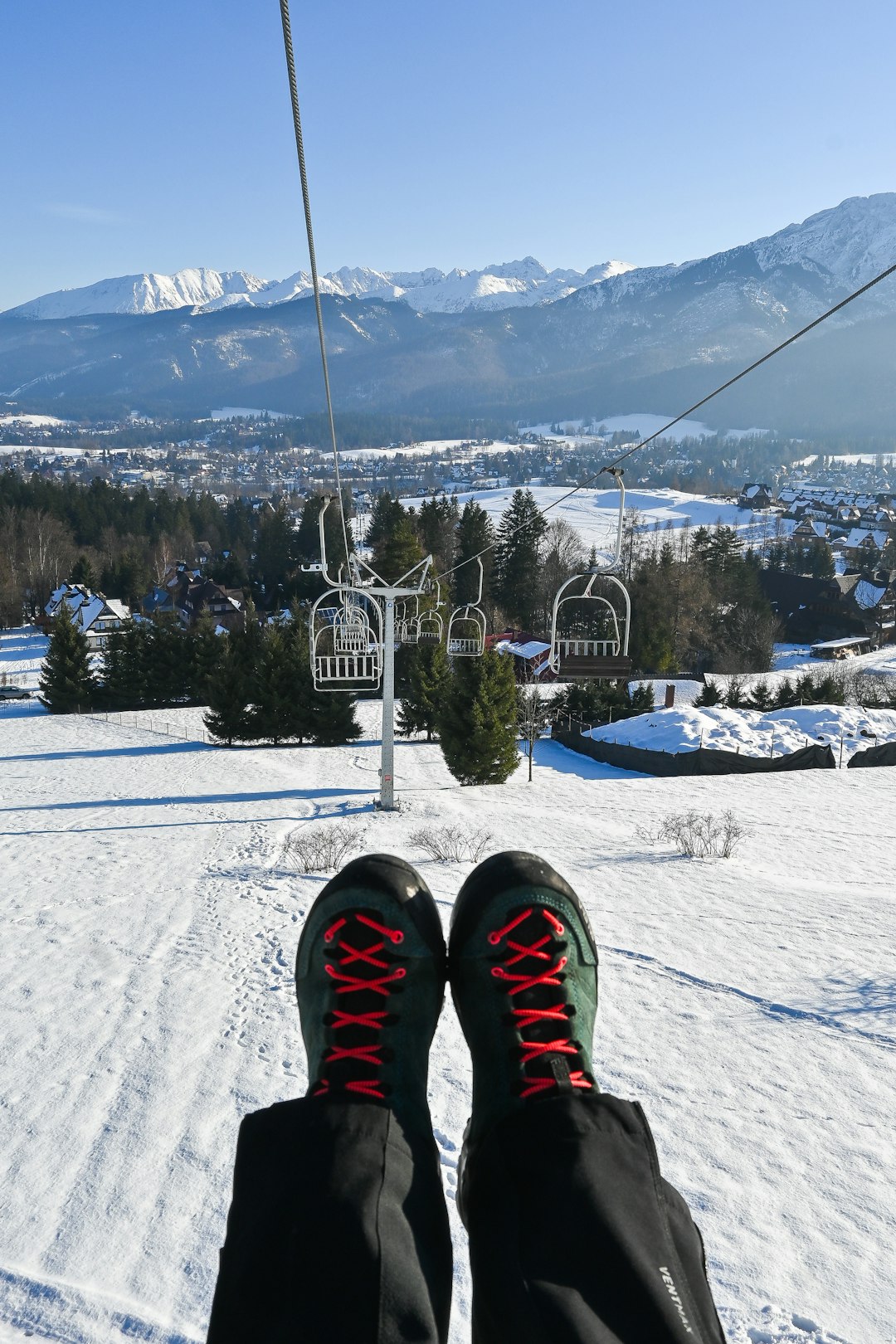
Poland is not an Alpine destination, and it doesn’t try to be. What it offers is accessible winter sport at prices well below those of Austria, France, or Switzerland - combined with a mountain town culture in Zakopane that makes the experience worthwhile beyond the slopes. Guided winter tours in the Tatra Mountains can include ski packages, snowshoe hikes, and highland cultural experiences. The Tatras are real mountains: the cable car at Kasprowy Wierch reaches 1,987 m and the scenery is genuinely dramatic. The ski area is just smaller and less extensive than its western counterparts.
Zakopane: Poland’s Main Ski Hub
Zakopane sits at the foot of the Tatra mountains at around 850 m, roughly 100 km south of Kraków. It is Poland’s only genuine mountain resort town and functions year-round, but winter draws the largest crowds. The town itself - wooden architecture, thermal baths, the pedestrianised Krupówki street - is worth experiencing regardless of the skiing.
Six main ski areas are accessible from Zakopane and its immediate surroundings. They vary significantly in character and difficulty.
Kasprowy Wierch
The flagship. A cable car from Kuźnice (on the edge of Zakopane) climbs to the Kasprowy Wierch summit at 1,987 m, placing you above the treeline with views into Slovakia. The cable car ticket costs approximately PLN 100 return as of 2026; ski passes for the runs below are sold separately at approximately PLN 170–220 per day as of 2026.
The runs are limited in number - around six to seven marked pistes - but the altitude means good snow quality even when lower resorts are struggling. This is the most technical area near Zakopane: the upper sections are classified red and black and genuinely test ability in icy conditions.
Cable car queues on weekends in peak season (particularly January and school holidays) can be long. Arriving early - before 9:00 - is worth it.
Nosal and Szymoszkowa
These two areas sit lower than Kasprowy and offer gentler terrain. Nosal is popular with beginners and families; Szymoszkowa has a slightly longer vertical and is served by a gondola. Both are significantly cheaper than Kasprowy Wierch for lift passes and are the more practical choice for intermediates spending a full day on groomers.
Harenda
A smaller area on the eastern edge of Zakopane, with a reputation among snowboarders for its park features. Relatively quiet compared to the central areas.
Equipment Hire in Zakopane
Zakopane’s town centre and the streets near the ski areas have dozens of rental shops competing for business. A full set - skis (or snowboard), boots, poles, and helmet - costs approximately PLN 60–100 per day as of 2026. Prices at the base of Szymoszkowa and Nosal are typically slightly higher than in the town centre; the difference is convenience versus cost.
Book or at least arrange rental the evening before for early starts on peak weekend days. Multi-day hire rates reduce the per-day cost - ask the shop for a weekly rate if you are staying several days.
Ski Schools
Szkoła Narciarska Tatry is one of the better-established schools in Zakopane with English-speaking instructors. Group lessons are approximately PLN 80 per hour as of 2026; private instruction runs approximately PLN 150 per hour as of 2026. Group sessions typically run in two-hour blocks and are available at beginner, intermediate, and children’s levels.
Several other schools operate in the town; walk the main street and compare prices before booking. Standards are generally consistent - the Polish ski instructor certification system is well-regarded. For children, group lessons with peers of the same age and ability are usually the most effective start.
Karpacz: The Karkonosze Alternative
Karpacz in the Karkonosze mountains of Lower Silesia is Poland’s second significant ski destination. At around 860 m base altitude, it is slightly lower than Zakopane and the runs are gentler - making it a particularly good choice for families and beginner-to-intermediate skiers.
Kopaonik-style area: The main ski area above Karpacz has around 20 km of marked runs served by a gondola and several chairlifts. Ski pass prices are approximately PLN 130–160 per day as of 2026 - somewhat cheaper than Kasprowy Wierch.
Karpacz is also easily reached from Wrocław (approximately one and a half hours by car), which makes it a practical option if you are basing yourself in Lower Silesia rather than Kraków.
Other Polish Ski Areas
Szczyrk (Silesian Beskids): A compact resort close to Bielsko-Biała with modern lift infrastructure including a gondola. Good intermediate terrain and a reasonable alternative to Zakopane if you are coming from Katowice or Upper Silesia.
Zieleniec (Giant Mountains): A small area in the Sudeten mountains near the Czech border, popular with skiers from Wrocław and Poznań. Limited vertical but reliable snow and quiet midweek.
Białka Tatrzańska: A newer development 15 km east of Zakopane with modern infrastructure and a thermal spa complex. Slightly easier access and more contemporary facilities than central Zakopane, though the ski area itself is smaller.
Poland vs the Alps: A Realistic Comparison
Poland is cheaper. A day’s skiing including hire, lift pass, and lunch runs approximately PLN 350–500 as of 2026 in Zakopane - a fraction of the cost in Chamonix or St. Anton. Accommodation, food, and après-ski are proportionately less expensive throughout.
What you give up:
- Vertical: The longest run at Kasprowy Wierch is around 3 km. Typical Alpine resorts offer 10–30 km continuous descents.
- Snow guarantee: Polish resorts use snowmaking, but warm spells can affect lower areas. Alpine resorts above 1,500 m base are more reliable from December to April.
- Variety: Six to eight pistes in Zakopane versus hundreds in a mid-sized French or Austrian resort.
For families, beginners, and those who want a long weekend in the mountains without the expense of a flight and high Alpine accommodation costs, Poland makes sense. For experienced skiers wanting technical challenge across multiple weeks, the Alps remain the better destination.
Getting There
Zakopane: Regular buses from Kraków’s main bus station cost approximately PLN 20–30 as of 2026 and take around two hours. Private minibus services also operate on the route. By car from Kraków, allow 1.5–2 hours; road conditions on the approach can be slow in heavy snowfall or weekend traffic. Most ski resorts in the Polish mountains are easiest to reach by car - compare car hire prices for Poland if you’re combining multiple ski areas or travelling with equipment.
Karpacz: Accessible by train to Jelenia Góra, then a short bus or taxi onward. From Wrocław by car is approximately one and a half hours.
Szczyrk: Accessible from Bielsko-Biała by local bus or taxi; 15 minutes from the town.
Related City Guides
- Zakopane City Guide - Poland’s main ski resort town with accommodation, lifts, and slope information
- Kraków City Guide - the most common base city for Zakopane ski trips
- Jelenia Góra City Guide - the gateway to Karpacz and the Karkonosze ski area
- Tatra Mountains Trekking - hiking the same mountains in the non-ski season
- Visiting Poland in December - ski season opening and winter travel tips
- Visiting Poland in January - peak ski season in the Tatras and Karkonosze
- Visiting Poland in February - the last reliable ski month before the spring thaw
- Karkonosze Hiking - the Sudeten range around Jelenia Góra and Karpacz in summer