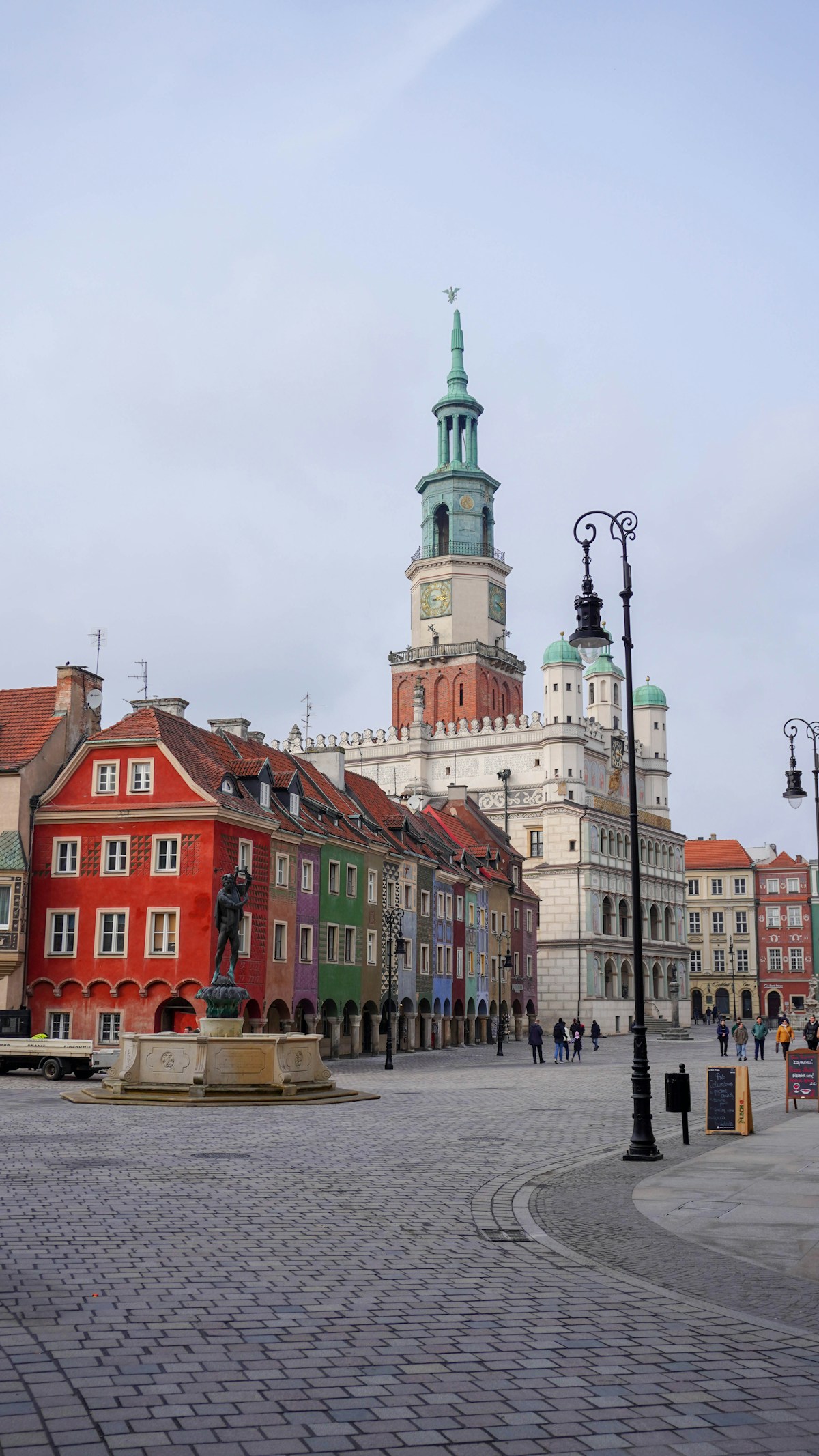
Poznań and Łódź are two of Poland’s most underrated cities - regularly skipped by visitors who fly between Warsaw and Kraków without exploring what lies between. Both have genuine personality, interesting histories, and considerably lower tourist pressure than the big-name destinations. The comparison between them reveals two quite different cities, however. Here is a direct look at what each offers.
Overview
Poznań is a city of around 550,000 people in western Poland, roughly midway between Warsaw and Berlin on the main east-west rail line. It has been a major commercial and trading city for a thousand years - the first capital of the Polish state was established here in the 10th century - and that mercantile energy is still visible in the elaborate 16th-century merchant townhouses that ring its Old Market Square (Stary Rynek), among the most beautiful in Poland. Poznań has a reputation as a practical, business-minded city; it hosts major trade fairs (the Poznań International Fair has operated since 1921) and maintains the infrastructure and confidence of a city that does not rely on tourism.
Łódź is Poland’s third-largest city by population, with around 650,000 people, and it has been through a more dramatic recent history. Once one of the most important textile manufacturing cities in Europe - the “Manchester of Poland” in the 19th century - it went through severe deindustrialisation after 1989 and has spent the decades since reinventing itself as a creative and cultural hub. The Old Town barely exists (Łódź was a young industrial city; it has no medieval core). Instead, the city’s identity is built around the 19th-century factory architecture along Piotrkowska Street, the world-class Manufaktura arts and shopping complex (a former textile mill), and an internationally recognised street art and mural scene.
Getting Between the Cities
Poznań and Łódź are separated by approximately 210 km. Direct trains connect them in approximately 2.5–3 hours; advance fares from around PLN 40–60 as of 2026. Standard tickets approximately PLN 60–90. There are also bus connections (FlixBus, Polski Bus) for around PLN 20–40, taking approximately 3–3.5 hours.
Both cities are well connected to Warsaw (Poznań by fast rail in approximately 2.5 hours; Łódź Fabryczna to Warsaw Centralna in approximately 1.5 hours via the fast intercity line - one of the most convenient connections in Poland).
Things to Do
Poznań is anchored by the Stary Rynek (Old Market Square) - arguably the most underrated historic market square in Poland after Kraków’s. The colourful Renaissance merchant townhouses, the 16th-century town hall (one of the finest examples of Renaissance civic architecture north of the Alps), and the goats that emerge from the clock tower at noon are the core sights. The Rogalowe Muzeum Poznania (Croissant Museum) offers a genuinely fun 45-minute interactive tour covering the city’s signature pastry; book in advance (entry approximately PLN 50 as of 2026). The National Museum houses a collection of Polish paintings. The Citadel Park on a hilltop north of the centre is where the final battle of Poznań was fought in 1945; the park contains a war cemetery and open-air sculpture. For more, see our Poznań things to do guide.
Łódź trades almost entirely on its industrial heritage and contemporary creative scene. Manufaktura - a vast brick textile mill complex on Ogrodowa Street converted into a retail, arts, and entertainment centre - is the single most impressive architectural conversion in Poland (entry to the complex is free; individual museums and cinemas are ticketed). The Museum of the City of Łódź (Muzeum Miasta Łodzi) is housed in the palace of Izrael Poznański, the 19th-century cotton magnate - his opulence still intact, entry approximately PLN 15 as of 2026. Piotrkowska Street, the main commercial boulevard running 4.9 km through the city centre, is Poland’s longest pedestrian street and the canvas for an extraordinary collection of street art murals - over 60 large-format works covering the sides of factory buildings along and off the main street. The Lodz Film School (Szkoła Filmowa), which produced Roman Polański and Krzysztof Kieślowski among others, has a small campus cinema open to the public. For the full picture, see our Łódź things to do guide.
Edge: Łódź for something genuinely different; Poznań for a more conventional (but excellent) historic city experience.
Food and Drink
Poznań has the most important local pastry in Poland: the rogal świętomarciński - a croissant filled with white poppy seed paste, rose hip, dried fruit, and covered in icing, traditionally eaten on St Martin’s Day (11 November) but available year-round at bakeries across the city. This is protected geographical indication food; the recipe is legally protected. Beyond pastries, Poznań has a well-developed restaurant scene. Stary Rynek has the tourist-priced waterfront restaurants and the more serious options on the side streets behind the square. Mid-range dinners run approximately PLN 50–85 per person as of 2026. See our Poznań where to stay guide for neighbourhood orientation.
Łódź has developed a food scene that partly reflects its multicultural industrial past. The city was home to large communities of Poles, Germans, Jews, and Russians in the 19th century, and traces of that diversity appear in the cuisine. Manufaktura contains several good restaurant options. Piotrkowska Street is lined with bars, cafés, and restaurants at a range of price points. The milk bar tradition is strong - Gospoda pod Łosiem is a reliable traditional option. Mid-range dinners approximately PLN 40–80 per person as of 2026.
Edge: Poznań for the rogal świętomarciński and a more settled restaurant scene; Łódź for the creative café culture around Manufaktura.
Where to Stay
Poznań has a solid accommodation market oriented around the Stary Rynek and the trade fair grounds (which drive business hotel supply). Hotel Blow Up Hall 5050, in a converted 19th-century cotton mill, is a genuinely creative boutique option from approximately PLN 450–600 per night as of 2026. Ibis Poznań Centrum offers reliable three-star comfort from approximately PLN 280–380 per night. Several hostels and budget hotels cluster near the Stary Rynek. See our Poznań where to stay guide.
Łódź has a growing boutique accommodation scene in converted factory spaces. The Manufaktura area and Piotrkowska Street are the best bases. Hotel Andel’s, a design hotel in a converted cotton mill on Ogrodowa Street next to Manufaktura, is the most prominent upmarket option (from approximately PLN 380–550 per night as of 2026). Budget: Focus Hotel Łódź Centrum from approximately PLN 220–300 per night. See our Łódź where to stay guide.
Edge: Draw. Both cities have interesting accommodation in industrial-heritage buildings; Poznań has more variety at the mid-range.
Search hotels in Poznań on Booking.com
Nightlife
Poznań has an active bar scene concentrated around the Stary Rynek and particularly on Śródka (the medieval settlement across the Cybina River, now a creative neighbourhood). Craft beer bars and cocktail bars are well-represented. The student population (four universities) sustains a year-round scene.
Łódź has a nightlife that punches above its weight, built around the Piotrkowska Street bar strip and the clubs in former factory spaces. Wytwórnia (the Factory) is a large creative venue hosting club nights, concerts, and pop-up markets on Łąkowa Street. The city’s art-world connections mean the events calendar (gallery openings, film screenings, experimental music) is more interesting than a city of this size might suggest.
Edge: Łódź on creative energy and interesting venues; Poznań on a more conventional but reliable bar scene.
Budget
| Expense | Poznań | Łódź |
|---|---|---|
| Hostel dorm (per night) | PLN 75–110 | PLN 65–100 |
| Mid-range hotel (per night) | PLN 300–480 | PLN 250–420 |
| Lunch (budget / milk bar) | PLN 20–35 | PLN 18–30 |
| Restaurant dinner (mid-range) | PLN 50–85 | PLN 40–80 |
| Museum entry (average) | PLN 15–25 | PLN 12–20 |
| Public transport (single) | PLN 4.00 | PLN 3.60 |
All approximate, as of 2026. Łódź is noticeably cheaper across most categories, reflecting its lower tourist footfall and different economic position.
The Verdict
Choose Poznań if: you want a genuinely beautiful historic market square, a well-organised and confident Polish city with good transport connections to Germany and Warsaw, and the best croissant in Central Europe.
Choose Łódź if: you want something genuinely different - vast industrial architecture, world-class street art, a creative arts scene, and lower prices - and you are comfortable with a city whose attractions are unconventional.
Both can be combined in a single trip given the reasonable rail connection between them, and both pair well with Warsaw (Łódź in particular is only 1.5 hours away by fast train). Poland tours that combine Warsaw with either city are a convenient option for first-time visitors. See our full guides to Poznań and Łódź for complete planning information.
Plan Your Visit
- Things to Do in Poznań - goat clock, croissants, and the Old Market Square in detail
- Things to Do in Łódź - Manufaktura, street art, and ul. Piotrkowska explored
- Getting Around Poland - train connections between both cities and Warsaw
- 10 Days in Poland Itinerary - how Poznań fits a longer western Poland route
- Poland Budget Guide - costs in both cities compared with Warsaw and Kraków
More Poland Comparisons
- Lublin vs Zamość - eastern Poland’s two overlooked cities compared
- Kraków vs Warsaw - Poland’s two headline cities: which one deserves your limited time
- Warsaw vs Gdańsk - capital vs Baltic port: the northern route comparison