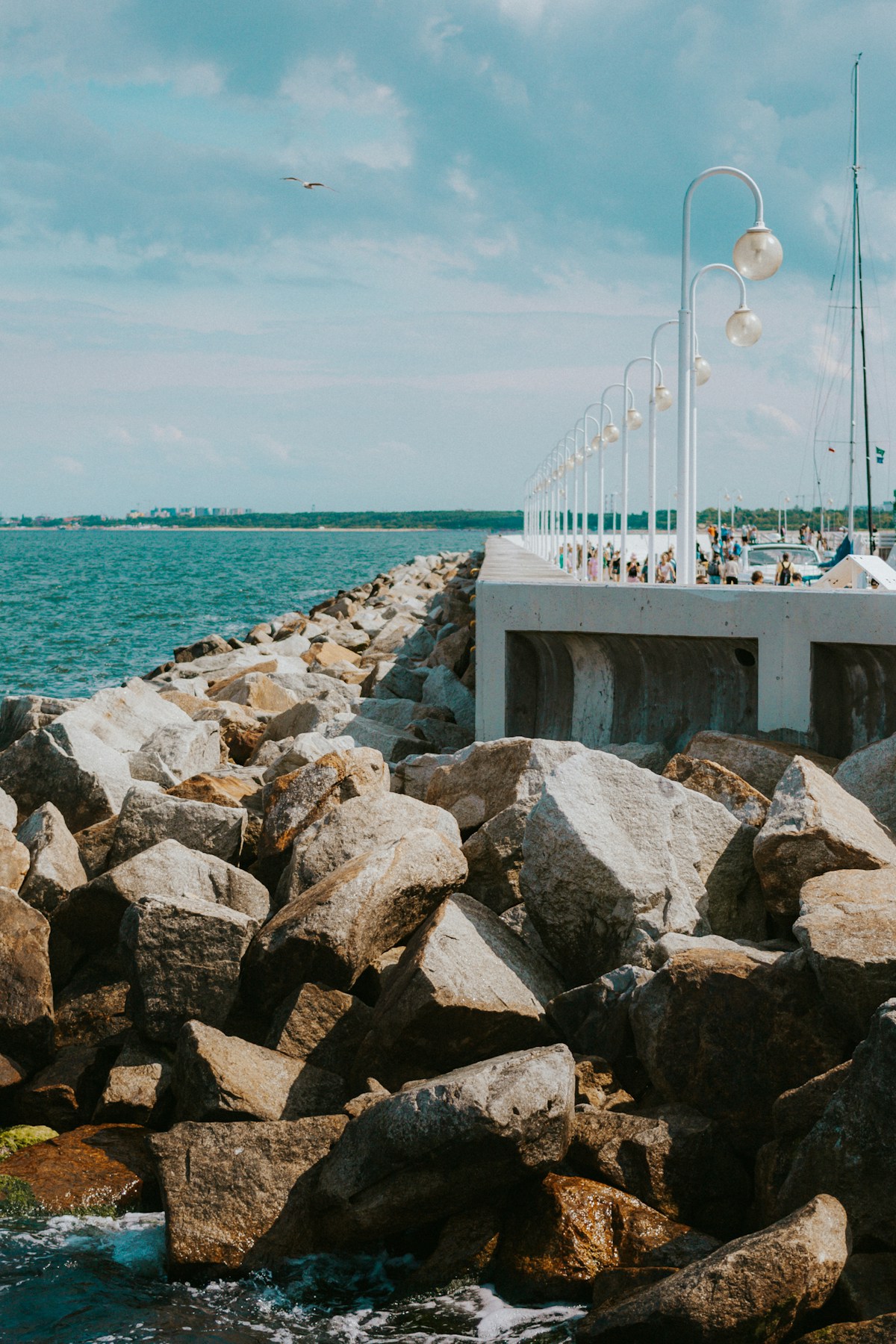
Sopot earns its reputation as Poland’s most glamorous Baltic resort without trying too hard. The famous wooden pier, the Art Nouveau spa hotels, the animated Monte Cassino promenade, and the excellent sandy beach combine into a visit that works comfortably as a day trip from Gdańsk or Gdynia, or as an overnight stay in its own right. Here is what to prioritise during your time here.
The Molo (Sopot Pier)
Walking the Molo is the non-negotiable Sopot experience. At 511 metres, it is the longest wooden pier in Europe and extends far enough into the Baltic that the shoreline recedes to a genuinely distant backdrop. Entry approximately PLN 12 as of 2026. The pier has stood here in various forms since the mid-19th century, when Sopot was being developed as a fashionable resort for German and Russian aristocracy.
At the far end, there are views back across the beach to the forested hills behind Sopot and, on clear days, north to the Hel Peninsula. Fishing from the pier’s edge is popular with locals throughout the year. In summer, boats run excursions from the pier head to Gdańsk, Gdynia, and along the coast - check the kiosks near the entrance for schedules and prices (approximately PLN 30–60 per person for a short cruise as of 2026).
Ul. Monte Cassino (Monciak)
The pedestrianised Monte Cassino street runs from the railway station to the pier entrance and is Sopot’s main social artery. The 600-metre walk passes some of the finest Art Nouveau and early 20th-century resort architecture in Poland - look up at the facades of the Grand Hotel, the Sopotnia tenements, and the various spa villas set back from the street. The ground floors are almost entirely given over to restaurants, cafes, ice cream parlours, and boutiques.
Grand Hotel Sopot (ul. Powstańców Warszawy 12) is Sopot’s most iconic building - a large 1920s seafront hotel that has hosted numerous heads of state and artists over the decades. Even if you are not staying, the lobby cafe is worth a look. Rooms from approximately PLN 800–1,500 per night as of 2026.
Search hotels in Sopot on Booking.com
The Beach
Sopot beach (Plaża Sopocka) runs for approximately 5 km along the seafront - a wide sandy beach backed by promenades and summer bars. The main beach section adjacent to the pier is the busiest and most accessible. During the main season (July–August) the beach is divided into free zones and paid zones where you can hire a sun lounger and parasol for approximately PLN 20–40/day as of 2026.
Swimming is realistic from mid-June to mid-August when Baltic water temperatures reach 17–21°C. Outside these months the beach is excellent for walking and kite-flying. The beach is generally clean and well-maintained; the Sopot authorities run regular environmental monitoring of water quality.
Forest Opera (Opera Leśna)
The Forest Opera sits on the hill behind Sopot, a 15-minute walk from the train station, and is one of the most distinctive concert venues in Poland. The natural bowl in the forest creates good acoustics without any artificial amplification assistance, and the surrounding beech and oak trees add to the atmosphere considerably. The venue hosts the TOP Sopot festival each summer (typically August) as well as classical concerts, pop performances, and theatre throughout the season (generally May–September).
Check the current programme and buy tickets in advance at operalesna.pl - popular events sell out weeks ahead. Standard seating approximately PLN 60–150; premium positions PLN 150–300 as of 2026.
Sopot Hippodrome
The Sopot Hippodrome (Tor Wyścigów Konnych), a 10-minute drive from the centre, is one of the oldest racecourses in Poland with horse races held throughout the spring and summer season. Race days are family-friendly social events; entry approximately PLN 15 as of 2026. The Hippodrome also hosts the Off Festival, a major Polish alternative music event held annually in late July or early August (check offmusicfestival.pl for current dates and tickets - approximately PLN 250–350 for a weekend pass as of 2026).
Crooked House (Krzywy Domek)
The Crooked House on ul. Monte Cassino 53 is Sopot’s most photographed architectural curiosity - a shopping centre built in 2004 with a deliberately warped, melting facade inspired by the fairy-tale illustrations of Jan Marcin Szancer. It is mainly a shopping complex inside, but the exterior is genuinely arresting and worth a photograph.
Day Trip Logistics
Sopot sits between Gdańsk (approximately 15 km south) and Gdynia (approximately 12 km north) and is connected to both by the SKM commuter train. For those who prefer a guided introduction to the whole Tri-City area, guided tours from Gdańsk often combine Sopot and Gdynia in a single day excursion with local commentary. - one of the most frequent rail services in Poland. Trains run every 5–10 minutes throughout the day; the journey from Gdańsk Główny takes approximately 20 minutes (PLN 4 as of 2026), from Gdynia Główna approximately 12 minutes. The train station on ul. Dworcowa is a 5-minute walk from Monte Cassino.
For those arriving by car, paid parking zones operate throughout the city centre - approximately PLN 4/hour in the central zone as of 2026. Parking is significantly easier outside July–August.
More in Sopot
- Sopot City Guide - overview, hotels, restaurants, and getting there
- Gdańsk City Guide - 15 km south by SKM train, the region’s main city
- Things to Do in Gdynia - modernist port city 12 km north
- Day Trips from Gdańsk - Sopot fits naturally into a Tri-City day trip
- Gdańsk vs Sopot - which Baltic city to base yourself in
- Malbork Castle Visitor Guide - an inland day trip contrast to the beach, 60 km from Gdańsk
- Best Time to Visit Poland - Sopot beaches at their best July–August
- 2 Weeks in Poland Itinerary - how the Baltic coast fits a longer Polish trip