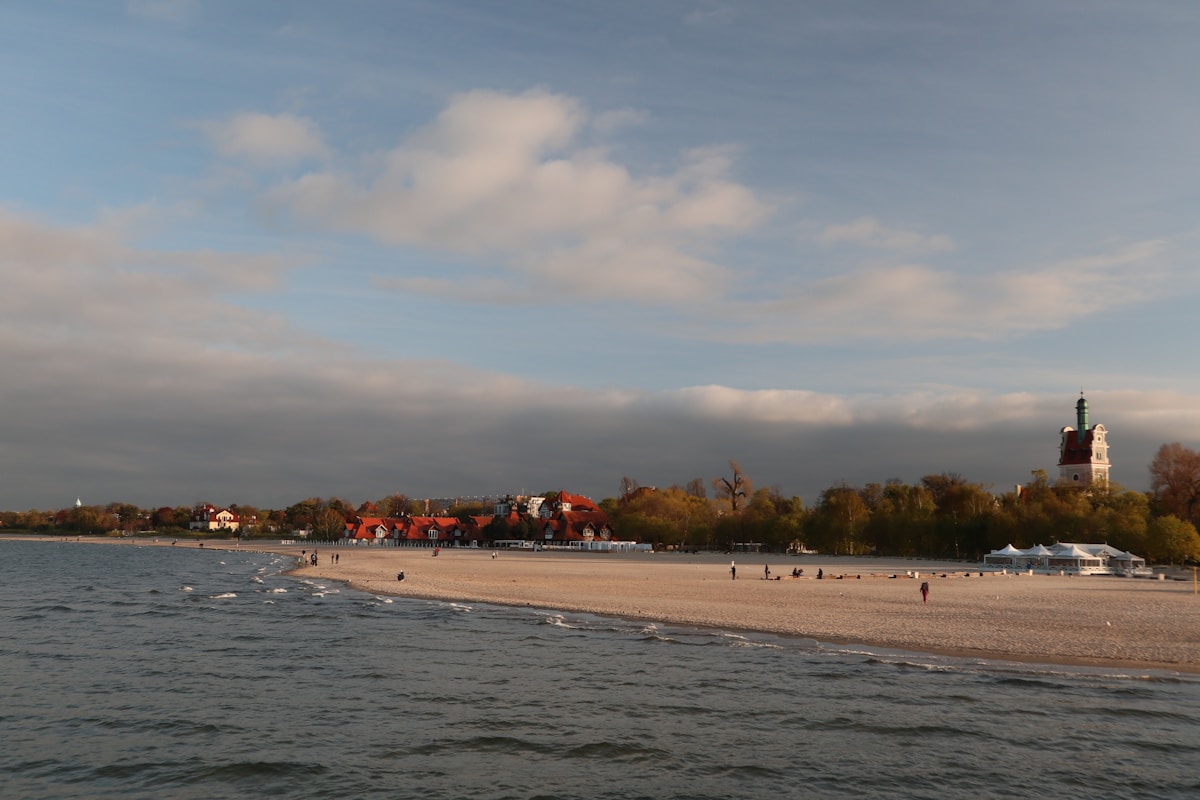
Gdańsk sits at the centre of Poland’s northern coast, which puts several of the country’s most compelling destinations within easy reach. Malbork Castle - the largest brick fortress ever built - is just over an hour away. Sopot, with its long sandy beach and the longest wooden pier in Europe, is a 20-minute train ride. The Hel Peninsula juts 35 kilometres into the Baltic Sea, and Westerplatte, where World War Two began, is a short bus or boat ride from the city centre. All four are manageable in a single day.
Malbork Castle
The Teutonic Knights completed Malbork (then Marienburg) in the late 14th century, and the fortress grew into the largest brick castle complex in the world - a title it still holds. The UNESCO-listed site covers over 20 hectares, with three interconnected castles, a Grand Master’s palace, and a treasury containing amber artefacts and medieval armoury. Read more in our Malbork Castle guide.
Getting there: Direct trains from Gdańsk Główny run roughly every 30–60 minutes. Journey time is approximately 55–65 minutes. As of 2026, a one-way ticket costs approximately 20–28 PLN (PKP Intercity IC trains are faster but pricier; regional REGIO trains are cheaper). Check pkp.pl for current timetables. For a full rundown of train and bus options across Poland, see our getting around Poland guide.
Entry: Admission to the full castle complex costs approximately 75 PLN for adults, 55 PLN for students and seniors as of 2026. Guided tours in English can be booked in advance at malbork.pl - recommended in summer when English guides book up quickly. The castle is open Tuesday–Sunday; check the official site for seasonal hours.
Allow: 3–4 hours minimum. The sheer scale of the complex means most visitors spend a full half-day.
Sopot
Sopot is the resort town of the Tri-City area (Gdańsk, Gdynia, Sopot), and it’s the easiest day trip on this list. The Sopot city guide covers the resort in full if you’re considering an overnight stay. The town centres on Monte Cassino Street - a pedestrianised strip of cafés, bars and boutiques that leads directly to the 511-metre wooden pier, the longest in Europe. The beach stretches north and south of the pier with paid sunbeds and showers in summer; admission to the beach costs approximately 5–10 PLN per entry as of 2026.
The main square hosts the Grand Hotel Sopot (from approximately 600 PLN per night as of 2026), one of Poland’s most famous seafront hotels, open since 1927. Even if you’re not staying, the hotel terrace is worth a stop for coffee.
Getting there: Commuter SKM trains depart Gdańsk Główny every 10–15 minutes. Journey time is approximately 20 minutes. A single ticket costs approximately 4–6 PLN as of 2026 - among the cheapest train journeys in Poland.
Allow: 2–3 hours for beach and pier; longer if you want lunch and a walk.
Hel Peninsula
The Hel Peninsula is a narrow sand spit that extends into the Gulf of Gdańsk, ending at the town of Hel itself. The drive along the 35-kilometre strip offers views of open sea on one side and the calmer gulf on the other - ideal for windsurfing and sailing. The town of Hel has a small harbour, a reconstructed fishermen’s museum (entry approximately 12 PLN as of 2026), and some of the most popular beaches on the Baltic.
Getting there: Trains depart Gdańsk Główny and Gdynia Główna toward Hel, with a journey time of approximately 1 hour 20 minutes from Gdańsk. Services run several times per day; in summer the frequency increases. One-way fare approximately 25–35 PLN as of 2026. Alternatively, in summer a ferry operates from Gdańsk’s Motława quay to Hel - journey time approximately 2 hours, but the nautical approach to the town is worth it. Ferry tickets cost approximately 85–110 PLN round trip as of 2026; check rejsy.gda.pl for current schedules.
Allow: A full day. Travel time alone is 2.5–3 hours return, so plan on leaving Gdańsk by 9am.
Westerplatte
On 1 September 1939, German battleship Schleswig-Holstein opened fire on the Polish Military Transit Depot at Westerplatte, beginning World War Two. A small garrison of 182 Polish soldiers held out for seven days before surrendering. Today the site is a solemn memorial with preserved ruins, bunkers, a museum and a monument - one of the most important sites of modern Polish history.
Getting there: Bus line 106 from the Brama Wyżynna stop in central Gdańsk reaches Westerplatte in approximately 40 minutes. In summer, a tourist boat departs from the Green Gate (Zielona Brama) pier near Długie Pobrzeże - journey time approximately 30 minutes. Boat tickets cost approximately 25–35 PLN as of 2026.
Entry: Entry to the memorial grounds is free. The Westerplatte Museum (opened 2022 in the renovated barracks) charges approximately 25 PLN for adults as of 2026. Hours are Tuesday–Sunday; check visitgdansk.com for current opening times.
Allow: 1.5–2 hours for the full site.
Combining Destinations
Sopot and Gdynia combine well: take the SKM train north to Sopot in the morning, walk the pier and beach, then continue one stop to Gdynia for lunch by the harbour before returning. This adds roughly 30 minutes to the Sopot trip.
Westerplatte pairs naturally with a morning in Gdańsk’s Old Town - the memorial takes less than half a day, leaving the afternoon free.
Malbork and Hel are better as standalone day trips given the travel time each requires.
Practical Notes
All four destinations are accessible without a car. The PKP and SKM apps allow advance ticket purchase with real-time departures. Gdańsk Główny station is the main hub; SKM (commuter) and PKP (intercity) trains use separate but adjacent platforms. For Malbork and the Hel Peninsula, guided day tours from Gdańsk are worth considering - they handle transport, entry, and a guide in a single booking. If you want to explore the Kashubian Lake District or other areas off the main rail lines, car hire in Poland opens up the region considerably.
Summer (July–August) is peak season for Sopot and Hel; book any accommodation in advance if you plan to stay overnight. Spring and autumn are quieter, and Malbork is particularly atmospheric in October when crowds thin but the castle is still fully open.
Search hotels in Gdańsk on Booking.com
More in Gdańsk
- Gdańsk City Guide - overview, top sights, restaurants, and getting there
- Things to Do in Gdańsk - full attractions guide
- Where to Stay in Gdańsk - hotels and hostels by area and budget
- Malbork Castle Visitor Guide - full guide to entry, tours, and getting there
- Sopot City Guide - beach resort guide for the most visited Baltic day trip
- Gdynia City Guide - the naval city and modernist architecture 24 km north
- 2 Weeks in Poland Itinerary - how day trips from Gdańsk fit into a longer route