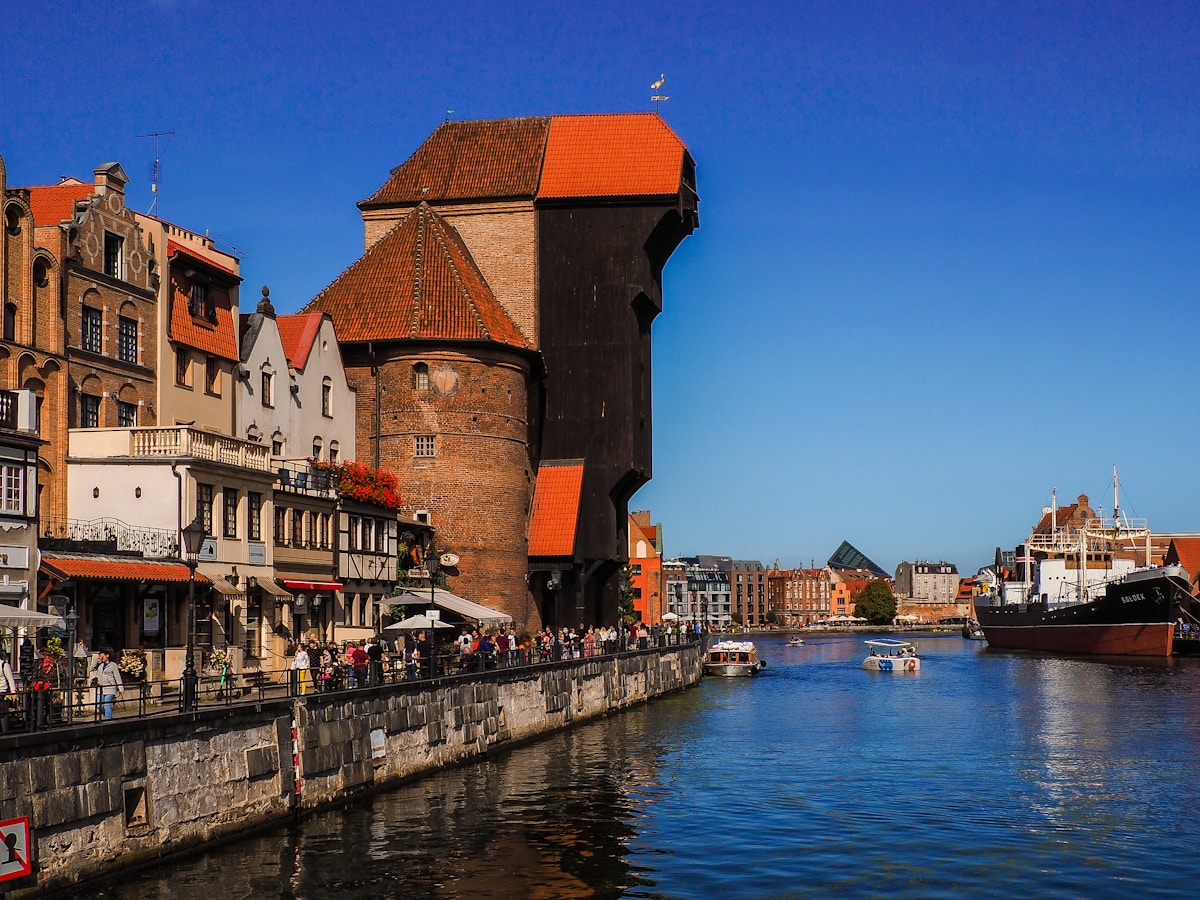
Gdańsk and Sopot are 15 km apart on the Polish Baltic coast and connected by the SKM commuter rail every few minutes. For many visitors, the question is not which one to visit - it is how to divide time between them. But they are genuinely different in character, and if you are planning a short trip, understanding what each offers helps you decide where to base yourself.
Overview
Gdańsk is a major city of around 480,000 people with a thousand years of history. Its Old Town is architecturally dramatic - the Long Market (Długi Targ) is a row of restored 17th-century Hanseatic merchant townhouses in reds, golds, and greens, one of the most photographed streetscapes in Poland. The city’s cultural offer is substantial: the European Solidarity Centre, St Mary’s Basilica, the Maritime Museum, and the Amber Museum are all serious attractions. Gdańsk is primarily a city for culture, history, and architecture, with the sea accessible but not its defining feature. For what to see, read our Gdańsk things to do guide.
Sopot is a resort town of around 35,000 permanent residents - one of the smallest cities in Poland - built around its sandy beach and its Monte Cassino Street (Monciak), a pedestrian shopping and dining boulevard that runs from the main railway station to the pier. The pier itself (Molo), extending 511 metres into the Baltic Sea, is the longest wooden pier in Europe and the central landmark. In summer Sopot becomes one of Poland’s most visited tourist destinations, filled with restaurants, beach bars, outdoor concerts, and the kind of relaxed resort energy that Gdańsk, for all its appeal, doesn’t quite replicate. The Sopot Opera (Opera Leśna) in the forest amphitheatre hosts major concerts throughout the summer, including the Sopot International Song Festival. For what to do in the town, see our Sopot things to do guide.
Getting Between the Cities
This is the key practical fact: the SKM commuter rail connects Gdańsk Główny and Sopot in approximately 15–18 minutes, with trains running every 5–10 minutes in summer. A single ticket costs approximately PLN 5.20 as of 2026. The journey is entirely practical as a day trip in either direction - many visitors base themselves in Gdańsk and spend a day or afternoon in Sopot, or vice versa.
A taxi or rideshare (Bolt, Uber) takes around 20 minutes and costs approximately PLN 35–50. Cycling along the coastal path between the two cities is also possible and takes around 45 minutes.
Things to Do
Gdańsk has the greater volume and depth of cultural attractions. The European Solidarity Centre (ECS) is one of the most important history museums in Poland, covering the 1980 shipyard strikes (entry approximately PLN 35 as of 2026). St Mary’s Basilica - the largest brick Gothic church in the world - rewards a visit and the tower climb (approximately PLN 15). The Crane (Żuraw) on the Motława waterfront is a surviving 15th-century port crane (approximately PLN 20). Amber is both omnipresent in tourist shops and a serious subject at the Amber Museum in the Torture Chamber tower (approximately PLN 20). The Long Market is free and stunning at any time of day.
Sopot has fewer traditional attractions and more lifestyle. The pier walk is the non-negotiable activity - particularly atmospheric at dawn or at sunset when most day-trippers are gone. The Crooked House (Krzywy Domek) on Monciak is a playfully distorted art nouveau building that makes for an unusual photograph. The beach itself is the attraction in summer: a wide sandy strip running several kilometres along the coast. Beach volleyball, paddleboard rental, and outdoor bars operate from June to August. The hipster hotel Park Sopot is worth a look even if you are not staying there. In terms of rainy-day culture, Sopot is thin - but in summer, that is rarely the issue.
Edge: Gdańsk by a significant margin on cultural depth; Sopot on beach life and coastal relaxation.
Food and Drink
Gdańsk’s food scene concentrates in and around the Old Town. The waterfront restaurants along the Motława are tourist-priced but atmospheric; better options are found one or two streets back. Baltic fish dishes - smoked eel, herring, fresh Baltic cod - are the regional speciality and worth seeking out. Restauracja Kubicki (founded 1918) is the most historic restaurant in the city (mains approximately PLN 50–80 as of 2026). Craft beer culture has developed strongly since around 2018; several good taprooms operate in the Old Town and in the Dolne Miasto district.
Sopot has a dense concentration of restaurants along Monciak and the streets running to the beach. In summer the entire street is essentially a long terrace. Quality varies considerably - the highest-footfall locations are not always the best value. Seafood and grilled fish are available everywhere; the best value tends to be at smaller places just off the main drag. Beer gardens and outdoor cocktail bars are thick on the ground in summer. Prices on Monciak can run higher than equivalent food in Gdańsk; budget approximately PLN 60–100 per person for a full evening dinner and drinks.
Edge: Gdańsk on food quality and variety; Sopot on outdoor eating atmosphere in summer.
Where to Stay
Gdańsk accommodation ranges from budget hostels to boutique hotels in converted medieval and Renaissance merchant buildings. Hilton Gdańsk on the waterfront is the most recognisable luxury option (from approximately PLN 500–700 per night as of 2026). Hotel Podewils, in a renovated 15th-century townhouse on the Motława, is the most atmospheric mid-range choice (from approximately PLN 450 per night). Budget: several hostels operate within the Old Town, typically PLN 80–120 for a dorm bed as of 2026. See our Gdańsk where to stay guide.
Sopot accommodation is dominated by hotels and apartments aimed at the summer leisure market. Prices are significantly higher in July and August than the rest of the year. Grand Hotel Sopot, a historic spa hotel from 1927 directly on the beachfront, is the most iconic (from approximately PLN 700–1,200 per night in summer as of 2026). Sheraton Sopot Hotel is the modern luxury option on the seafront (from approximately PLN 600–900 per night). Mid-range options fill up fast in peak summer - book early. Out of season (September–May) Sopot accommodation is significantly cheaper and the town is much quieter.
Edge: Gdańsk on range and value; Sopot on beachfront atmosphere in summer (at a premium).
Search hotels in Gdańsk on Booking.com
Nightlife
Gdańsk has a more sustained year-round bar and club scene. The Dolne Miasto (Lower Town) district has developed as the city’s creative nightlife hub, with cocktail bars, craft beer taprooms, and small clubs in former industrial spaces. The Old Town also has a healthy concentration of bars. The scale is modest compared to Warsaw or Kraków but the quality is high.
Sopot is one of Poland’s most active summer nightlife destinations. The casino on the beach, the clubs along Monciak, beach bars, and the outdoor Opera Leśna concerts make the town genuinely buzzing from June to August. In September it quiets quickly. The Sopot club scene has historically attracted major summer bookings; the city has hosted significant music events since the 1960s. Outside summer, the nightlife is much thinner.
Edge: Sopot in summer (June–August) specifically; Gdańsk year-round.
Budget
| Expense | Gdańsk | Sopot (summer) |
|---|---|---|
| Hostel dorm (per night) | PLN 85–120 | PLN 100–150 |
| Mid-range hotel (per night) | PLN 400–550 | PLN 500–800 |
| Beach bar cocktail | PLN 25–40 | PLN 30–50 |
| Restaurant dinner (per person) | PLN 50–90 | PLN 60–110 |
| Pier entry | Free | Free |
| SKM rail (one way) | PLN 5.20 | PLN 5.20 |
All approximate, as of 2026. Sopot is meaningfully more expensive in July and August particularly; outside peak summer the gap narrows.
The Verdict
Choose Gdańsk as your base if: you want depth of culture and history, a full-size city with year-round practicality, better value accommodation, and a base from which Sopot is a short rail trip away.
Choose Sopot as your base if: you are visiting specifically in summer (June–August), beach access is a priority, and you want the concentrated resort energy and nightlife of the most popular Baltic resort in Poland.
The most practical approach for most visitors is to base in Gdańsk and spend one afternoon or evening in Sopot - the 15-minute rail connection makes this very easy. A day in each direction is also realistic for a longer trip. See our full guides to Gdańsk and Sopot for complete planning information. If you want guided context for the Old Town and Solidarity sites, Gdańsk tours have good options for half-day and full-day itineraries.
Plan Your Baltic Trip
- Things to Do in Gdańsk - the Solidarity Centre, Westerplatte, and amber workshops
- Things to Do in Sopot - the pier, beaches, and Monte Cassino street
- Gdynia City Guide - the modernist city that rounds out the Tri-City triangle
- Malbork Castle Visitor Guide - the world’s largest Gothic castle, a day trip from Gdańsk
- 2 Weeks in Poland Itinerary - how the Baltic coast fits into a longer Polish trip
- Best Time to Visit Poland - when the Baltic beaches are at their best
More Poland Comparisons
- Warsaw vs Gdańsk - capital museums and urban scale vs Gothic waterfront and Baltic access
- Gdańsk vs Wrocław - Hanseatic coast vs canal city: which of Poland’s two gems suits you
- Kraków vs Warsaw - medieval depth and Auschwitz proximity vs capital energy and WWII museums