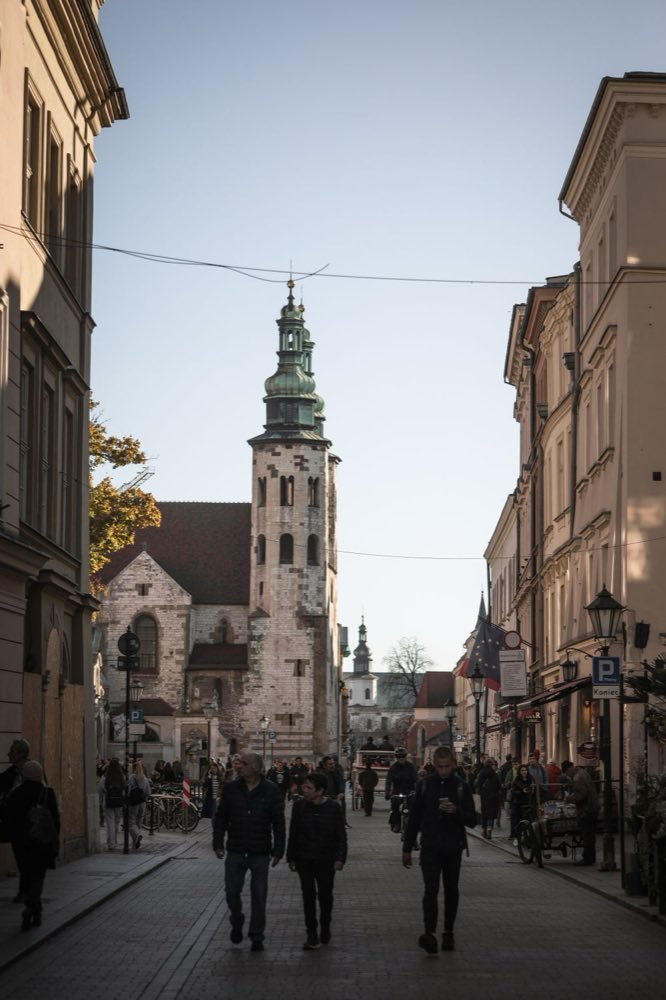
Krakow and Prague are the two cities most travellers weigh against each other for a Central European city break. Both survived the Second World War with their medieval cores intact, both have a castle on a hill and a vast market square, and both sell excellent beer for little money. This page compares the two cities directly. If you are choosing between whole countries instead, see our Poland vs Czech Republic comparison.
Short answer: choose Krakow if you want deeper history, lower prices and easy access to Auschwitz-Birkenau and the Wieliczka Salt Mine. Choose Prague if you want the grandest single skyline in the region and a very compact, walkable centre. The cities are about 6 hours apart by coach, so many travellers do both.
Quick Verdict
| Category | Krakow | Prague |
|---|---|---|
| Value for money | Wins | - |
| Grand architecture | - | Wins |
| WWII and Jewish history | Wins | - |
| Beer and pub culture | - | Wins |
| Food variety | Wins | - |
| Day trips | Wins | - |
| Crowds | Wins (less intense) | - |
| Airport links and flights | - | Wins |
| Nightlife on a budget | Wins | - |
Cost Comparison
Krakow is the cheaper city, and the gap is widest on accommodation and sit-down meals. Prices below are approximate as of 2026.
| Expense | Krakow | Prague |
|---|---|---|
| Hostel dorm bed | PLN 60-80 (EUR 14-19) | CZK 500-800 (EUR 20-32) |
| Mid-range double room | PLN 240-450 (EUR 56-105) | CZK 2,800-4,500 (EUR 110-180) |
| Milk bar or pub lunch | PLN 20-30 | CZK 200-300 |
| Mid-range dinner, per person | PLN 60-110 | CZK 400-700 |
| Half-litre of beer in a pub | PLN 14-28 | CZK 55-95 |
| 24-hour transport pass | PLN 19 | approximately CZK 120 |
Krakow’s cost guide breaks these figures down further. For rooms, search Krakow hotels on Booking.com and book at least a week ahead in July, August and the Christmas market period. Prague hotel prices in the Old Town and Lesser Town climb sharply in the same weeks.
Currency matters for planning: Poland uses the zloty (about 4.25 PLN to the euro), the Czech Republic uses the koruna (about 25 CZK to the euro). Neither takes euros at most shops, and card payment is common in both cities.
Architecture and Sights
Prague: the bigger set piece
Prague’s Old Town Square with the astronomical clock (Orloj, dating from 1410), Charles Bridge, the Lesser Town and Prague Castle form one of Europe’s most photographed walks. Prague Castle is among the largest castle complexes in the world; allow 3 to 4 hours, with circuit tickets from approximately CZK 250-450 depending on how many interiors you choose. The official Prague City Tourism site lists current opening hours and events. Charles Bridge is at its best at sunrise, before the tour groups arrive.
Krakow: history you can feel
Krakow’s Rynek Glowny is one of the largest medieval squares in Europe, anchored by the Cloth Hall and St Mary’s Basilica, whose hourly trumpet call (the hejnal) is cut short mid-note in memory of a medieval watchman. Wawel Royal Castle and Cathedral sit above the Vistula; the Royal Chambers start from PLN 57 as of 2026, and the official Wawel site handles timed tickets, which sell out in summer. Our Krakow city guide covers the Old Town in full.
Where Krakow pulls clearly ahead is the Jewish Quarter of Kazimierz and Podgorze. Schindler’s Factory Museum (PLN 60 as of 2026, see our Schindler’s Factory guide) is among the best history museums in Poland. Prague has an atmospheric Jewish Quarter of its own, with the Old-New Synagogue and Old Jewish Cemetery, but Krakow tells the 20th-century story with more depth and less crowding.
Food and Drink
Krakow wins on variety. Pierogi, zurek (sour rye soup), obwarzanek rings from street carts at PLN 2-4, and zapiekanki at Plac Nowy in Kazimierz (PLN 12-18) make for cheap, filling days, and the city has a serious craft beer scene. A Krakow food tour is a good first-evening orientation.
Prague wins on beer. The Czech Republic has the highest beer consumption per head in the world, and a half-litre of fresh unfiltered lager in a local pub is among the best-value pints in Europe. Stay away from the tourist-street pubs around Old Town Square, which charge roughly double. Traditional dishes such as svickova (beef in cream sauce with bread dumplings) are filling but less varied than Polish menus. Chimney cakes (trdelnik) sold on every tourist street are a modern confection, not a Czech tradition.
Day Trips
Krakow is the stronger base for day trips, all doable without a car:
- Auschwitz-Birkenau: about 1.5 hours each way. Entry is free with a timed pass, while guided tours with transport typically cost PLN 80-150 per person. See visiting Auschwitz-Birkenau.
- Wieliczka Salt Mine: 30 minutes from the centre, from PLN 143-159 for the English-language tour as of 2026.
- Zakopane and the Tatras: about 2 hours by bus, roughly PLN 20-30 each way.
Prague’s best day trips are Kutna Hora and its bone church (about 1 hour by train, around EUR 5 return), Cesky Krumlov (about 3 hours by bus) and Karlovy Vary. They are excellent, but fewer of them carry the historical weight of Auschwitz. Browse Krakow tours and day trips to compare options before you book.
Getting There and Around
Prague’s Vaclav Havel Airport has more routes and more long-haul connections than Krakow’s John Paul II Airport, so it is often the cheaper or simpler entry point from outside Europe. Krakow is well served by Ryanair, Wizz Air and several other low-cost airlines from most European hubs. The Krakow airport transfer guide covers the train, bus and taxi options (a taxi to the Old Town is approximately PLN 100-140).
Inside the cities, both are walkable. Krakow’s Old Town and Kazimierz can be covered on foot, with trams for Podgorze and Nowa Huta. Prague’s centre is similarly compact, with metro and trams for the castle district and the outskirts.
Seasons and Crowds
May to September is the peak for both, and both cities are crowded in July and August. April, early May and October are the best compromise: mild weather and noticeably lower hotel prices. In December, Krakow’s Rynek Glowny and Prague’s Old Town Square both host major Christmas markets, with Prague’s being busier and more expensive. Winter weekdays in Krakow are among the quietest, cheapest times to visit either city.
Doing Both: Krakow to Prague
Combining the two is easy. FlixBus and RegioJet run direct coaches in approximately 6 to 7 hours from around EUR 15-25 each way as of 2026. Compare trains and buses on Omio for current timetables and fares. A common plan is 3 days in Krakow (including Auschwitz or Wieliczka), the coach on day 4, then 3 days in Prague. Start in Krakow if you want the heavier history first and a lighter finish. Our 3 days in Krakow itinerary covers the Polish leg.
Who Should Choose Which
Choose Krakow if you:
- Want WWII and Jewish history with real depth
- Are travelling on a tighter budget
- Want varied day trips from one base
- Prefer a lively but less overcrowded old town
Choose Prague if you:
- Have only a long weekend and want maximum visual impact
- Care most about pub-culture beer
- Are connecting onward to Germany, Austria or Slovakia
- Want the easier long-haul flight connections
Final Verdict
For most travellers on a trip of four days or more, Krakow offers more per euro: deeper history, better food variety and the Auschwitz and Wieliczka day trips. Prague is the better choice for a three-day weekend built around architecture and beer. If you have a week, do both, and read the Krakow vs Warsaw comparison if you are also weighing Poland’s capital. For the country-level decision, see Poland vs Czech Republic. Official visitor information is also available at Visit Krakow.