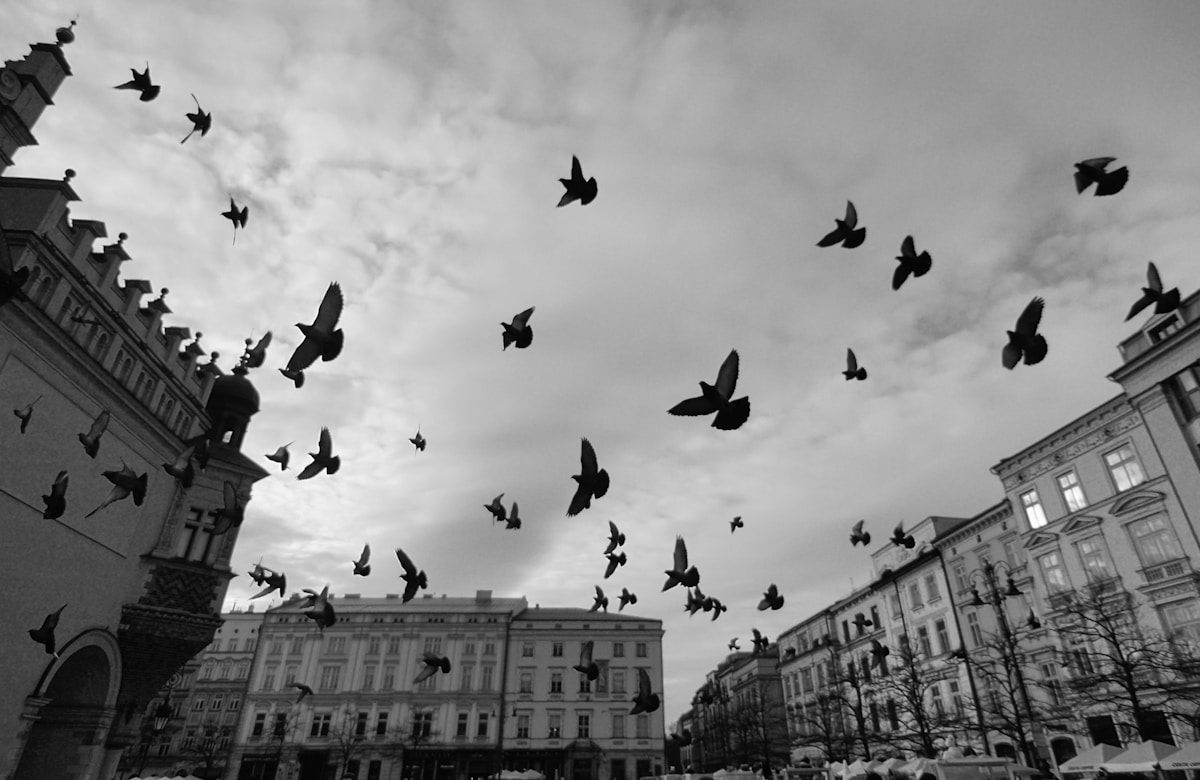
Two of Central Europe’s most compelling destinations, Poland and the Czech Republic sit close enough to compare directly yet feel meaningfully different the moment you arrive. Whether you’re planning your first Eastern European trip or choosing between them for a specific experience, this guide breaks down what each country genuinely does better.
Quick Verdict
| Category | Poland Wins | Czech Republic Wins |
|---|---|---|
| Value for money | Yes | - |
| Architecture | - | Yes (Prague especially) |
| History depth | Yes | - |
| Beer quality | - | Yes |
| Food variety | Yes | - |
| City range | Yes | - |
| Compact itinerary | - | Yes |
| WWII significance | Yes | - |
Poland is the better choice if you want heavy historical weight, a wider range of cities, and slightly lower costs. Czech Republic wins if Prague’s architecture is your primary draw, or if you want the world’s finest lager culture in one concentrated, walkable city.
Climate and Best Time to Visit
Both countries share a Continental climate with cold winters and warm summers. May to September is the sweet spot for both, with July and August bringing the largest crowds (and prices) to Prague.
Poland’s shoulder seasons - April and October - are particularly rewarding. Krakow and Warsaw see fewer tourists, and accommodation prices drop noticeably. Prague in October retains its atmospheric quality without summer’s worst crowds.
Winter travel works well in both countries if you’re drawn to Christmas markets. Krakow’s Rynek Główny market and Prague’s Old Town Square markets run from late November and are among Europe’s best.
Cost Comparison
Poland is the slightly cheaper option, though the gap has narrowed as both countries see rising tourism.
| Expense | Poland (daily) | Czech Republic (daily) |
|---|---|---|
| Budget accommodation | USD 15–25 | USD 20–35 |
| Mid-range hotel | USD 60–100 | USD 80–130 |
| Street food / lunch | USD 4–8 | USD 6–10 |
| Sit-down dinner | USD 15–25 | USD 18–30 |
| Beer (500ml, pub) | USD 1.50–2.50 | USD 1.50–2.00 |
| Daily budget | USD 40–60 | USD 50–70 |
Search hotels in Poland on Booking.com
Prague inflates Czech Republic averages significantly. If you base yourself in Brno, Olomouc, or Cesky Krumlov, costs drop considerably. Similarly, Warsaw and Krakow are Poland’s most expensive cities - smaller cities like Wroclaw or Gdansk cost noticeably less.
Both countries use their own currencies (Polish Złoty and Czech Koruna). Neither uses the Euro. Card payments are widely accepted in cities, but carry some local currency for markets and rural areas.
Top Experiences and Highlights
Poland
Krakow is Poland’s most visited city for good reason. The Royal Wawel Castle overlooks the Vistula River, the medieval market square (Rynek Główny) is one of Europe’s largest, and the former Jewish Quarter of Kazimierz offers a genuinely moving and culturally rich neighbourhood to explore. From Krakow, Auschwitz-Birkenau (approximately 1.5 hours by bus, around PLN 85 for transport) is a half-day visit that fundamentally changes how you understand 20th-century history.
Warsaw tells a different story - one of almost total destruction and remarkable reconstruction. The Warsaw Uprising Museum is among the most powerful historical museums in Europe, covering the 1944 revolt against Nazi occupation in extraordinary detail. Entry costs approximately PLN 30 (as of 2026). The reconstructed Old Town, now a UNESCO World Heritage Site, is visually striking even knowing it was rebuilt from rubble post-war.
Gdansk on the Baltic coast adds maritime history (the city where WWII began at Westerplatte) and beautiful Dutch-influenced architecture. It pairs well with a day trip to the Wieliczka Salt Mine from Krakow (entry approximately PLN 119, as of 2026).
Czech Republic
Prague is, objectively, one of Europe’s most beautiful capitals. Charles Bridge at dawn - before the crowds arrive - remains one of those travel experiences that doesn’t disappoint. The Old Town astronomical clock (Orloj), dating to 1410, still draws crowds on the hour. Prague Castle complex is the largest ancient castle in the world by area; budget 3–4 hours for it.
Beyond Prague, Cesky Krumlov (2.5 hours south) is a UNESCO-listed medieval town so perfectly preserved it feels staged. Brno is a younger, more affordable city with a strong café culture and remarkable Moravian wine country nearby. Karlovy Vary offers elegant spa architecture that rewards a day trip from Prague.
Food and Drink
Poland Wins on Food Variety
Polish cuisine is more diverse than its reputation suggests. Pierogi (filled dumplings) come in dozens of variations - ruskie (potato and cheese), meat, mushroom and sauerkraut, or sweet with fruit. Żurek (sour rye soup with egg and sausage) is a genuinely distinctive national dish. Bigos (hunter’s stew with meat and cabbage) is hearty winter comfort food. Street food culture peaks with zapiekanka - open-faced baguette with mushrooms, cheese, and toppings, available from kiosks throughout Krakow’s Kazimierz district from around PLN 8–15.
Czech food centres on svíčková (beef sirloin in cream sauce with bread dumplings), knedlíky (bread or potato dumplings as a side), and vepřo knedlo zelo (pork, dumplings, sauerkraut). Solid, satisfying, but less varied than Polish cuisine. Trdelník (chimney cake sold on every Prague tourist street) is best avoided - it’s a tourist confection, not a traditional Czech food.
Czech Republic Wins on Beer
This isn’t close. The Czech Republic drinks more beer per capita than any other country on Earth, and the quality matches the enthusiasm. Pilsner Urquell was invented in Plzeň in 1842 and remains the benchmark for all pilsner-style lagers worldwide. Prague’s pub culture is embedded in daily life - a 500ml glass of unfiltered (nefiltrované) lager in a local pub costs approximately €1.50–2.00 (as of 2026), often lower than in Warsaw or Krakow.
Polish beer - Żywiec, Tyskie, Okocim - is perfectly drinkable. Poland has a growing craft beer scene worth exploring in Krakow and Warsaw. But Czech lager from the source is a different experience entirely.
Getting There and Around
Both countries are easily reached from Western Europe. Prague’s Václav Havel Airport handles more international routes than Warsaw Chopin, making it the more convenient entry point for many travellers. Warsaw Chopin Airport and Krakow John Paul II Airport both receive direct flights from most major European cities, with Ryanair and Wizz Air offering particularly competitive fares.
Within Poland, the PKP rail network connects major cities reliably. Warsaw to Krakow takes approximately 2 hours 15 minutes by express train (from approximately PLN 99 as of 2026). Within the Czech Republic, Prague is well connected by train to Brno (2.5 hours) and Cesky Krumlov (bus, 3 hours). To get the most from limited time in Poland, guided tours in Kraków are especially useful - they cover the major sites efficiently and provide historical context that’s hard to replicate independently.
For the combined Krakow–Prague trip: FlixBus and RegioJet operate comfortable coaches between the two cities. Journey time is approximately 6 hours and costs from €15–25 each way (as of 2026), making it one of Europe’s best-value city-to-city connections.
History: Where Each Country Leads
Poland carries the heaviest historical weight in modern European memory. The systematic destruction of Polish Jews during the Holocaust (Auschwitz, Treblinka, Warsaw Ghetto), the Warsaw Uprising of 1944, and Poland’s position on the Eastern Front give the country a historical depth that is difficult to process but genuinely important to understand.
Czech Republic’s most significant 20th-century chapters - the 1968 Prague Spring (Soviet invasion), decades of Communist rule, and the 1989 Velvet Revolution - are fascinating and deeply human stories. The Museum of Communism in Prague covers this period accessibly. However, the Czech Republic largely escaped the physical destruction that shaped modern Poland.
If historical immersion is your primary travel motivation, Poland demands more time and more emotional preparation.
Who Should Choose Each?
Choose Poland if you:
- Want to understand 20th-century European history at its most profound
- Prefer a wider range of distinct cities over one dominant capital
- Are travelling on a tighter budget
- Want a mix of medieval, baroque, and rebuilt urban history
- Plan to combine with a Baltic coast stop (Gdansk/Sopot)
Choose Czech Republic if you:
- Want the most concentrated architectural beauty in one city (Prague)
- Are travelling for a long weekend rather than a multi-week trip
- Want the world’s best pub-culture beer experience
- Plan to combine with Germany, Austria, or Slovakia
Side Trips Compared
The strength of side-trip options is one area where Poland has a clear structural advantage.
From Krakow, three of Europe’s most significant day trips are within 90 minutes: Auschwitz-Birkenau (approximately PLN 85 by return bus, 1.5 hours); the Wieliczka Salt Mine (PLN 119 entry, 30 minutes by bus or minibus, tickets from PLN 25–40); and Zakopane in the Tatra Mountains (approximately 2 hours by bus, PLN 20–30 return). All three are genuinely world-class experiences and none requires a car.
From Warsaw, the Chopin birthplace at Żelazowa Wola (1 hour by dedicated bus, PLN 50 return) and the Kampinos National Forest (accessible by city bus) offer easier day-trip options. The Białowieża Primeval Forest - Europe’s last ancient woodland - is a longer journey (4 hours by train and local bus) but rewards the effort with bison sightings and old-growth forest unlike anywhere else on the continent.
From Prague, the most popular day trips are Cesky Krumlov (3 hours by bus, approximately €10–15 return), Kutna Hora (1 hour by train, approximately €5 return) with its famous bone church, and Karlovy Vary (2.5 hours by bus, €10–14 return). These are high-quality options, but the Polish range is broader and the experiences more varied in character.
Day-trip verdict: Poland wins on variety and historical weight. Czech Republic wins on ease — Prague’s transport connections make its side trips simpler to execute independently. If you are a first-time traveller without much planning experience, Czech Republic’s compact geography is easier to navigate. If you want to cover significant ground and accumulate experiences, Poland’s side-trip range is unmatched.
Visa and Practicalities
Both countries are EU members and part of the Schengen Area, so EU and EEA citizens move freely between them. Non-EU visitors covered by standard Schengen visa-free access (US, Canada, Australia, UK) can enter both without a visa. The 90-days-in-180-days Schengen rule applies to the combined stay across both countries.
Neither country uses the Euro: Poland uses the Polish Zloty (PLN), Czech Republic uses the Czech Koruna (CZK). Currency exchange offices (kantor in Poland, směnárna in Czech Republic) typically offer better rates than airport bureaux. ATMs are widely available in both countries. As of 2026, approximately 1 EUR = 4.25 PLN and 1 EUR = 25 CZK.
Mobile data and roaming: EU SIM cards work in both countries under EU roaming rules. Visitors from outside the EU should consider a local SIM or an international eSIM for affordable data.
Final Verdict
Both countries reward every day you give them. If forced to choose one, Poland offers more for a longer trip - more historical weight, more geographic variety, and a slightly lower cost floor. But Czech Republic, specifically Prague, delivers the more immediately spectacular city experience that photographs and memories return to.
The good news: you don’t have to choose. A Krakow–Warsaw–Prague route is one of Europe’s most satisfying two-week itineraries and one of its most affordable. Browse guided tours across Poland to plan the Polish leg efficiently.
Explore Poland
- Kraków City Guide - the most popular Polish city for international visitors
- Warsaw City Guide - the rebuilt capital with world-class museums
- Wrocław City Guide - nearest major Polish city to the Czech border
- Zakopane City Guide - Tatra mountains on the Slovak border
- 1 Week in Poland Itinerary - the Kraków–Warsaw–Gdańsk route for a first-time visit
- 2 Weeks in Poland Itinerary - how to add Wrocław and the east to a longer trip
- Kraków History Guide - why Kraków rivals Prague for historical depth
- Visiting Auschwitz-Birkenau - Poland’s most important historical site, which Czech Republic cannot match
- Hiking in Karkonosze National Park - the mountain area Poland shares with the Czech Republic
- Poland Budget Guide - cost breakdown for 2026
More Poland Comparisons
- Kraków vs Warsaw - Poland’s two biggest cities head to head on history, food, and cost
- Warsaw vs Gdańsk - capital scale vs Baltic charm: the northern route comparison
- Gdańsk vs Wrocław - Hanseatic coast vs canal city for a two-city Poland trip
Plan Your Trip
✈️ Book your flights to Poland 🛡️ Get travel insurance 📱 Stay connected with an eSIM 🚗 Rent a car