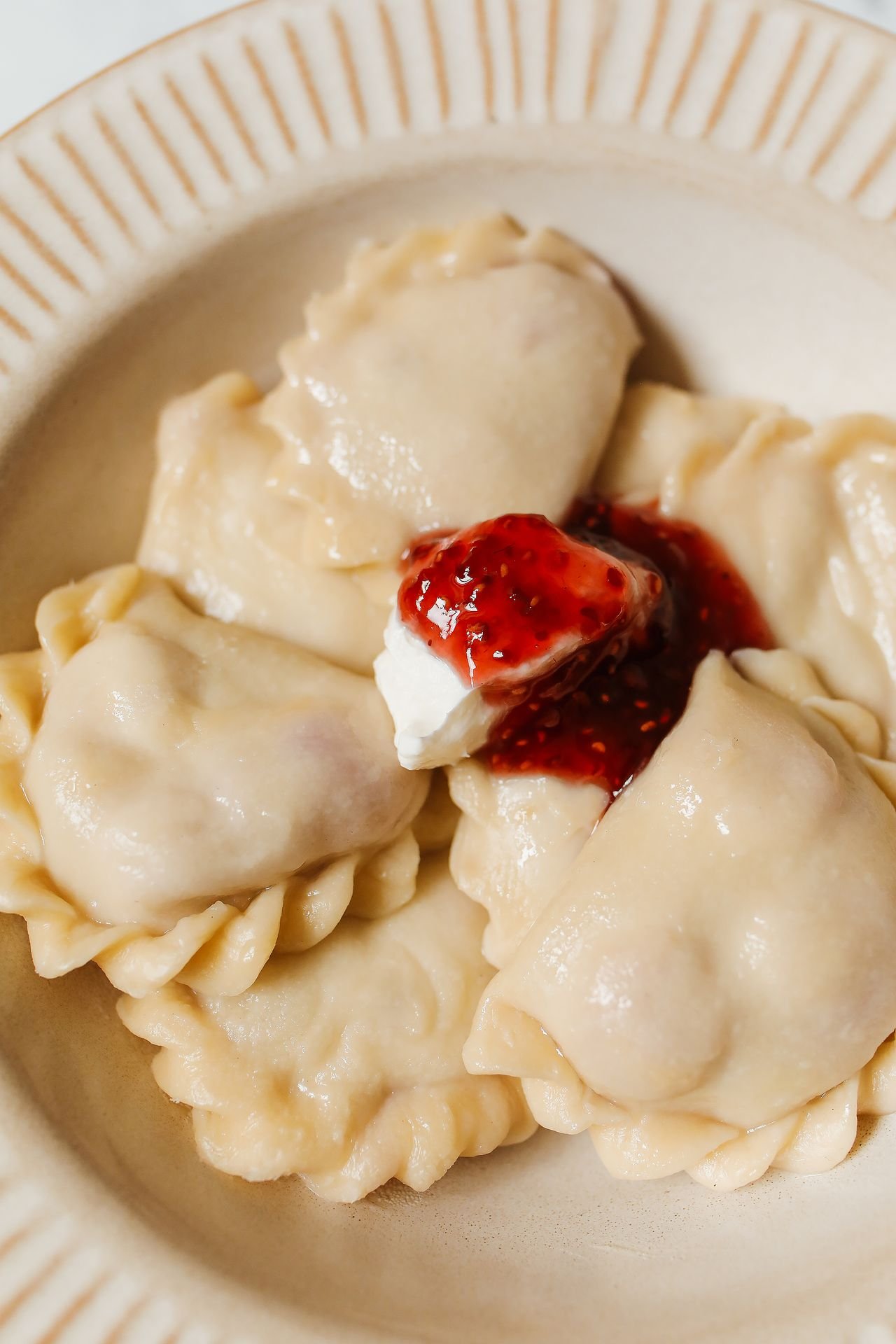
The Polish dishes to try first are pierogi, żurek, bigos, kotlet schabowy and barszcz, followed by street snacks such as zapiekanka, obwarzanek and grilled oscypek, and sweet pączki and piernik. Most cost approximately PLN 10 to 30 as of 2026, and the best places to eat them are milk bars, markets and traditional restaurants in Kraków, Warsaw and Toruń.
Polish cooking is built on soups, dumplings, pork, cabbage and dairy, and it is more regional than most visitors expect. This list is ordered roughly from main-course classics to street food and sweets, with a local tip on each where we have one. For the wider story, see our guides to Polish cuisine by region and Polish street food, plus the official Poland Travel overview of Polish flavours.
1. Pierogi
Pierogi are filled dumplings, boiled and often finished in a pan with onion and butter. Pierogi ruskie (potato and white cheese) are the standard order and cost approximately PLN 16 at Warsaw’s Bar Bambino as of 2026, with meat, sauerkraut and mushroom, and fruit versions also common. Sweet pierogi with berries and sour cream are a summer dessert.
Local tip: order a mixed plate if the menu offers one, so you can compare fillings. Bar Bambino is open weekdays 7:00 to 18:00. Compare more options in our best restaurants in Warsaw guide, or join a Warsaw food tour built around pierogi.
2. Żurek
Żurek is a sour soup made from fermented rye flour, usually served with sausage and a halved egg, sometimes in a bread bowl. It is the Polish soup most visitors remember. In a milk bar a bowl costs approximately PLN 10, and in a restaurant roughly double.
Local tip: Mazovian-style żurek, the Warsaw-area version, is a good reference point before you try regional variants described in our Polish cuisine guide. For Warsaw bars and restaurants see Warsaw food and drink.
3. Bigos
Bigos is a slow-cooked stew of sauerkraut, fresh cabbage and several kinds of meat and sausage, often with mushrooms. It is known as hunters’ stew, and Poland Travel notes that it tastes better each time it is reheated. It is common in colder months and at Christmas and Easter.
Local tip: order it in the colder months, when it is a seasonal staple. Kraków options are listed in best restaurants in Kraków and Kraków food and drink.
4. Kotlet Schabowy
The breaded pork cutlet is the Polish Sunday lunch, served with boiled potatoes and cabbage salad. At Bar Mleczny Pod Temidą on ul. Grodzka 43 in Kraków, a plate costs approximately PLN 24 as of 2026, and the bar is open daily 11:00 to 20:00. Large portions and low prices make it a standard budget meal.
Local tip: share a plate if you also want soup and dessert. If you want to pair a cutlet lunch with sightseeing, start from our Kraków city guide.
5. Barszcz With Uszka
Barszcz is a clear beetroot soup, sometimes served with uszka, small mushroom-filled dumplings called “little ears”. At Bar Gdański on ul. Długa 33/35 in Gdańsk, barszcz with uszka costs approximately PLN 10, and it is open daily 10:00 to 18:00. The soup is naturally meat-free in many places, but ask about the stock.
Local tip: milk bars close early, so eat here at lunch rather than dinner. For more of the northern coast, read our Gdańsk food guide.
6. Zapiekanka
A zapiekanka is a baguette halved lengthwise, topped with mushrooms, cheese and ketchup, and grilled. At Plac Nowy in Kazimierz, Kraków, a standard one costs approximately PLN 12 to 18, with gourmet versions from approximately PLN 22 at Endzior on ul. Starowiślna 4. In Warsaw, Lunch Bar Wenecja on Krakowskie Przedmieście charges approximately PLN 14 to 20.
Local tip: the Plac Nowy kiosks open from around 15:00 until midnight and are busiest after 20:00, but queues move fast. Make it part of a Kraków food tour or a walk through Kazimierz.
7. Obwarzanek
The obwarzanek krakowski is a ring-shaped bread, boiled and then baked, and sold from street carts across Kraków for approximately PLN 2 to 3 per ring. Around 150,000 are baked and sold in the city each day, according to our Polish street food guide.
Local tip: eat it warm, within an hour of baking, and look for carts that operate from early morning until mid-afternoon.
8. Oscypek
Oscypek is smoked sheep’s cheese from the Tatra region, grilled and served with cranberry preserve. Stalls in Zakopane and at Kraków’s Stary Kleparz market sell a grilled portion for approximately PLN 10 to 15. It is salty and slightly chewy, and it works as a snack or a starter.
Local tip: buy it from a stall where it is being grilled to order. If you are heading to the mountains, see our Zakopane city guide for the best bases and day trips.
9. Pączki
Pączki are filled doughnuts, usually with rose jam or custard. They cost approximately PLN 4 to 6 at bakeries and milk bars, and PLN 5 to 8 at premium patisseries such as Cukiernia Bliklego on ul. Nowy Świat 35 in Warsaw or Ciastkarnia Ratuszowa on the Rynek Główny in Kraków.
Local tip: on Tłusty Czwartek, the Thursday before Lent, Poles queue for pączki nationwide, so expect lines at the best bakeries.
10. Piernik
Toruń’s gingerbread (piernik) is the best-known sweet souvenir in Poland. At the Piernik Museum on ul. Strumykowa 4, a hands-on baking workshop costs approximately PLN 40 to 50 per person as of 2026, and you take the cookies home. See our food to try in Toruń guide for more.
Local tip: book workshops online in advance, especially in summer. Combine the trip with the Toruń city guide and Toruń tours.
Where to Eat All of Them
Milk bars cover items 2, 4 and 5 at the lowest prices, markets and street stalls cover 6, 7 and 8, and a mid-range restaurant is best for bigos and pierogi variations. If you would rather eat with a guide, browse Poland food tours or the 4-hour Kraków food tour. Our Poland budget guide shows how much to set aside per day.