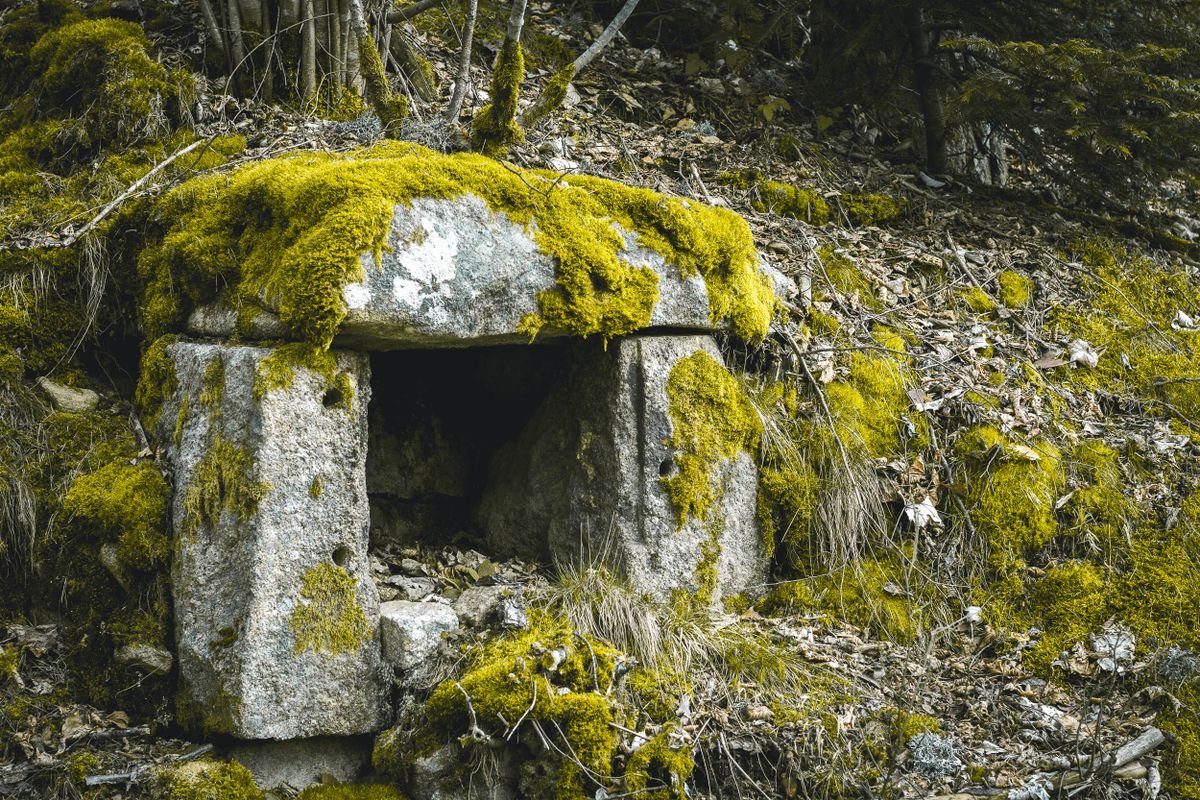
The Wolf’s Lair (Wilczy Szaniec in Polish, Wolfsschanze in German) was Hitler’s main headquarters on the Eastern Front, hidden in the Masurian forest at Gierłoż near Kętrzyn. Built from 1940 and used from June 1941, it is where the 20 July 1944 bomb plot by Claus von Stauffenberg took place. Today it is an outdoor museum of shattered concrete in dense woodland, and one of the most atmospheric WWII sites in Poland.
What Happened Here
The complex began as a handful of bunkers and grew into a sprawling compound of dozens of bunkers and buildings, surrounded by minefields and fences. Hitler spent much of the war here, directing operations against the Soviet Union. On 20 July 1944, Stauffenberg placed a briefcase bomb in the conference barrack; Hitler survived. As the Red Army advanced in January 1945, the German forces blew up the site. The bunkers did not collapse cleanly, and the thick reinforced walls remain as broken, tilted blocks.
What You See
The site is not a museum with reconstructed rooms. You walk through woodland paths between ruined bunkers: Hitler’s bunker, the quarters of Göring, Bormann and others, the guest barracks and the command structures. Numbered signs (in Polish, English and German) mark the main ruins, and a small memorial plaque marks the spot of the July 1944 attempt. Some bunkers have walls several metres thick, which is why the demolition left them standing.
Nearby Sites Worth Pairing
Gierłoż is close to two other Hitler-era sites in the region. The Mauerwald headquarters of the German army high command lies near Mamerki, outside Węgorzewo, and the Boyen Fortress in Giżycko is a Prussian-era defensive work. Kętrzyn itself has a Teutonic Order castle, now the town museum. Combined with the Wolf’s Lair, these make a full history day in the north-east, though each needs a car or taxi to connect efficiently.
Self-Guided or Guided?
Self-guided works for most visitors: the paths are signed and the ruins are readable without a guide. A guide adds the human story, such as who lived in which bunker, how the compound was camouflaged and what the Soviet advance meant for the site, and a good one helps you read the rubble. Guides at the gate charge per group, so splitting the cost with other visitors is worthwhile in high season. If you are on a tight schedule, a booked tour from Olsztyn removes the bus timetable problem.
Safety: Unstable Bunkers
Many structures are structurally unsound. Stay on marked paths, follow any fencing, avoid climbing on the slabs, and take care after rain when the ground is slippery. Wear sturdy shoes, and bring insect repellent in summer.
Tickets and Hours
Several sources list approximately PLN 25 for adults in high season and PLN 20 in low season, with separate parking fees, as of 2026. Opening hours are seasonal: long summer days (roughly 8:00 to 18:00 or later) and shorter winter hours that end by about 16:00. Because sources disagree, check the ticket office or the site operator before travelling. Guides are available on site at extra cost.
Is the On-Site Hotel Open?
We could not confirm it. The private company that leased the Gierłoż site, Wilcze Gniazdo, ran an on-site hotel and museum, but a long dispute with the Srokowo Forest District led to a court ruling that the lease was lawfully terminated, and the company was later declared bankrupt. We found no recent evidence of on-site accommodation, so treat any listing with caution and base yourself in Kętrzyn or Giżycko instead. If you have recently been, tell us and we will update this page.
Getting There
By train and bus: take a regional train to Kętrzyn (from Olsztyn or Giżycko), then cover the roughly 8 km to Gierłoż by taxi or the local bus towards Węgorzewo, which stops near the site. Timetables are sparse, so confirm the return before you go. Use PKP Intercity or Omio for the train leg.
By car: about 1.5 hours from Olsztyn and under an hour from Giżycko, with parking on site. Hire a car if you plan to combine the site with the lakes.
From Gdańsk or Warsaw: it is a long day by public transport, so most visitors stay overnight in Olsztyn, Giżycko or Kętrzyn. A guided tour from Olsztyn is the easy option without a car.
Combine It With the Masurian Lakes
The Wolf’s Lair pairs naturally with a lakes trip. See our Masurian Lakes guide for bases at Giżycko and Mikołajki, and things to do in Olsztyn for the regional capital. For other WWII history in Poland, see visiting Auschwitz-Birkenau and the Warsaw Rising Museum. For another Gothic fortress in the north, see Malbork Castle.
Visitor Etiquette
This is a site of war crimes planning, not a fun park. Visit respectfully, and be aware of the surrounding Holocaust and Eastern Front history.