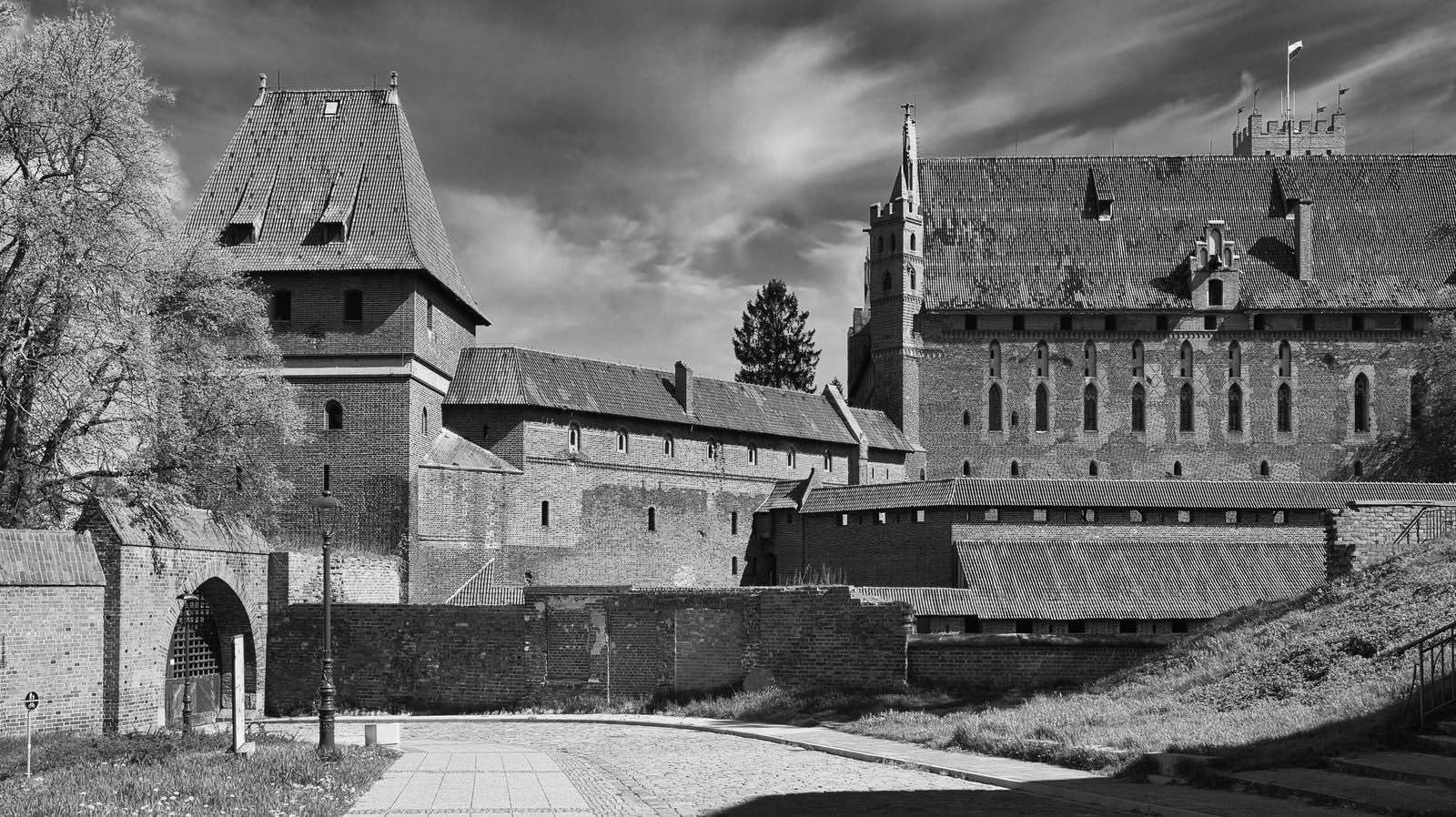
Five historical sites in Poland that deserve as much time as Auschwitz are Malbork Castle, Wawel Royal Castle, the Warsaw Rising Museum, Westerplatte and the Wolf’s Lair. They span 700 years, from the Teutonic Knights to the first shots of World War II, and each is reachable in a day from a major city. Prices below are approximate, as of 2026.
Many visitors treat Poland’s history as a single site. In fact the country’s story runs from medieval brick fortresses and royal coronations to the 1944 uprising and the opening of the Second World War, and these five tell it in different registers. For the camp itself, read our Auschwitz-Birkenau visiting guide. If you want a broader list, see UNESCO sites in Poland.
1. Malbork Castle: The Teutonic Order’s Brick Fortress
Malbork covers approximately 143,000 square metres on the Nogat River and is the largest castle in the world by area. The Teutonic Knights began building it in 1274 and made it their Grand Master’s seat in the early 1300s, and it is a UNESCO World Heritage Site listed in 1997. Heavily damaged in 1945, it was restored over decades, and the red brick towers and moat are among the most photographed sights in northern Poland.
Cost and access: the Historical Castle Route is PLN 80 (reduced PLN 60) and includes a compulsory guide or audio guide. The shorter Castle Grounds Route is PLN 35 (reduced PLN 25). Direct trains from Gdańsk Główny take about 35 to 40 minutes.
Local tip: book timed slots in July and August and bring a jacket, as the interiors stay cool. Our Malbork Castle guide has tickets and opening hours, and you can also book a Gdańsk tour that includes Malbork.
2. Wawel Royal Castle: Where Poland’s Kings Were Crowned
Wawel Hill in Kraków was the seat of Polish kings and the coronation site for centuries, and the Cathedral holds royal tombs. The court moved to Warsaw in the late 1500s, but Wawel stayed the symbolic heart of the country. The hill has the State Rooms, the Royal Private Apartments, the Crown Treasury and the Armoury, each sold as a separate timed ticket.
Cost and access: the combined Castle ticket is PLN 95 (reduced PLN 71) as of 2026, and individual exhibitions start around PLN 9 to 57. The grounds are free to walk. The Cathedral is sold separately.
Local tip: book the State Rooms or Private Apartments first, since they sell out. See our Wawel Castle tickets guide or book a guided Wawel tour, and add Kraków’s Kazimierz district for the Jewish history next door.
3. Warsaw Rising Museum: The 63 Days of 1944
The museum covers the Warsaw Uprising, the armed revolt by the Polish Home Army against German occupation that began on 1 August 1944 and ended after 63 days. Around 250,000 civilians died and the city was systematically destroyed afterwards. The museum opened in 2004 in a former tram power station in the Wola district and uses sound, photographs and a reconstructed bomber to put you inside the city under fire.
Cost and access: adult tickets are approximately PLN 35 (reduced PLN 25), and entry is free on Thursdays per the museum’s official site. Allow 2 to 3 hours.
Local tip: go early on a Thursday only if you are prepared for crowds, and pair the visit with a walking tour of Wola and the Old Town. Read our full Warsaw Rising Museum guide, then browse Warsaw WWII tours or the Warsaw city guide.
4. Westerplatte: Where World War II Began
On 1 September 1939 the German battleship Schleswig-Holstein opened fire on the Polish military depot at Westerplatte, on a peninsula at the mouth of Gdańsk’s port, and the Second World War began. A garrison of roughly 200 Polish soldiers held out for seven days. Today the site has the ruins of Guardhouse No. 1, a small museum, a cemetery and the 25-metre Monument to the Defenders of the Coast from 1966, all set in pine woods by the water.
Cost and access: the grounds and monument are free. A city bus or a seasonal boat from central Gdańsk reaches the peninsula in under an hour. Check Gdańsk transit timetables before you go.
Local tip: visit in the morning, when light is best over the water and tour groups are fewer. Combine it with the Gdańsk city guide, a Westerplatte tour or a Gdańsk hotel for the evening.
5. The Wolf’s Lair: Hitler’s Eastern Front Headquarters
Hidden in the Masurian forest near Kętrzyn, the Wolf’s Lair (Wilczy Szaniec) was Hitler’s main headquarters from June 1941. It is where Claus von Stauffenberg’s bomb failed to kill him on 20 July 1944. German forces blew up the site in January 1945, and the cracked concrete bunkers still lie in woodland. It is less polished than the others, and that is part of its power.
Cost and access: adult tickets are approximately PLN 25 in high season, with separate parking. The nearest town is Kętrzyn, and the site is about 8 km away, so a car or taxi is needed.
Local tip: stay on marked paths, since many bunkers are structurally unsound, and wear sturdy shoes. Our Wolf’s Lair guide covers how to get there, and a guided tour from Olsztyn removes the transport problem.
How to Combine Them
North Poland works as one loop: Gdańsk and Westerplatte, then Malbork, then the Wolf’s Lair via Olsztyn. Kraków and Warsaw are separate city stops. Our 10 days in Poland itinerary shows how to link them with the rest of the country, and the best castles in Poland roundup is a good companion if you enjoy the fortress side of this list.